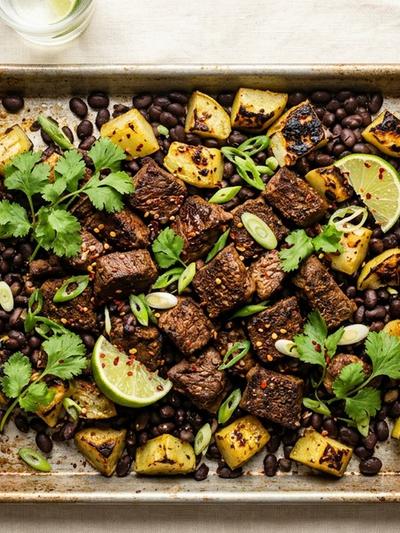
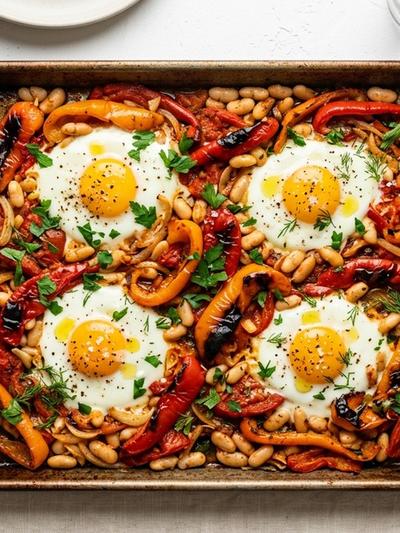
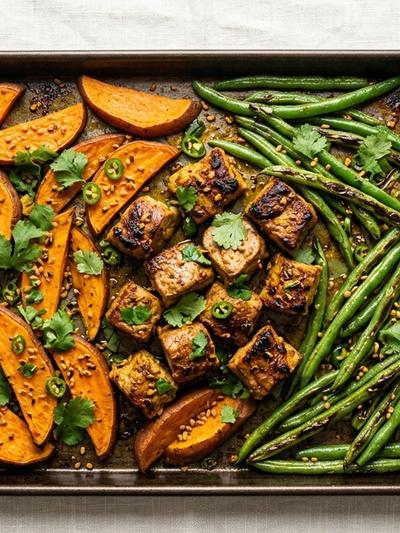
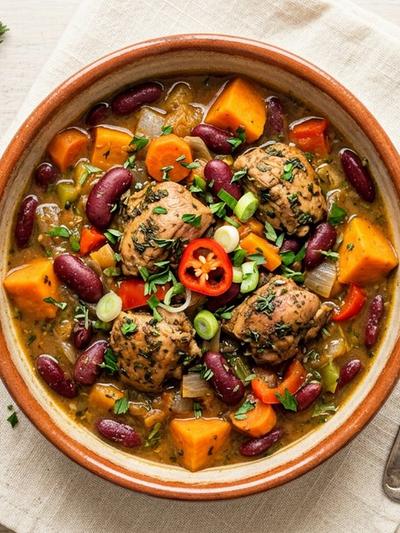
Each serving of this Caribbean mojo chicken sheet pan delivers 33 grams of protein and 8 grams of fiber from a short list of whole ingredients: lean chicken breast, sweet potato, black beans, and roasted bell pepper. The mojo marinade — a traditional Cuban-Caribbean blend of citrus, garlic, cumin, and oregano — infuses the chicken with bright, savory flavor without adding fat or sugar. At 345 calories per portion, this is a nutrient-dense lunch that keeps you fueled through the afternoon without heaviness.
The flavor here comes from contrast. Sharp lime and sweet orange cut through the earthiness of roasted sweet potato, while cumin and oregano anchor the marinade with warm, aromatic depth. The black beans pick up a light char on the sheet pan, giving them a slightly crispy exterior and creamy center. Red bell pepper softens and caramelizes alongside thin wedges of red onion, and a scattering of fresh cilantro at the end brings everything together with a clean, herbal lift.
This recipe was designed around how GLP-1 users actually eat. The portions are moderate but deeply satisfying — the combination of lean protein, complex carbohydrate from sweet potato, and legume fiber keeps blood sugar steady and digestion comfortable. Sheet pan cooking means minimal cleanup and easy portioning, which matters on days when appetite is unpredictable and standing in the kitchen feels like a commitment.
Why This Works on GLP-1
The 33 grams of protein per serving come primarily from chicken breast, with an additional boost from black beans. That protein load matters for anyone on Mounjaro or similar GLP-1 medications: as appetite decreases and caloric intake drops, adequate protein becomes the primary defense against muscle loss. Research consistently shows that maintaining 25 to 40 grams of protein per meal helps preserve lean mass during weight loss, and this recipe lands squarely in that range without any protein powder or supplements.
Fiber is the second pillar here. The 8 grams per serving — split between black beans, sweet potato skin, and bell pepper — support gut motility, which can slow on GLP-1 medications. Black beans in particular provide a mix of soluble and insoluble fiber that feeds beneficial gut bacteria without the intense bloating that cruciferous vegetables sometimes cause. The sweet potato adds gentle resistant starch, especially if you let leftovers cool before reheating.
The low fat content of 7 grams per serving is deliberate. GLP-1 medications slow gastric emptying, and high-fat meals can amplify the nausea and discomfort that some users experience, especially in the early weeks on Wegovy or during dose escalation. This recipe keeps fat minimal — just enough olive oil to prevent sticking and promote browning — so it sits comfortably even when your stomach is sensitive.
Ingredients (serves 4)
For the mojo marinade:
- 3 tablespoons fresh orange juice (~45ml)
- 2 tablespoons fresh lime juice (~30ml)
- 4 cloves garlic, minced
- 1 teaspoon ground cumin
- 1 teaspoon dried oregano
- 1/4 teaspoon smoked paprika
- 1/4 teaspoon fine sea salt
- 1/4 teaspoon black pepper
For the sheet pan:
- 1 lb (450g) boneless skinless chicken breast, cut into 1-inch pieces
- 1 medium sweet potato (~10 oz / 300g), peeled and cut into 3/4-inch cubes
- 1 large red bell pepper, cut into 1-inch pieces
- 1 small red onion, cut into thin wedges
- 1 can (15 oz / 425g) black beans, drained and rinsed
- 1 tablespoon olive oil
- 1/4 teaspoon fine sea salt
For serving:
- 2 tablespoons fresh cilantro, roughly chopped
- Lime wedges
Instructions
Make the mojo marinade and prep:
Whisk together the orange juice, lime juice, garlic, cumin, oregano, smoked paprika, salt, and pepper in a medium bowl. Add the chicken pieces and toss until evenly coated. Set aside while you prepare the vegetables — this gives the citrus and garlic at least 10 to 15 minutes to penetrate the meat, which is enough to build noticeable flavor without making the chicken mushy from the acid.
Preheat your oven to 425°F (220°C). Line a large rimmed sheet pan with parchment paper for easy cleanup.
Start the sweet potato:
- Spread the sweet potato cubes on the prepared sheet pan. Drizzle with half the olive oil (about 1-1/2 teaspoons) and the salt. Toss to coat and arrange in a single layer. Roast for 8 minutes. Sweet potato is the densest ingredient here and needs a head start so everything finishes at the same time — skipping this step leaves you with undercooked potato and overcooked chicken.
Add the remaining ingredients and roast:
Remove the pan from the oven. Add the marinated chicken (pour any remaining marinade over the pan), bell pepper, red onion, and black beans. Drizzle the remaining olive oil over the vegetables. Use a spatula to spread everything into a single, uncrowded layer — if pieces overlap, they steam instead of roast, and you lose the caramelized edges that make this dish satisfying.
Return the pan to the oven and roast for 17 to 18 minutes, tossing everything once at the halfway mark. The chicken is done when the thickest piece registers 165°F (74°C) on an instant-read thermometer and the sweet potato is fork-tender. The black beans will have a slightly dried, crispy exterior — that texture is intentional and adds a pleasant crunch.
Finish and serve:
- Let the pan rest for 3 minutes out of the oven. This brief rest allows the chicken to reabsorb juices and makes for more tender bites. Scatter the cilantro over the top and serve with lime wedges for squeezing at the table.
Nutrition per Serving
| Nutrient | Amount (approx.) |
|---|---|
| Calories | ~345 kcal |
| Protein | ~33g |
| Fat | ~7g |
| Carbohydrates | ~36g |
| Fiber | ~8g |
Calculated from USDA data for raw boneless skinless chicken breast, canned black beans (drained), raw sweet potato, and measured olive oil. Actual values vary with ingredient brands and piece sizes.
Practical Notes
Meal prep storage. This recipe holds well for up to 4 days in the refrigerator in airtight containers. The flavors actually deepen overnight as the mojo marinates the vegetables. Reheat in a 375°F oven for 8 to 10 minutes or microwave with a damp paper towel over the container for 90 seconds. If you plan to meal prep, portion into individual containers immediately after cooking — it is easier to grab and go than scooping from a large batch container.
Chicken thigh substitution. Boneless skinless chicken thighs work well here and are more traditional in Caribbean cooking. Expect about 4 extra grams of fat per serving and slightly less protein (around 29 grams). Thighs are more forgiving of overcooking, which makes them a good choice if you tend to leave sheet pans in the oven a minute or two longer than planned. Cut them into similar 1-inch pieces for even cooking.
Portion flexibility for smaller appetites. If you are in the first weeks of Zepbound or adjusting to a new dose, serve yourself half a portion and refrigerate the rest. This recipe reheats cleanly, so there is no penalty for eating less now and finishing it tomorrow. A half serving still provides about 16 grams of protein, which is meaningful even as a smaller meal.
Boosting the citrus punch. The mojo marinade is deliberately mild so it stays comfortable for sensitive stomachs. If you tolerate citrus well and want more brightness, add the zest of one lime to the marinade before tossing with the chicken. You can also add a teaspoon of apple cider vinegar for extra tang without adding heat.
Canned bean tip. Drain and rinse the black beans thoroughly, then spread them on a clean kitchen towel and pat dry. Removing excess surface moisture is the key to getting that crispy exterior on the sheet pan. Wet beans steam instead of roasting, and you miss the textural contrast that makes this recipe more interesting than a typical beans-and-chicken bowl.
Frequently Asked Questions
Will the citrus in the mojo marinade cause stomach issues on GLP-1 medication?
Can I use a different protein instead of chicken?
How long does this keep, and can I freeze it?
What if I can only eat a very small amount right now?
Do I need to peel the sweet potato?
This article provides general food and nutrition guidance only. It does not constitute medical advice. Always consult your healthcare provider regarding your GLP-1 medication and individual nutritional needs.