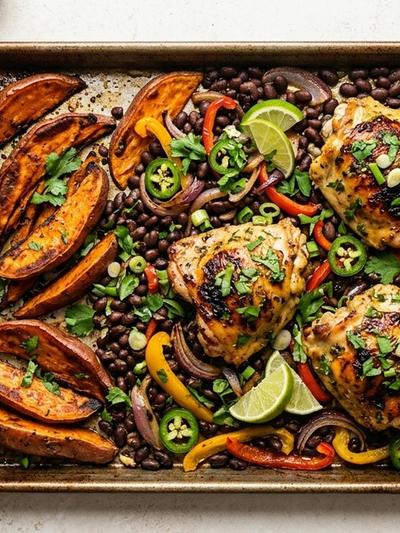
This sheet pan lunch packs 37 grams of protein and 10 grams of fiber into a single 392-calorie serving. Lean sirloin steak provides the bulk of the protein, while black beans contribute both additional amino acids and soluble fiber that supports steady blood sugar. The combination of chayote squash, bell peppers, and red onion adds volume and micronutrients without excess calories. Every component roasts together on one pan, making cleanup as minimal as the ingredient list.
Caribbean adobo seasoning — a blend of garlic, oregano, cumin, black pepper, and citrus — gives the beef a savory depth that tastes far more complex than the effort involved. Chayote, a mild squash staple across the Caribbean, turns tender and slightly sweet in the oven while holding its shape. The black beans get lightly crisp at their edges, and a squeeze of fresh lime at the end pulls all the flavors together with bright acidity.
For GLP-1 users, this recipe checks the boxes that matter most: high protein to preserve lean muscle, generous fiber for digestive regularity, and a moderate portion size that satisfies without overwhelming a reduced appetite. The sheet pan format means no stirring or babysitting — you prep, roast, and eat. Leftovers reheat well, making it a practical option for midweek lunches when energy for cooking runs low.
Why This Works on GLP-1
Each serving delivers 37 grams of protein primarily from lean sirloin steak, one of the most bioavailable protein sources available. Maintaining adequate protein intake is critical during GLP-1-assisted weight loss, as medications like Mounjaro and Wegovy can lead to muscle loss alongside fat reduction if protein falls too low. Research suggests aiming for at least 25–30 grams of protein per meal to stimulate muscle protein synthesis effectively. This recipe exceeds that threshold comfortably while keeping total calories under 400.
The 10 grams of fiber per serving come from two complementary sources: black beans provide soluble fiber that slows glucose absorption, while chayote contributes gentle insoluble fiber that supports regular digestion. For Zepbound users who experience the constipation that GLP-1 medications can cause, this combination helps maintain bowel regularity without the bloating that very high-fiber meals can trigger.
The relatively low fat content — just 9 grams per serving — means this meal moves through the stomach more efficiently, which matters when gastric emptying is already slowed by GLP-1 medication. The lean sirloin and minimal cooking oil keep the dish light enough to eat comfortably while still providing deep, satisfying flavor from the adobo spice blend and roasted vegetables.
Ingredients (serves 4)
For the adobo seasoning:
- 1 tablespoon (8g) garlic powder
- 2 teaspoons (4g) dried oregano
- 1½ teaspoons (4g) ground cumin
- 1 teaspoon (3g) smoked paprika
- ½ teaspoon (1g) black pepper
- ½ teaspoon (3g) fine sea salt
- Zest of 1 lime
For the sheet pan:
- 1¼ lb (565g) lean sirloin steak, trimmed and cut into 1-inch cubes
- 2 medium chayote squash (about 14 oz / 400g total), peeled and cut into ¾-inch pieces
- 1 large red bell pepper (about 6 oz / 170g), cut into 1-inch squares
- 1 medium red onion (about 5 oz / 140g), cut into thick wedges
- 1 can (15 oz / 425g) black beans, drained and rinsed
- 1 tablespoon (15ml) olive oil
- 2 tablespoons (30ml) fresh lime juice
For serving:
- 2 tablespoons fresh cilantro, roughly chopped
- 1 lime, cut into wedges
- Hot sauce (optional)
Instructions
Prepare the adobo seasoning and ingredients:
- Preheat your oven to 425°F (220°C) and line a large rimmed sheet pan with parchment paper. The parchment prevents the beans from sticking and makes cleanup effortless.
- Combine the garlic powder, oregano, cumin, smoked paprika, black pepper, salt, and lime zest in a small bowl. Stir to mix evenly. The lime zest is essential here — it blooms in the oven heat and bridges the spice blend with the fresh citrus added later.
- Pat the sirloin cubes dry with paper towels. Dry surfaces brown rather than steam, which concentrates the beef's flavor and creates a light crust even in a crowded pan.
- Place the beef cubes in a large mixing bowl. Add the chayote, bell pepper, and red onion. Drizzle with the olive oil and toss to coat evenly. Sprinkle the adobo seasoning over everything and toss again until all pieces are well coated.
Roast the sheet pan:
- Spread the seasoned beef and vegetables in a single layer across the prepared sheet pan. Leave small gaps between pieces where possible — overcrowding traps steam and prevents browning. If your pan feels crowded, use two pans on separate oven racks.
- Scatter the drained black beans across the pan, filling the gaps between the beef and vegetables. The beans don't need oil — they'll roast in the residual moisture and develop lightly crisp edges.
- Roast for 20–22 minutes without stirring. The beef should register 135–140°F (57–60°C) for medium and the chayote should be fork-tender with golden edges. If you prefer your beef more well-done, roast for an additional 3–4 minutes.
- Remove the pan from the oven and immediately drizzle the fresh lime juice across the entire surface. The acid hitting the hot pan creates a light glaze that clings to the beef and vegetables as they rest.
Finish and serve:
- Let the pan rest for 3 minutes. This allows the beef juices to redistribute and the lime juice to settle into the beans and vegetables.
- Divide among four plates or meal prep containers. Garnish with fresh cilantro and serve with lime wedges on the side. A dash of Caribbean hot sauce adds heat for those who enjoy it, but keep it light if your stomach is sensitive.
Nutrition per Serving
| Nutrient | Amount (approx.) |
|---|---|
| Calories | ~392 kcal |
| Protein | ~37g |
| Fat | ~9g |
| Carbohydrates | ~35g |
| Fiber | ~10g |
Estimates based on lean sirloin steak trimmed of visible fat, canned black beans, and measured olive oil. Actual values may vary slightly depending on specific cuts and brands used.
Practical Notes
Meal prep storage. This recipe stores well in airtight containers for up to 4 days in the refrigerator. Reheat individual portions in the microwave for 90 seconds or in a 350°F oven for 8–10 minutes. The chayote holds its texture remarkably well compared to softer squashes like zucchini, which is one reason it works so well for meal prep.
Chayote substitution. If chayote is unavailable at your market, zucchini or yellow summer squash work as the closest substitute — cut them slightly larger since they cook faster and soften more. Kohlrabi is another option that holds its shape well during roasting. Avoid butternut squash, which adds significantly more carbohydrates and changes the calorie profile.
Adjusting for smaller appetites. During the early weeks of Ozempic or similar GLP-1 medications, appetite can be dramatically reduced. Divide this recipe into 6 portions instead of 4 — you'll still get roughly 25 grams of protein per serving, which meets the minimum threshold for muscle preservation. Store the extra portions for days when cooking feels like too much effort.
Choosing the right sirloin. Look for top sirloin or sirloin tip, which are among the leanest beef cuts available. Trim any visible fat before cubing. Flank steak is an acceptable alternative with a similar protein-to-fat ratio, though it benefits from being sliced against the grain after roasting rather than cubed beforehand.
Building a complete plate. For those with a larger appetite or higher calorie needs, serve this over ½ cup of cooked brown rice or with a small whole wheat tortilla on the side. Either addition brings the meal closer to 500 calories while adding complex carbohydrates for sustained energy through the afternoon.
Frequently Asked Questions
Can I eat this recipe if I'm experiencing nausea from my GLP-1 medication?
Can I use ground beef instead of sirloin steak?
How long does this keep in the refrigerator, and can I freeze it?
I'm in the first month of GLP-1 treatment and can barely eat half a cup at a time. How should I approach this recipe?
My sheet pan is smaller than standard — how do I avoid overcrowding?
This article provides general food and nutrition guidance only. It does not constitute medical advice. Always consult your healthcare provider regarding your GLP-1 medication and individual nutritional needs.