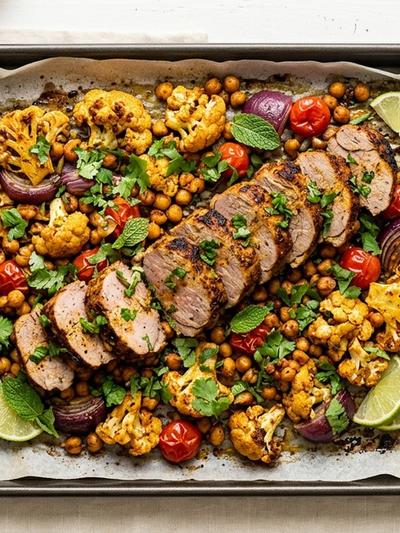
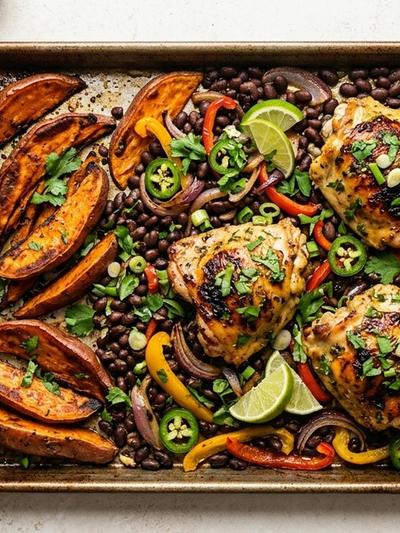
This sheet pan lunch delivers 35 grams of protein and 8 grams of fiber per serving, built around lean pork tenderloin and a generous spread of roasted sweet potato and green beans. The yogurt-fenugreek marinade tenderizes the pork while adding a subtle bitterness and nuttiness that defines so many North Indian dishes. Each serving comes in under 400 calories, making it one of the more nutrient-dense meals you can pull from a single pan.
Fenugreek — called methi in Indian cooking — has a distinctive warm, slightly maple-like flavor that pairs beautifully with turmeric, cumin, and ginger. The yogurt marinade creates a thin crust on the pork as it roasts, keeping the interior juicy while the edges turn golden. Underneath, sweet potato wedges caramelize against the hot pan, and green beans blister and char just enough to develop a satisfying snap.
For GLP-1 users, this format works particularly well. The combination of lean protein, complex carbohydrates, and fiber-rich vegetables creates a meal that feels complete even in smaller portions. Everything roasts together on one pan, which means minimal cleanup and easy portion control — you can plate exactly what your appetite allows and store the rest.
Why This Works on GLP-1
Pork tenderloin is one of the leanest cuts available, comparable to skinless chicken breast in its protein-to-fat ratio. Each serving of this dish provides roughly 35 grams of protein with only 10 grams of fat, which supports muscle preservation during GLP-1-assisted weight loss. Maintaining lean muscle mass is a documented concern for people on medications like Mounjaro, and consistently hitting 30+ grams of protein per meal is one of the most effective strategies. The yogurt in the marinade contributes an additional 3 grams of protein per serving, pushing the total higher without adding bulk.
The 8 grams of fiber per serving come from sweet potato and green beans — both gentle on the digestive system compared to raw cruciferous vegetables or large amounts of legumes. This matters because GLP-1 medications slow gastric emptying, and foods that are easy to digest reduce the risk of discomfort, bloating, or nausea after eating. Roasting the vegetables softens their fiber structure further, making them even easier on a sensitive stomach.
The warm spice profile — fenugreek, turmeric, cumin — adds significant flavor without relying on heavy cream, coconut milk, or large amounts of oil. Turmeric in particular contains curcumin, which has well-studied anti-inflammatory properties. Keeping the total fat low at 10 grams per serving means the meal moves through the digestive system more comfortably, which is especially relevant when gastric motility is already reduced by your medication.
Ingredients (serves 4)
For the yogurt-fenugreek marinade:
- 1/3 cup (80g) plain Greek yogurt (2% or nonfat)
- 2 teaspoons dried fenugreek leaves (kasuri methi), crushed between your palms
- 1 teaspoon ground turmeric
- 1 teaspoon ground cumin
- 1 teaspoon ground coriander
- 1/2 teaspoon garam masala
- 1/2 teaspoon fine salt
- 1/4 teaspoon black pepper
- 1 tablespoon fresh ginger, finely grated
- 3 cloves garlic, minced
- 1 tablespoon lemon juice
For the sheet pan:
- 1.25 lb (560g) pork tenderloin, trimmed of silver skin
- 1 lb (450g) sweet potatoes, peeled and cut into 3/4-inch wedges
- 12 oz (340g) green beans, trimmed
- 1 medium red onion, cut into 8 wedges
- 1 tablespoon avocado or olive oil
- 1/2 teaspoon fine salt
- 1/4 teaspoon black pepper
For serving:
- 2 tablespoons fresh cilantro, roughly chopped
- Lemon wedges
Instructions
Marinate the pork:
- Whisk together the yogurt, crushed fenugreek leaves, turmeric, cumin, coriander, garam masala, salt, pepper, ginger, garlic, and lemon juice in a medium bowl. The mixture should be thick enough to coat the pork without sliding off.
- Pat the pork tenderloin dry with paper towels — this helps the marinade adhere. Coat the pork evenly with the yogurt mixture. For best results, marinate for at least 30 minutes at room temperature or up to 8 hours in the refrigerator. If refrigerated, pull it out 20 minutes before roasting to take the chill off.
Prepare the vegetables:
- Preheat your oven to 425°F (220°C) and position a rack in the center. Line a large rimmed sheet pan (18×13 inches) with parchment paper.
- Toss the sweet potato wedges, green beans, and red onion with the oil, salt, and pepper. Spread them in a single layer on the prepared pan, leaving a clear space down the center for the pork. Crowding the vegetables causes steaming rather than roasting, so use two pans if necessary.
Roast everything together:
- Place the marinated pork tenderloin in the center of the pan, nestled among the vegetables. The yogurt coating will form a spiced crust as it roasts — this is where the flavor concentrates.
- Roast for 20 minutes, then flip the pork and stir the vegetables. The sweet potatoes should be starting to brown on the bottom.
- Continue roasting for another 10–15 minutes until the pork reaches an internal temperature of 145°F (63°C) and the sweet potatoes are tender when pierced with a fork. The green beans should be blistered and lightly charred at the tips.
Rest and serve:
- Transfer the pork to a cutting board and let it rest for 5 minutes. Resting allows the juices to redistribute — cutting too early means dry pork. The internal temperature will rise another 3–5 degrees during this time.
- Slice the tenderloin into 1/2-inch rounds. Divide the roasted vegetables among four plates, fan the pork slices on top, and finish with fresh cilantro and a lemon wedge.
Nutrition per Serving
| Nutrient | Amount (approx.) |
|---|---|
| Calories | ~385 kcal |
| Protein | ~35g |
| Fat | ~10g |
| Carbohydrates | ~39g |
| Fiber | ~8g |
Estimates based on 1.25 lb trimmed pork tenderloin, 2% Greek yogurt, and 1 tablespoon total oil divided across four servings.
Practical Notes
Kasuri methi is worth finding. Dried fenugreek leaves are available at any Indian grocery store and increasingly at well-stocked supermarkets. They keep for months in an airtight container and add a depth of flavor that dried fenugreek powder cannot replicate. Crush them between your palms before adding to release their oils.
This meal preps beautifully for 3–4 days. Store sliced pork and vegetables in separate airtight containers in the refrigerator. Reheat at 350°F (175°C) for 8–10 minutes or microwave in 60-second intervals. The pork stays tender because the yogurt marinade locks in moisture — a significant advantage over dry-rubbed pork.
Start with half a portion if you are early in your GLP-1 journey. Plate half the pork and vegetables, then save the rest. Many Wegovy or Zepbound users find that their appetite is significantly reduced in the first weeks of treatment. A half-portion still delivers about 17 grams of protein, which makes it a substantial light lunch.
Swap the sweet potato if you prefer lower carbs. Cauliflower florets or butternut squash cubes roast in the same time frame and reduce the carbohydrate count by roughly 15 grams per serving. The fenugreek-turmeric spice profile works well with either substitute.
Use a meat thermometer for consistent results. Pork tenderloin goes from perfectly juicy at 145°F to dry and chalky at 160°F faster than most cuts. An instant-read thermometer removes the guesswork entirely and takes about three seconds to use.
Frequently Asked Questions
Is pork tenderloin easy to digest on GLP-1 medication?
Can I use chicken breast or turkey tenderloin instead of pork?
How long does this keep in the fridge, and can I freeze it?
What if I can only eat a very small amount right now?
Can I marinate the pork overnight for stronger flavor?
This article provides general food and nutrition guidance only. It does not constitute medical advice. Always consult your healthcare provider regarding your GLP-1 medication and individual nutritional needs.