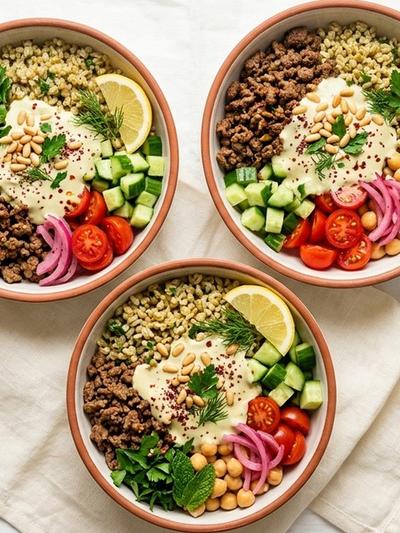
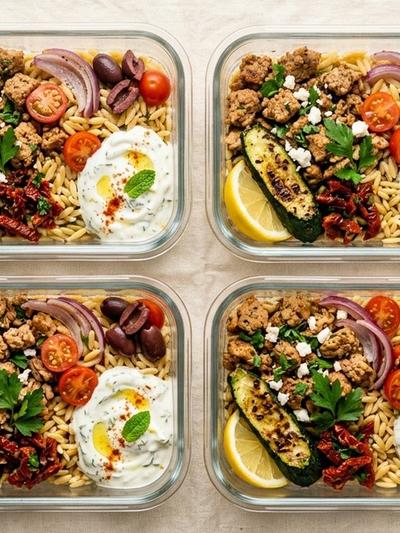
Each serving of these Greek-style beef keftedes delivers 36 grams of protein from a combination of lean ground beef, chickpeas, and feta cheese. The dish also provides 6 grams of fiber from chickpeas and roasted vegetables, plus iron and B12 from the beef — two nutrients that GLP-1 users sometimes fall short on when eating reduced portions. Everything cooks on a single sheet pan, making this a practical weekday lunch with minimal cleanup.
The flavor profile here is unmistakably Greek: warm oregano and cumin season the beef, while a generous amount of fresh mint brightens each bite. Cherry tomatoes burst and caramelize in the oven, creating a natural sauce that pools around the keftedes and chickpeas. A finish of crumbled feta and a squeeze of lemon pulls everything together with the kind of salty, tangy contrast that makes you forget you're eating a calorie-conscious meal.
For GLP-1 users, this recipe solves the common lunch problem of needing something satisfying in a smaller volume. The keftedes are compact and protein-dense, so even two or three small patties with a scoop of chickpeas and tomatoes feels like a complete meal. The sheet-pan format means you can batch-cook all four servings at once, refrigerate them, and reheat portions throughout the week without any quality loss.
Why This Works on GLP-1
With 36 grams of protein per serving, this dish hits the upper range of what most GLP-1 users should target at lunch. Adequate protein intake is critical during GLP-1-assisted weight loss because these medications — including Mounjaro and Wegovy — reduce overall appetite, which can inadvertently lower protein consumption below the threshold needed for muscle preservation. The combination of beef, chickpeas, and feta creates a complete amino acid profile that supports lean mass retention even when total calorie intake is reduced.
The chickpeas contribute both protein and soluble fiber, which works synergistically with GLP-1 medications to promote steady blood sugar levels. Roasted cherry tomatoes add lycopene and vitamin C without the raw-vegetable roughness that some GLP-1 users find difficult to digest, especially in the early weeks of treatment.
The fat content stays moderate at 19 grams per serving — enough for satiety and fat-soluble vitamin absorption, but low enough to avoid the heavy, sluggish feeling that high-fat meals can cause when gastric emptying is already slowed. Using 93% lean ground beef and limiting added oil to one tablespoon for the entire pan keeps the dish within a reasonable calorie budget while still tasting rich and satisfying.
Ingredients (serves 4)
For the keftedes:
- 1 lb (450g) lean ground beef (93/7)
- 1/3 cup (30g) rolled oats, finely ground
- 1 large egg
- 2 tablespoons finely chopped fresh mint
- 1 tablespoon finely chopped fresh flat-leaf parsley
- 2 cloves garlic, minced
- 1 teaspoon dried oregano
- 1/2 teaspoon ground cumin
- 1/2 teaspoon salt
- 1/4 teaspoon black pepper
For the sheet pan:
- 2 cups (300g) cherry tomatoes, halved
- 1 can (15 oz / 425g) chickpeas, drained and rinsed
- 1 medium red onion, cut into thin wedges
- 1 tablespoon extra-virgin olive oil
- 1/2 teaspoon dried oregano
- 1/4 teaspoon salt
To finish:
- 2 oz (60g) crumbled feta cheese
- 1 tablespoon fresh lemon juice
- Fresh mint leaves, for garnish
Instructions
Prepare the keftedes:
Preheat your oven to 425°F (220°C) and line a large rimmed sheet pan with parchment paper. The parchment prevents sticking and makes cleanup effortless — important when you're cooking lean beef without much rendered fat.
In a medium bowl, combine the ground beef, ground oats, egg, mint, parsley, garlic, oregano, cumin, salt, and pepper. Mix gently with your hands until just combined — overmixing makes the keftedes dense and tough rather than tender. The ground oats act as a binder and add a small amount of fiber without making the texture bready.
Shape the mixture into 16 small oval patties, about 2 tablespoons each. Keftedes are traditionally oval rather than round, which gives them more surface area for browning. Arrange them on one half of the prepared sheet pan, leaving a little space between each.
Prepare the vegetables:
In a bowl, toss the halved cherry tomatoes, chickpeas, and red onion wedges with the olive oil, oregano, and salt. Spread them in a single layer on the other half of the sheet pan. Keeping the vegetables and keftedes separate initially ensures even cooking — the beef needs direct heat contact for browning.
Roast for 20 minutes on the middle rack. The keftedes should be golden brown on top and cooked through (internal temperature of 160°F / 71°C), and the cherry tomatoes should be soft and blistered. If the tomatoes are browning faster than the beef, simply swap the pan's orientation halfway through.
Assemble and serve:
Remove the pan from the oven and gently toss the roasted vegetables so the burst tomato juices coat the chickpeas. Scatter the crumbled feta over the entire pan while everything is still hot — the residual heat will slightly soften the cheese without fully melting it.
Squeeze the lemon juice over the top and finish with fresh mint leaves. Serve directly from the pan, portioning four keftedes per plate with a generous scoop of the tomato-chickpea mixture alongside.
Nutrition per Serving
| Nutrient | Amount (approx.) |
|---|---|
| Calories | ~418 kcal |
| Protein | ~36g |
| Fat | ~19g |
| Carbohydrates | ~24g |
| Fiber | ~6g |
Estimates based on 93% lean ground beef, canned chickpeas, and standard feta cheese. Actual values may vary with specific brands and portion sizes.
Practical Notes
Meal prep storage. These keftedes refrigerate beautifully for up to 4 days in airtight containers. Store the feta separately and add it when reheating to keep its texture intact. Reheat in a 350°F (175°C) oven for 8–10 minutes or microwave for 90 seconds — the oven method preserves the exterior texture better.
Make it portable. This lunch packs well for work. Spoon the keftedes and vegetables into a meal prep container, add feta in a small separate compartment, and bring a lemon wedge on the side. It tastes good at room temperature too, almost like a warm Mediterranean salad.
Swap the protein if needed. Ground turkey (93% lean) works as a direct substitute for the beef with very similar nutrition numbers. Ground lamb is traditional for keftedes but raises the fat content significantly — if using lamb, choose the leanest ground available and reduce the olive oil to 1 teaspoon.
Adjust for smaller appetites. If you're in the early weeks of Ozempic or another GLP-1 medication and finding full portions overwhelming, serve two keftedes instead of four with a proportional scoop of vegetables. That gives you about 18 grams of protein — pair it with a small Greek yogurt later in the afternoon to reach your protein target for the meal window.
Boost the vegetables. Diced zucchini or baby bell peppers roast in the same time and at the same temperature as the tomatoes and onions. Adding a cup of either increases the fiber and volume of the dish without meaningfully changing the calorie count, which is helpful if you want a larger-looking plate for psychological satisfaction.
Frequently Asked Questions
Can I eat this recipe during the first few weeks of GLP-1 medication?
What can I use instead of chickpeas?
How long do leftovers keep, and can I freeze them?
I find ground beef hard to digest on GLP-1 — any tips?
Can I use a different cooking method for the keftedes?
This article provides general food and nutrition guidance only. It does not constitute medical advice. Always consult your healthcare provider regarding your GLP-1 medication and individual nutritional needs.