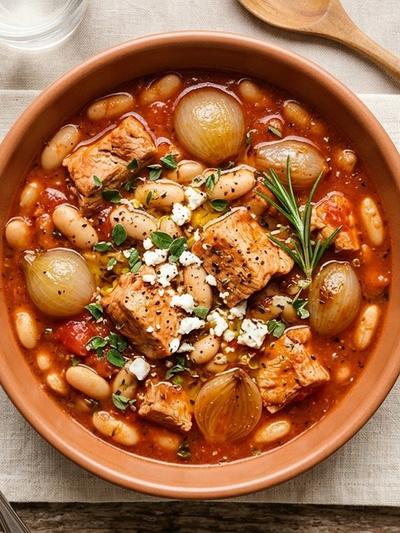
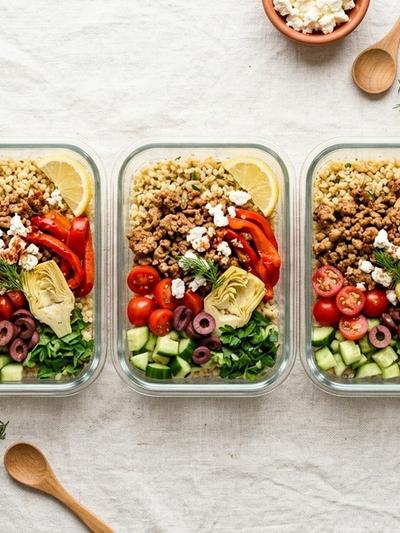
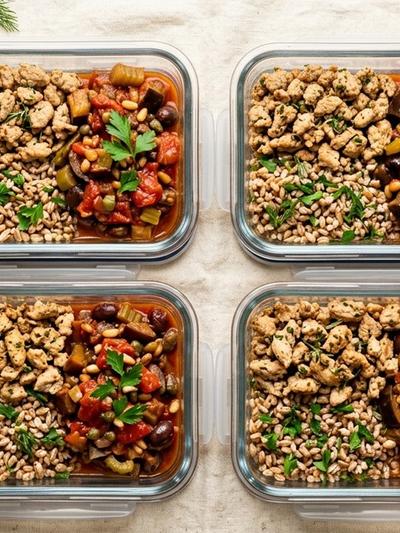
Each of these meal prep bowls packs 34 grams of protein and 8 grams of fiber into a satisfying 385-calorie lunch. Ground turkey seasoned with oregano, garlic, and smoked paprika forms the protein base, while whole wheat orzo and roasted zucchini round out the macros with slow-digesting carbohydrates and gentle vegetable fiber. The result is a nutritionally complete midday meal that reheats beautifully and keeps you fueled through the afternoon without heaviness.
The flavor profile here draws from Greek and Turkish pantry staples — sun-dried tomatoes add concentrated umami sweetness, Kalamata olives contribute briny depth, and a bright lemon-herb yogurt drizzle ties everything together with cooling tang. The roasted zucchini caramelizes at high heat, developing nutty sweetness that complements the savory turkey. Fresh dill and a squeeze of lemon juice at the end lift the entire bowl with herbaceous brightness.
This recipe was designed specifically for the meal prep format that works so well on GLP-1 medications. Smaller appetites mean you need every bite to count nutritionally, and having four identical, portioned bowls eliminates the daily decision fatigue that can lead to skipped meals. The components reheat gently in the microwave without drying out, and the yogurt sauce stays fresh when stored separately.
Why This Works on GLP-1
Preserving lean muscle mass is one of the most important nutritional priorities during GLP-1-assisted weight loss, and these bowls deliver 34 grams of complete protein per serving to support that goal. Ground turkey provides all essential amino acids with significantly less saturated fat than beef, making it easier on a digestive system that's already working more slowly on medications like Mounjaro or Wegovy. The protein is distributed evenly across the bowl rather than concentrated in one component, which supports steady absorption throughout the afternoon.
The 8 grams of fiber per serving come from a combination of whole wheat orzo, roasted zucchini, and chickpeas — all sources that are gentle on the GI tract rather than harsh or bloating. This moderate fiber level supports the slower gastric emptying that GLP-1 medications produce without adding digestive discomfort, and the soluble fiber from the chickpeas helps maintain steady blood sugar levels after eating.
The fat content stays lean at 12 grams per serving, with most of it coming from heart-healthy sources — olive oil for cooking and olives for flavor. This lower fat profile means the bowl digests more comfortably than heavier Mediterranean dishes, while the complex carbohydrates from whole wheat orzo provide sustained energy that pairs well with the appetite-regulating effects of GLP-1 therapy.
Ingredients (serves 4)
For the seasoned turkey:
- 1 lb (450g) lean ground turkey (93% lean)
- 2 teaspoons extra-virgin olive oil
- 3 cloves garlic, minced
- 1 teaspoon dried oregano
- 1 teaspoon smoked paprika
- ½ teaspoon ground cumin
- ¼ teaspoon salt
- ¼ teaspoon black pepper
For the orzo and vegetables:
- 1 cup (170g) whole wheat orzo, dry
- 2 medium zucchini (about 14 oz / 400g), diced into ½-inch pieces
- 1 can (15 oz / 425g) chickpeas, drained and rinsed
- ⅓ cup (50g) sun-dried tomatoes (dry-packed), chopped
- ¼ cup (30g) Kalamata olives, halved
- 1 tablespoon extra-virgin olive oil
- ½ teaspoon salt
For the lemon-herb yogurt:
- ¾ cup (180g) plain Greek yogurt (2% fat)
- 2 tablespoons fresh lemon juice
- 2 tablespoons fresh dill, finely chopped
- 1 small clove garlic, grated
- Pinch of salt
For finishing:
- 2 cups (60g) baby spinach
- 1 tablespoon lemon juice
- Fresh dill sprigs for garnish
Instructions
Cook the orzo:
- Bring a medium pot of salted water to a boil. Add the whole wheat orzo and cook according to package directions, usually 8–10 minutes, until al dente. Drain, rinse briefly with cool water to stop cooking and prevent sticking, then set aside. Rinsing also cools the orzo so it doesn't wilt the spinach when you assemble the bowls.
Roast the zucchini:
- While the orzo cooks, preheat your oven to 425°F (220°C). Spread the diced zucchini on a parchment-lined baking sheet, toss with 1 tablespoon olive oil and a pinch of salt, and arrange in a single layer. Roast for 18–20 minutes, flipping once halfway through, until golden brown on the edges. High heat caramelizes the natural sugars without making the zucchini mushy — you want some texture here.
Cook the seasoned turkey:
Heat 2 teaspoons olive oil in a large nonstick skillet over medium-high heat. Add the ground turkey, breaking it into small crumbles with a wooden spoon. Cook for 3–4 minutes until it begins to brown.
Add the minced garlic, oregano, smoked paprika, cumin, salt, and pepper. Continue cooking for another 3–4 minutes until the turkey is fully cooked through and the spices are fragrant. The smoked paprika blooms in the hot fat, releasing deeper flavor than if added later.
Add the drained chickpeas, chopped sun-dried tomatoes, and halved olives to the skillet. Stir to combine and cook for 2 minutes, just long enough to warm everything through and let the chickpeas absorb some of the seasoned pan juices.
Make the lemon-herb yogurt:
- In a small bowl, whisk together the Greek yogurt, lemon juice, chopped dill, grated garlic, and a pinch of salt. Taste and adjust the lemon or salt as needed. This sauce should be bright and tangy — it cuts through the richness of the turkey and brings all the bowl components together.
Assemble the meal prep bowls:
Divide the baby spinach evenly among four meal prep containers — it forms a bed that wilts slightly under the warm components, adding volume without extra calories. Top each container with one quarter of the cooked orzo, one quarter of the turkey-chickpea mixture, and one quarter of the roasted zucchini.
Squeeze fresh lemon juice over each bowl and garnish with dill sprigs. Store the lemon-herb yogurt in a separate small container or in a corner of the bowl, covered with plastic wrap to keep it from mixing during storage.
Seal the containers and refrigerate. The bowls keep well for up to 4 days in the refrigerator.
To reheat:
- Microwave each bowl (without the yogurt) for 2–2½ minutes at medium power, stirring once halfway through. Add the yogurt sauce after reheating — it should stay cool and fresh against the warm bowl.
Nutrition per Serving
| Nutrient | Amount (approx.) |
|---|---|
| Calories | ~385 kcal |
| Protein | ~34g |
| Fat | ~12g |
| Carbohydrates | ~36g |
| Fiber | ~8g |
Estimates based on 93% lean ground turkey, whole wheat orzo, canned chickpeas, and 2% Greek yogurt. Actual values may vary by brand.
Practical Notes
Reheat at medium power for better texture. Microwaving on high can make the turkey rubbery and dry out the orzo. Two minutes at 60–70% power with a quick stir halfway through heats everything evenly while keeping the turkey tender and the orzo from clumping. If your microwave doesn't have power settings, heat in shorter 45-second bursts.
Keep the yogurt sauce separate until serving. The lemon-herb yogurt stays bright and fresh for the full four days when stored in its own small container. Mixed into a warm bowl and refrigerated, it breaks down and loses its tang by day two. A small 2-oz sauce cup fits perfectly in the corner of most meal prep containers.
Swap whole wheat orzo for farro or quinoa. If you prefer a chewier grain or need a gluten-free option, cooked quinoa works as a direct swap with nearly identical macros. Farro gives a nuttier flavor and slightly more fiber. Both hold up well through four days of refrigeration without getting mushy.
Start with a half portion if you're in your first weeks on GLP-1. Early in treatment, appetite suppression can be strong and portions that once seemed normal may feel overwhelming. Pack these into smaller containers and eat half a bowl — you'll still get 17 grams of protein, which is meaningful. You can always eat the rest an hour or two later.
Double the batch for freezer reserves. The turkey-chickpea mixture and roasted zucchini freeze well for up to 6 weeks. Cook the orzo fresh when you thaw a batch, since frozen pasta tends to lose its texture. Having frozen components on hand means you're never more than 15 minutes from a balanced, high-protein lunch.
Frequently Asked Questions
Will this bowl feel like too much food on GLP-1 medication?
Can I make this dairy-free?
How long do these bowls last in the fridge, and can I freeze them?
What if I'm experiencing nausea on my GLP-1 medication?
Can I use turkey breast instead of ground turkey?
This article provides general food and nutrition guidance only. It does not constitute medical advice. Always consult your healthcare provider regarding your GLP-1 medication and individual nutritional needs.