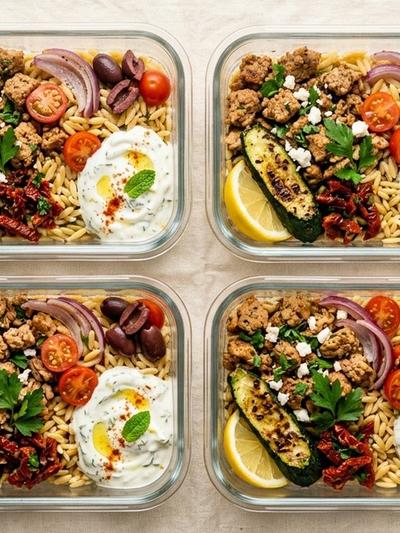
Each serving of these Mediterranean turkey and artichoke bulgur bowls packs 33 grams of protein and 8 grams of fiber for roughly 395 calories — a ratio that supports satiety on a smaller portion. The lean ground turkey provides the bulk of protein while bulgur wheat contributes an additional 3 grams per serving plus slow-digesting complex carbohydrates. Artichoke hearts bring a surprising 2 grams of protein alongside their considerable fiber content, making them one of the most nutrient-dense vegetables you can add to a meal prep bowl.
The flavors here are distinctly Levantine — warm cumin and coriander season the turkey, while bright lemon juice and fresh herbs tie everything together. Artichoke hearts add a subtle, earthy sweetness that pairs naturally with the nutty chew of bulgur, and a scattering of briny kalamata olives provides pops of salt against the mild grain base. A crumble of feta over the top rounds things out with a creamy tang that makes each reheated bowl taste freshly assembled.
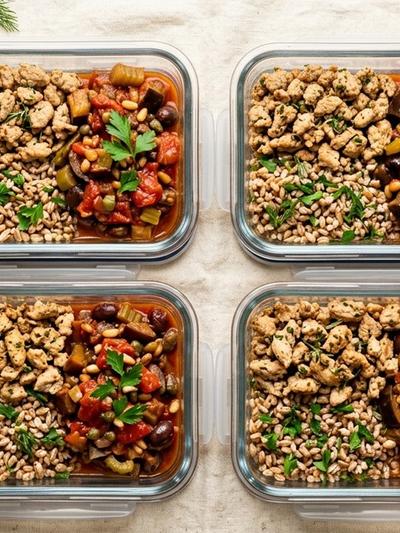
This is a practical weekday lunch system designed specifically for smaller appetites. The portions are compact yet nutritionally dense, so you get substantial protein without having to push through a large volume of food. The bowl components hold well in the fridge for four to five days, and the flavors actually improve overnight as the lemon-herb dressing soaks into the bulgur.
Why This Works on GLP-1
At 33 grams of protein per serving, these bowls provide a meaningful dose of the nutrient most critical for preserving lean muscle during weight loss. Research consistently shows that people on GLP-1 medications like Mounjaro can lose both fat and muscle, and adequate protein intake at each meal is the primary dietary strategy for minimizing that muscle loss. The combination of animal protein from turkey and plant protein from bulgur and artichokes creates a complete amino acid profile that supports muscle protein synthesis throughout the afternoon.
The 8 grams of fiber per serving come from gentle, soluble sources — bulgur wheat and artichoke hearts — rather than the harsh insoluble fibers that can aggravate the slower gastric emptying common on GLP-1 medications. This means you get the blood sugar-stabilizing benefits of fiber without the bloating or discomfort that raw cruciferous vegetables or bran-heavy foods sometimes cause.
The moderate fat content of 16 grams per serving keeps the bowl satisfying without overtaxing digestion. Most of that fat comes from heart-healthy sources — olive oil and olives — which provide anti-inflammatory monounsaturated fatty acids. The overall calorie density of around 395 per serving sits in the sweet spot for a GLP-1 lunch: enough to fuel your afternoon, compact enough to finish comfortably.
Ingredients (serves 4)
For the seasoned turkey:
- 1¼ lb (565g) lean ground turkey (93% lean)
- 1 tablespoon olive oil
- 3 cloves garlic, minced
- 1 teaspoon ground cumin
- 1 teaspoon ground coriander
- ½ teaspoon smoked paprika
- ½ teaspoon salt
- ¼ teaspoon black pepper
For the bulgur base:
- ¾ cup (135g) dry bulgur wheat (medium grind)
- 1½ cups (360ml) low-sodium chicken broth
- 1 can (14 oz / 400g) artichoke hearts in water, drained and quartered
- 1 cup (150g) cherry tomatoes, halved
- ½ small red onion, finely diced (about ⅓ cup / 50g)
- 16 kalamata olives, halved
- 2 cups (60g) baby spinach
For the lemon-herb dressing:
- 3 tablespoons fresh lemon juice (about 1 large lemon)
- 1 tablespoon olive oil
- 2 tablespoons chopped fresh flat-leaf parsley
- 1 tablespoon chopped fresh mint
- 1 teaspoon dried oregano
- Pinch of salt
For topping:
- 3 oz (85g) crumbled feta cheese
- Fresh mint leaves (optional)
Instructions
Cook the bulgur:
Bring the chicken broth to a boil in a medium saucepan. Add the bulgur, stir once, then cover and remove from heat. Let the bulgur steam undisturbed for 12 to 15 minutes until all the liquid is absorbed and the grains are tender but still slightly chewy. Fluff with a fork and set aside to cool slightly. Using broth instead of water adds flavor depth without any extra effort.
While the bulgur steams, make the lemon-herb dressing by whisking together the lemon juice, olive oil, parsley, mint, oregano, and salt in a small bowl. Set aside — the flavors will meld while you cook the turkey.
Cook the seasoned turkey:
Heat the olive oil in a large nonstick skillet over medium-high heat. Add the diced red onion and cook for 2 minutes until slightly softened, stirring occasionally.
Add the ground turkey, breaking it into small crumbles with a wooden spoon. Sprinkle the cumin, coriander, smoked paprika, salt, and pepper over the turkey as it cooks. Continue cooking for 6 to 7 minutes, stirring frequently, until the turkey is cooked through and lightly browned with no pink remaining. The small crumble size is intentional — it distributes protein evenly across each bowl and reheats more consistently than large chunks.
Add the minced garlic and cook for 30 seconds until fragrant, then remove the skillet from heat.
Assemble the bowls:
Add the quartered artichoke hearts, halved cherry tomatoes, olives, and baby spinach to the cooked bulgur. The residual heat from the bulgur will gently wilt the spinach without cooking it completely, preserving its color and nutrients.
Pour the lemon-herb dressing over the bulgur mixture and toss gently to coat everything evenly.
Divide the dressed bulgur and vegetable mixture evenly among four meal prep containers. Top each bowl with one-quarter of the seasoned turkey crumbles and a scant ounce of crumbled feta.
Let the bowls cool to room temperature (about 20 minutes) before sealing the lids. Cooling before sealing prevents condensation from making the bulgur soggy during storage. Refrigerate immediately.
To reheat:
- Microwave each bowl for 90 seconds to 2 minutes with the lid slightly cracked to vent steam. Alternatively, eat the bowls cold — the lemon dressing keeps everything bright and the bulgur softens further overnight, making a satisfying cold grain salad.
Nutrition per Serving
| Nutrient | Amount (approx.) |
|---|---|
| Calories | ~395 kcal |
| Protein | ~33g |
| Fat | ~16g |
| Carbohydrates | ~30g |
| Fiber | ~8g |
Estimates based on 93% lean ground turkey, medium-grind bulgur wheat, canned artichoke hearts in water, and standard feta cheese. Actual values vary by brand.
Practical Notes
Meal prep storage. These bowls keep well in airtight containers in the refrigerator for up to 5 days. The acidity of the lemon dressing acts as a natural preservative and keeps the vegetables tasting fresh. If you prefer, store the dressing separately and add it just before eating for maximum brightness.
Ground turkey selection matters. Use 93% lean ground turkey for the best balance of flavor and leanness. The 99% extra-lean variety dries out quickly during reheating and loses its appeal by day three. The small amount of additional fat in 93% lean keeps the meat moist through multiple reheats — a critical consideration for meal prep.
Adapting portions for smaller appetites. If you are early in your Wegovy or Zepbound treatment and finding that full portions feel like too much, divide this recipe into 6 smaller servings instead of 4. You will still get approximately 22 grams of protein per serving, which remains meaningful for muscle preservation. Eat what is comfortable and refrigerate or freeze the rest.
Bulgur substitutions. If bulgur is unavailable, farro or freekeh are excellent whole-grain swaps with similar texture and fiber content. For a lower-carb version, substitute riced cauliflower — steam it separately and toss with the dressing. This drops the carbohydrates to roughly 14 grams per serving while keeping the protein nearly identical.
Freezing for longer storage. These bowls freeze well for up to 2 months. Omit the fresh spinach and cherry tomatoes from bowls intended for the freezer, as both become watery when thawed. Instead, add a handful of fresh spinach and a few tomato halves when you reheat. Thaw overnight in the refrigerator and microwave for 2 to 3 minutes.
Frequently Asked Questions
Can I eat these bowls cold if microwaving triggers nausea on GLP-1?
Can I substitute chicken for the turkey?
How should I reheat these to avoid dry, rubbery turkey?
What if I can only manage a few bites during early GLP-1 treatment?
Why use canned artichoke hearts instead of fresh or frozen?
This article provides general food and nutrition guidance only. It does not constitute medical advice. Always consult your healthcare provider regarding your GLP-1 medication and individual nutritional needs.