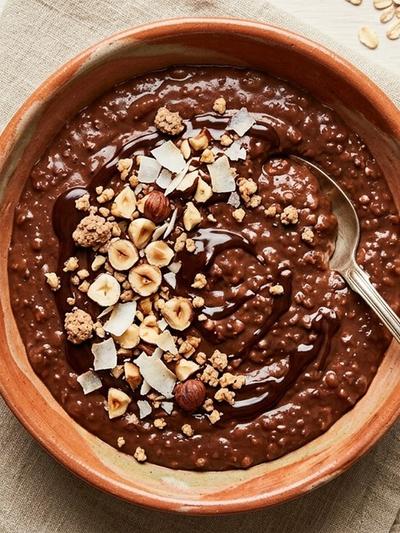
This chocolate mousse delivers 31 grams of plant-based protein per serving while keeping calories under 360 — numbers that are difficult to achieve in a conventional dessert. Silken tofu forms the protein-rich base, contributing roughly 24 grams of protein per block, while cocoa powder adds both depth of flavor and a surprising amount of dietary fiber. A scoop and a half of plant-based protein powder rounds out the macros without altering the texture.
The flavor profile draws directly from Mexican hot chocolate tradition: real dark chocolate melted with ground cinnamon, a full teaspoon of ancho chile powder, and a whisper of cayenne. Ancho chile brings smoky, raisin-like warmth rather than heat, while the cinnamon amplifies the chocolate's natural sweetness. The result tastes deeply, almost decadently chocolatey — closer to a Parisian mousse au chocolat than a "protein dessert."
Everything cooks in a single saucepan in about ten minutes of active time. You chill the mousse for at least an hour before serving, which makes it an ideal make-ahead dessert for GLP-1 users who want something ready when a sweet craving hits. The small portions — roughly half a cup each — are rich enough to feel indulgent without overwhelming a reduced appetite.
Why This Works on GLP-1
With 31 grams of protein per serving, this mousse does more work than most desserts. Adequate protein intake is critical during GLP-1-assisted weight loss because the body can lose lean muscle mass alongside fat if protein falls below recommended thresholds. People taking Mounjaro or other GLP-1 medications often struggle to hit protein targets when appetite is significantly suppressed — a high-protein dessert that actually tastes like a treat helps close that gap at the end of the day.
The silken tofu base is gentle on digestion, which matters when gastric emptying is slowed by medication. Unlike heavy cream or egg-based custards, tofu-based mousses sit lighter in the stomach while still delivering a satisfying, creamy texture. The cocoa powder contributes about 5 grams of fiber across both servings, supporting the regularity that GLP-1 medications can sometimes disrupt.
Dark chocolate provides flavanols and magnesium — a mineral that many people on calorie-restricted diets fall short on. The ancho chile powder contains capsaicin in trace amounts, which some research associates with mild thermogenic effects. Neither of these makes or breaks the recipe nutritionally, but they are worthwhile additions that cost nothing in terms of excess calories.
Ingredients (serves 2)
For the mousse:
- 1 block (12.3 oz / 349g) silken tofu, firm or extra-firm
- 1.5 scoops (45g) plant-based vanilla or chocolate protein powder
- 3 tablespoons (16g) unsweetened cocoa powder
- 1 oz (28g) dark chocolate (70% cacao or higher), finely chopped
- 3 tablespoons (45ml) unsweetened almond milk or oat milk
- 1.5 tablespoons (22ml) pure maple syrup
- 1 teaspoon ancho chile powder
- 1 teaspoon ground cinnamon
- 1 teaspoon pure vanilla extract
- ⅛ teaspoon cayenne pepper (optional — omit for zero heat)
- ¼ teaspoon fine sea salt
For the topping:
- 1 tablespoon (8g) raw pepitas (pumpkin seeds)
- Pinch of flaky sea salt
- Pinch of ground cinnamon
Instructions
Toast the pepitas (same saucepan you will use for the mousse):
- Place the pepitas in a medium saucepan over medium heat. Shake the pan occasionally for 1–2 minutes until the seeds puff slightly, turn golden, and smell nutty. Transfer them to a small bowl and set aside — you will use these as garnish.
Melt the chocolate base:
Reduce the heat to low. Add the chopped dark chocolate and almond milk to the same saucepan. Stir gently with a silicone spatula for 1–2 minutes until the chocolate is fully melted and the mixture is smooth.
Add the cocoa powder, ancho chile powder, cinnamon, cayenne (if using), and salt. Stir continuously for about 30 seconds until the spices bloom in the warm chocolate — you will smell the ancho and cinnamon become fragrant.
Stir in the maple syrup and vanilla extract until evenly combined.
Blend and thicken the mousse:
Crumble the silken tofu directly into the saucepan in rough chunks. Using an immersion blender, blend the mixture in the pot until completely smooth and uniform, about 30–45 seconds. Scrape down the sides as needed. If you do not have an immersion blender, blend the tofu alone in a countertop blender until liquefied, then pour it into the saucepan and whisk to combine.
Sprinkle the protein powder over the surface in three additions, whisking after each one to prevent clumps. Continue stirring over low heat for 3–4 minutes until the mousse thickens noticeably and coats the back of a spoon. Do not let it boil — the low temperature keeps the texture silky.
Chill and serve:
Divide the mousse evenly between two ramekins, small bowls, or glasses. Smooth the tops with the back of a spoon. Press a small piece of plastic wrap directly onto the surface of each portion to prevent a skin from forming, or leave uncovered if you prefer a slightly firmer top layer.
Refrigerate for at least 1 hour, or up to 24 hours for the best texture. The mousse firms as it chills but remains creamy and scoopable.
Just before serving, top each portion with half the toasted pepitas, a pinch of flaky sea salt, and a dusting of cinnamon.
Nutrition per Serving
| Nutrient | Amount (approx.) |
|---|---|
| Calories | ~358 kcal |
| Protein | ~31g |
| Fat | ~16g |
| Carbohydrates | ~26g |
| Fiber | ~6g |
Estimates based on Mori-Nu firm silken tofu, Hershey's unsweetened cocoa powder, Lindt 70% dark chocolate, and a typical plant-based protein powder averaging 20g protein per 30g scoop.
Practical Notes
Make it the night before. This mousse tastes best after chilling for 8–12 hours. The flavors meld, the ancho warmth deepens, and the texture becomes dense and truffle-like. Prepare it after dinner, refrigerate overnight, and it is ready as a next-day dessert or afternoon snack.
Protein powder matters. Use a plant-based powder that dissolves well in liquid — pea protein isolate or a pea-rice blend works best here. Whey protein will also work if you are not strictly plant-based, and it tends to create an even creamier texture. Avoid powders with large granules or gritty textures, which will not blend smooth.
Adjust the heat to your tolerance. The ancho chile powder adds smokiness with very mild warmth. The optional cayenne provides the actual tingle. For Wegovy users who experience heightened taste sensitivity, start with the ancho alone and skip the cayenne entirely — you can always stir in a tiny pinch later if you want more kick.
Swap the topping for variety. Cacao nibs, toasted coconut flakes, a drizzle of almond butter, or a few fresh raspberries all work in place of pepitas. Each option changes the texture without affecting the macros significantly. Freeze-dried strawberries add a tart contrast that pairs well with the smoky chocolate.
Freeze for a mousse-ice-cream hybrid. Transfer the mousse to a freezer-safe container and freeze for 2–3 hours. The result is a dense, fudgy frozen dessert similar to chocolate gelato. Let it sit at room temperature for 5 minutes before scooping — the texture softens quickly and stays scoopable.
Frequently Asked Questions
I am in the first month of GLP-1 treatment and struggling with nausea — can I eat this mousse?
Can I use regular firm tofu instead of silken tofu?
How long does this mousse keep in the refrigerator?
What if I only want a very small portion — does this scale to 4 servings?
The mousse tastes bitter — what went wrong?
This article provides general food and nutrition guidance only. It does not constitute medical advice. Always consult your healthcare provider regarding your GLP-1 medication and individual nutritional needs.