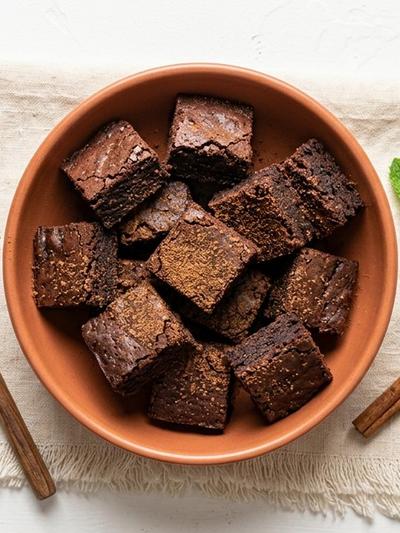
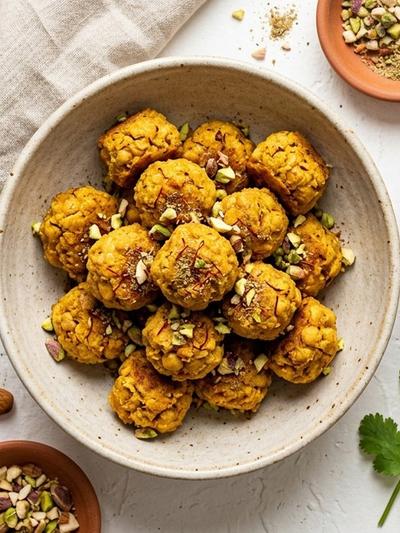
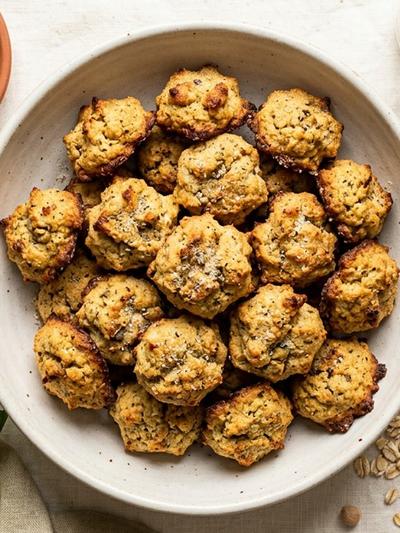
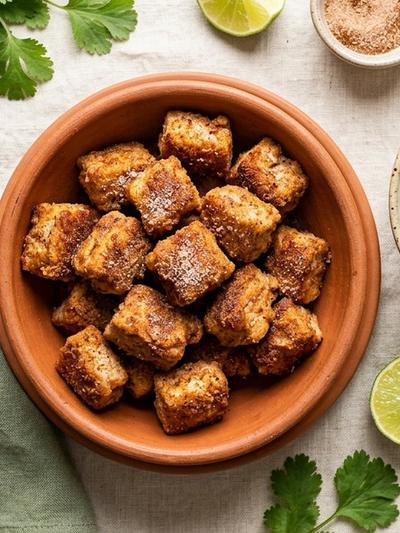
Each serving of these café de olla chickpea bites packs 27 grams of complete plant-based protein from a trio of chickpeas, extra-firm tofu, and vanilla protein powder — all for about 360 calories. The combination also delivers 6 grams of fiber per serving, primarily from the chickpeas, supporting steady blood sugar alongside the protein hit. A quick roll in a warm piloncillo-cinnamon coating finishes each bite with the deep, caramelized sweetness that makes café de olla one of Mexico's most beloved flavor traditions.
Café de olla — literally "pot coffee" — is Mexico's traditional clay-pot-brewed coffee, sweetened with piloncillo and scented with cinnamon and a whisper of star anise. These bites capture that exact aromatic combination: instant espresso provides a deep, slightly bitter backbone that prevents the sweetness from becoming one-dimensional, ground Mexican cinnamon brings persistent warmth, and a pinch of anise seed adds the floral note that separates café de olla from ordinary cinnamon coffee. The result is a dense, fudgy bite that tastes far more indulgent than its macro profile suggests.
For people on GLP-1 medications who naturally eat smaller dessert portions, these bites are designed to satisfy in just three or four pieces. The high protein density means even half a serving contributes meaningfully to daily intake targets, while the moderate sweetness and low fat content avoid the nausea triggers that greasy or sugar-heavy desserts can cause when gastric emptying is already slowed. Air frying keeps the exterior golden and lightly crisp without any deep-frying greasiness.
Why This Works on GLP-1
At 27 grams of protein per serving, these bites deliver more than most traditional desserts and rival what you'd get from a palm-sized portion of grilled chicken. For people taking Wegovy or other GLP-1 receptor agonists, preserving lean muscle mass during weight loss is one of the most important dietary priorities, and consistent protein intake across meals and snacks is the most effective strategy to support it. The chickpea-tofu-protein powder combination provides all essential amino acids in complementary ratios — chickpeas are rich in lysine while lower in methionine, and the tofu and protein powder fill the gap — making this a genuinely complete protein source despite being entirely plant-based.
The 6 grams of fiber per serving come primarily from the chickpeas, promoting prolonged satiety and supporting healthy digestion without the bloating that very high-fiber raw foods can cause when gastric motility is already slowed by medication. Processing the chickpeas into a smooth dough breaks down the cell walls, which actually makes the fiber gentler on the stomach compared to eating whole chickpeas. This matters particularly for Mounjaro users in their first months of treatment, when digestive adaptation is still ongoing.
The espresso component provides roughly 40 milligrams of caffeine per serving — about a third of a standard cup of coffee — which some GLP-1 users find helpful for the mild fatigue that occasionally accompanies early dose titration. Piloncillo, Mexico's unrefined whole cane sugar, retains trace minerals including iron, calcium, and potassium that white sugar lacks, and its complex molasses-like flavor means a small amount creates more perceived sweetness than an equal quantity of refined sugar. Less added sugar for the same dessert satisfaction is a practical win when managing caloric intake.
Ingredients (serves 2)
For the protein bites:
- 1 can (15 oz / 425g) chickpeas, drained and rinsed
- 6 oz (170g) extra-firm tofu, patted dry and crumbled
- 1 scoop (30g) vanilla plant-based protein powder
- 2 tbsp (16g) oat flour (or quick oats pulsed fine in the food processor)
- 2 tsp (10g) natural almond butter
- 1 tbsp (12g) grated piloncillo or dark brown sugar
- 1 tbsp instant espresso powder
- 2 tsp hot water
- 1½ tsp ground cinnamon
- 1 tsp pure vanilla extract
- ¼ tsp ground anise seed
- ⅛ tsp fine sea salt
- Avocado oil cooking spray
For the cinnamon-piloncillo coating:
- 2 tsp (8g) grated piloncillo or coconut sugar
- ½ tsp ground cinnamon
- Pinch of ground anise
Instructions
Prepare the dough:
Dissolve the espresso powder in 2 teaspoons of hot water and set aside to cool slightly — this concentrated shot delivers more café de olla flavor than brewed coffee without adding excess moisture that would make the bites fall apart.
Pat the drained chickpeas dry with a clean kitchen towel or paper towels, spreading them in a single layer and pressing gently. Removing surface moisture is the key to achieving a crisp exterior in the air fryer instead of a steamed, soft one.
Add the chickpeas to a food processor and pulse 8 to 10 times until broken into coarse crumbs but not yet a paste. You want some texture variation in the final bites.
Add the crumbled tofu, protein powder, oat flour, almond butter, piloncillo, dissolved espresso, cinnamon, vanilla, anise, and salt. Process for 30 to 45 seconds, scraping down the sides once halfway through, until a thick, scoopable dough forms. It should hold together cleanly when pressed between your fingers — if it crumbles, add water one teaspoon at a time.
Shape and air fry:
Using a tablespoon measure or small cookie scoop, portion the dough into 12 equal balls. Roll each between slightly damp palms to smooth the surface — the thin moisture film prevents cracking during cooking and helps the bites hold their round shape.
Preheat your air fryer to 350°F (175°C) for 2 minutes. Line the basket with perforated parchment paper or lightly spray the basket with avocado oil cooking spray.
Arrange the bites in a single layer with about half an inch of space between each one for air circulation. If your air fryer basket is small, work in two batches rather than crowding — overcrowding traps steam and prevents browning. Lightly spray the tops of the bites with cooking spray.
Air fry for 12 to 14 minutes, turning the bites gently with tongs or a fork at the 6-minute mark. They are done when the outside is golden brown and feels firm to a light press, while the center remains slightly soft and fudgy.
Coat and cool:
While the bites cook, stir together the coating piloncillo, cinnamon, and anise in a small shallow bowl or plate.
Transfer the warm bites directly into the coating and roll gently to cover all sides. The residual heat from the air fryer slightly melts the piloncillo granules, helping the coating adhere and form a thin, lightly crunchy shell.
Set the coated bites on a wire rack and let them cool for at least 5 minutes before eating. They firm up significantly as the protein powder sets, reaching their ideal texture — somewhere between a fudgy cookie and a dense truffle — at about room temperature.
Nutrition per Serving
| Nutrient | Amount (approx.) |
|---|---|
| Calories | ~360 kcal |
| Protein | ~27g |
| Fat | ~9g |
| Carbohydrates | ~42g |
| Fiber | ~6g |
Calculated using USDA data for canned chickpeas, extra-firm tofu, and a standard plant-based vanilla protein powder (20g protein per 30g scoop). Actual values will vary by brand of tofu and protein powder.
Practical Notes
Finding and grating piloncillo. Piloncillo is sold in solid cones at Latin grocery stores and in the international aisle of many supermarkets. Grate it on a box grater or microplane — it softens quickly at room temperature, making this easier than it sounds. If unavailable, dark brown sugar is the closest substitute with a similar molasses depth. Avoid white sugar entirely, as it lacks the caramel complexity that defines the café de olla flavor.
Make these ahead for the week. Store the bites in a single layer in an airtight container in the refrigerator for up to 5 days. Eaten cold, they take on a denser, more fudge-like texture that many people prefer. To restore the crisp coating, reheat in the air fryer at 300°F (150°C) for 3 to 4 minutes. They also freeze well for up to 2 months — lay them flat on a sheet pan to freeze individually, then transfer to a freezer bag.
Choosing the right protein powder. A pea-rice blend with a smooth texture works best here — gritty or chalky powders will come through in the final texture. Whey protein also works well if you are not strict about plant-based eating, but avoid casein-heavy blends, which can turn the bites gummy and dense. If your protein powder is unsweetened, add an extra teaspoon of piloncillo to compensate.
GLP-1 portion guidance. If you are in the early weeks of Zepbound or another GLP-1 medication and your appetite is very low, start with just 2 to 3 bites and save the rest in the refrigerator. Even half a serving delivers over 13 grams of protein — more than a whole large egg — making these worthwhile even in very small quantities. Eat slowly and pair with a few sips of water or herbal tea.
Troubleshooting dough consistency. Tofu brands vary significantly in moisture content, which can make the dough too wet or too dry. If it won't hold its shape when rolled, add oat flour one tablespoon at a time until it firms up. If it is too dry and crumbly, add water one teaspoon at a time. You are aiming for a texture similar to thick, slightly sticky cookie dough that holds a ball shape without cracking.
Frequently Asked Questions
Can I eat these bites if I experience nausea on GLP-1 medication?
What can I use instead of tofu if I have a soy allergy?
How should I store and reheat leftovers?
I am in the first month of GLP-1 treatment and can barely eat — is this recipe still useful?
Can I bake these in a regular oven instead of an air fryer?
This article provides general food and nutrition guidance only. It does not constitute medical advice. Always consult your healthcare provider regarding your GLP-1 medication and individual nutritional needs.