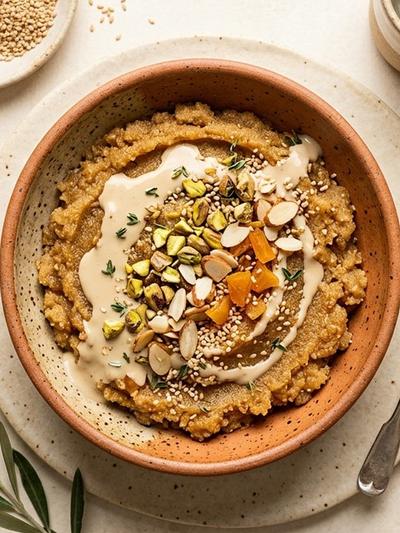
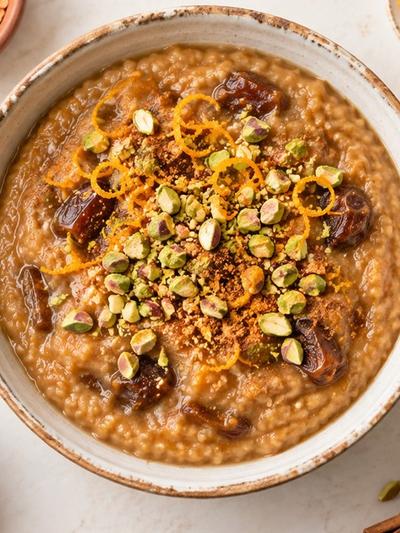
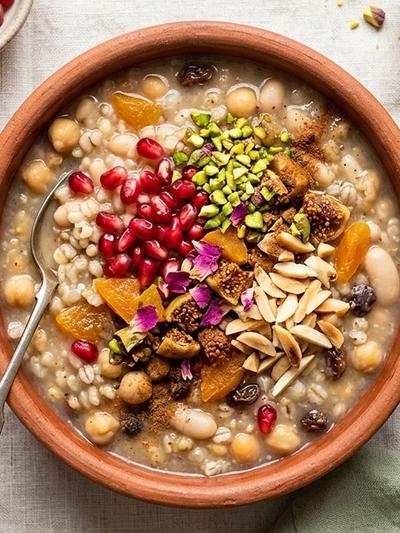
Each serving of this chilled Levantine-style pudding provides 35 grams of protein primarily from silken tofu and vanilla plant protein powder, with an additional boost from crushed pistachios. The combination of complete amino acids from tofu and concentrated pea or rice protein makes this one of the most protein-dense plant-based desserts you can prepare in a single saucepan. At just 355 calories per portion, it fits comfortably within a calorie-conscious meal plan while delivering meaningful satiety.
The flavor here draws from mahalabia, the beloved Levantine milk pudding found across Turkey, Lebanon, and the wider Eastern Mediterranean. Orange blossom water provides a fragrant, floral sweetness that reads unmistakably as dessert without heavy sugar, while a pinch of cinnamon adds quiet warmth beneath the surface. Crushed pistachios on top bring color, crunch, and a rich nuttiness that rounds everything out. The texture is smooth and mousse-like — dense enough to feel indulgent but light enough to sit comfortably.
This is a dessert built for smaller appetites. Because GLP-1 medications reduce the volume most people want to eat, every spoonful here needs to deliver both satisfaction and nutrition. The pudding chills into a firm, spoonable consistency that encourages slow eating, and the high protein content means it genuinely contributes to your daily intake rather than wasting precious appetite on empty calories.
Why This Works on GLP-1
Muscle preservation is one of the most important nutritional priorities during GLP-1-assisted weight loss, and protein intake is the primary lever you have. At 35 grams per serving, this pudding supplies roughly the same protein as a chicken breast — in dessert form. For people on Mounjaro or similar tirzepatide-based medications, appetite suppression can make it difficult to hit daily protein targets through main meals alone. A protein-dense sweet like this fills that gap without requiring you to force down another savory plate when you are already full.
The tofu base is naturally gentle on digestion. Silken tofu blends into a custard-like consistency that requires minimal stomach work to break down, which matters when gastric emptying is already slowed by medication. The chia seeds contribute soluble fiber and omega-3 fatty acids without the bulk or bloating risk of high-fiber grains or raw vegetables.
Orange blossom water and cinnamon both have mild digestive-calming properties recognized in traditional Mediterranean herbalism. The modest carbohydrate content — primarily from honey and cornstarch — provides just enough energy to support the protein without triggering blood sugar spikes. For Zepbound users managing both weight and glycemic control, the balanced macro profile here keeps the dessert functional rather than purely recreational.
Ingredients (serves 2)
For the pudding:
- 1 package (12.3 oz / 350g) firm silken tofu, drained
- 2 scoops (60g) vanilla plant-based protein powder (pea or pea-rice blend)
- 1 cup (240ml) unsweetened almond milk
- 1½ tablespoons (12g) cornstarch
- 1½ tablespoons (30g) honey
- 2 teaspoons (7g) chia seeds
- 1 tablespoon orange blossom water
- 1 teaspoon vanilla extract
- ¼ teaspoon ground cinnamon
- Pinch of fine sea salt
- Zest of 1 small orange
For the topping:
- 2 tablespoons (16g) shelled pistachios, roughly crushed
- Pomegranate seeds, for garnish (optional)
Instructions
Blend the pudding base:
- Drain the silken tofu and break it into rough chunks directly into a blender or the cup of an immersion blender. Add the almond milk, protein powder, cornstarch, honey, chia seeds, orange blossom water, vanilla extract, cinnamon, and salt. Blend on high for 45 to 60 seconds until the mixture is completely smooth with no visible lumps. Blending before cooking is essential — protein powder clumps badly if you try to whisk it into a hot liquid, and silken tofu needs thorough processing to achieve the right silky consistency.
Cook the pudding:
Pour the blended mixture into a medium saucepan and set it over medium-low heat. Stir constantly with a silicone spatula or wooden spoon, scraping the bottom and sides of the pan. The cornstarch will begin to activate after about 4 minutes and the mixture will thicken noticeably.
Continue cooking and stirring for 8 to 10 minutes total, until the pudding coats the back of the spatula and holds a brief trail when you drag a finger through it. Do not let it boil — sustained high heat can cause the protein powder to develop a grainy texture. If you see bubbles forming at the edges, reduce the heat immediately.
Remove the saucepan from the heat. Stir in the orange zest. Adding the zest off-heat preserves the volatile citrus oils that give it a bright, fresh aroma rather than a cooked-orange flavor.
Chill and set:
Divide the pudding evenly between two bowls, ramekins, or small jars — you will get roughly ¾ cup per serving. Press plastic wrap or silicone lids directly onto the surface of each pudding. This prevents a skin from forming as it cools.
Refrigerate for at least 2 hours, or up to overnight, until fully set and cold throughout. The pudding will firm considerably as the cornstarch and chia seeds finish absorbing moisture.
Finish and serve:
- Remove the plastic wrap. Scatter crushed pistachios evenly over each serving and add a few pomegranate seeds if using. Serve cold.
Nutrition per Serving
| Nutrient | Amount (approx.) |
|---|---|
| Calories | ~355 kcal |
| Protein | ~35g |
| Fat | ~13g |
| Carbohydrates | ~28g |
| Fiber | ~4g |
Estimates based on firm silken tofu, a standard pea-rice protein powder averaging 21g protein per 30g scoop, unsweetened almond milk, and raw shelled pistachios. Actual values vary with specific brands.
Practical Notes
This pudding keeps well for meal prep. Covered tightly, it holds its texture in the refrigerator for up to 3 days. Add the pistachio topping just before eating so it stays crunchy. If you want to make a larger batch for the week, double the recipe using the same saucepan — just allow an extra 2 to 3 minutes of cooking time for the thicker volume to heat evenly.
Choose your protein powder carefully. Pea protein and pea-rice blends work best here because they thicken smoothly when heated and have a neutral enough flavor to complement the orange blossom. Avoid hemp protein, which can taste grassy, and soy protein isolate, which sometimes develops a chalky texture when cooked. If your protein powder is unsweetened, increase the honey to 2 tablespoons.
Split into smaller portions if your appetite is very low. Dividing this recipe into 3 or 4 smaller servings gives you 18 to 24 grams of protein per portion at roughly 180 to 240 calories — still substantial for a dessert, and easier to finish when medication suppresses hunger. The pudding is dense enough that even a few spoonfuls feel satisfying.
Orange blossom water varies in strength between brands. Start with 1 tablespoon and taste the blended mixture before cooking. Lebanese and Turkish brands (Cortas, Al Wadi) tend to be potent — you may want only 2 teaspoons. If you cannot find orange blossom water, substitute rose water at half the quantity, or use 1 teaspoon of pure orange extract. Both are available at Middle Eastern grocery stores or online.
The active cooking time is only 20 minutes. Plan the 2-hour chill into your schedule — this pudding works best made in the morning for an evening dessert, or the night before for next-day portions. The consistency improves with time; overnight chilling gives the firmest, most scoopable result.
Frequently Asked Questions
Will this pudding upset my stomach if I'm in my first weeks on GLP-1 medication?
Can I make this with regular (non-silken) tofu?
How should I store leftovers, and can I freeze this pudding?
What if I can only eat a few bites at a time right now?
Why does the pudding need constant stirring while cooking?
This article provides general food and nutrition guidance only. It does not constitute medical advice. Always consult your healthcare provider regarding your GLP-1 medication and individual nutritional needs.