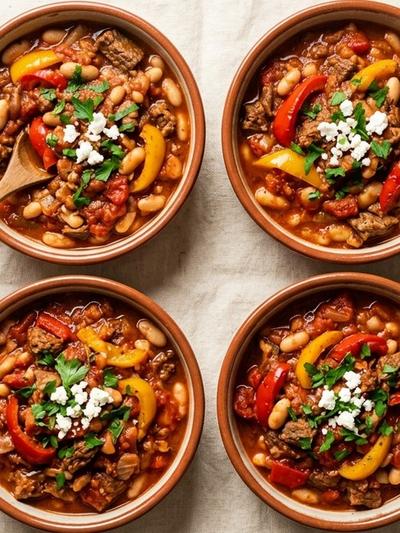
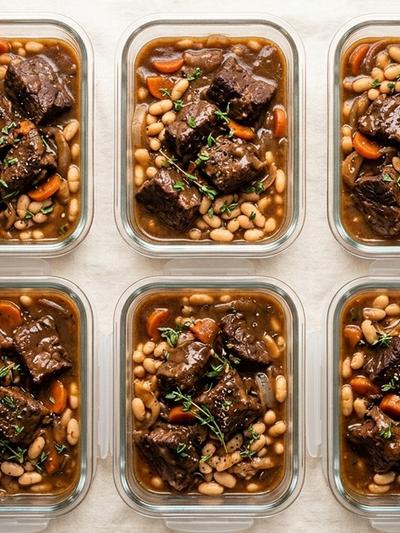
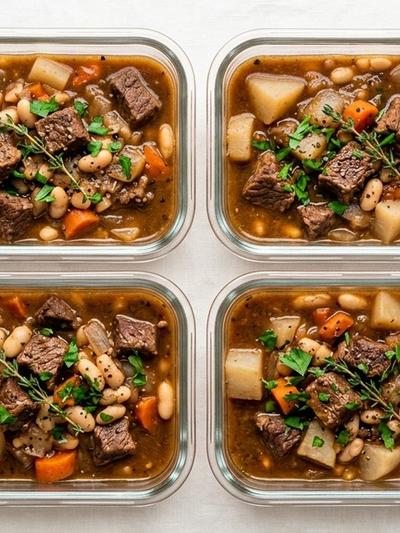
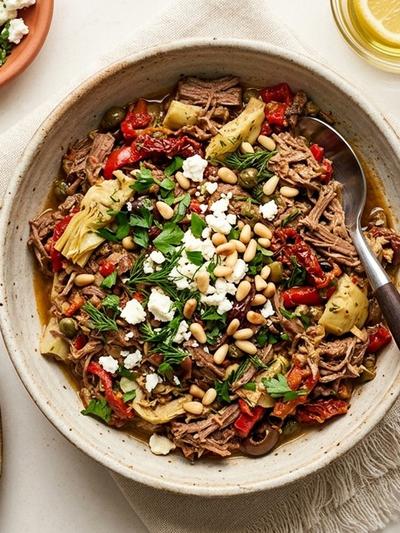
Each serving of these Spanish-style beef albondigas delivers 36 grams of protein and just 395 calories, making them one of the most efficient protein-to-calorie dinners you can batch-cook. The meatballs get their flavor from smoked paprika and cumin rather than added fat, while the saffron-tomato broth provides a light but deeply savory base. Chickpeas contribute both fiber and plant protein, and a handful of baby spinach wilted into the broth at the end rounds out the micronutrient profile with iron, folate, and vitamin K.
The flavor here is unmistakably Spanish. Saffron gives the tomato broth a warm, honeyed depth that you cannot replicate with turmeric alone, while two layers of smoked paprika — in both the meatballs and the broth — build a gently smoky backbone. Diced roasted red pepper adds sweetness, and a squeeze of lemon juice at the end lifts everything without sharpness. The texture contrast between tender meatballs, creamy chickpeas, and silky wilted spinach keeps each spoonful interesting.
This recipe is designed around the reality of eating on GLP-1 medications. The broth format means you can eat a smaller portion and still feel satisfied — warm liquid fills the stomach gently without the density of a casserole or grain bowl. Reheating is effortless, and the flavors actually improve after a day in the fridge as the saffron and paprika continue to bloom.
Why This Works on GLP-1
With 36 grams of protein per serving, these albondigas directly address one of the most critical nutritional concerns during GLP-1-assisted weight loss: preserving lean muscle mass. Research consistently shows that higher protein intake — at least 1.2 grams per kilogram of body weight daily — helps protect muscle tissue when overall calorie intake drops significantly. For someone on Mounjaro whose appetite has naturally decreased by 30 to 40 percent, a single serving of this dinner covers roughly half of that daily target. The protein comes primarily from lean ground beef, with meaningful contributions from the egg binder and chickpeas.
The chickpeas provide 5 grams of fiber per serving alongside their protein, supporting the slower digestion that GLP-1 medications already promote. Because the fiber comes in a cooked, soft form within a broth, it is far less likely to cause the bloating or gas that raw high-fiber foods sometimes trigger for GLP-1 users. The spinach adds iron and folate without any digestive burden.
Saffron is more than a flavor ingredient here. Small studies have suggested that saffron extract may support satiety signaling, which could complement the appetite regulation that medications like Wegovy already provide. At the very least, the warmth and complexity that saffron adds to this broth means you will not feel like you are eating a "diet" dinner — and psychological satisfaction matters when your portions are naturally smaller.
Ingredients (serves 4)
For the albondigas (meatballs):
- 1 1/4 pounds (570g) 93% lean ground beef
- 1/4 cup (28g) whole wheat panko breadcrumbs
- 1 large egg
- 3 cloves garlic, minced
- 2 tablespoons fresh flat-leaf parsley, finely chopped
- 1 1/2 teaspoons smoked paprika (pimentón)
- 1/2 teaspoon ground cumin
- 1/2 teaspoon fine sea salt
- 1/4 teaspoon black pepper
For the saffron-tomato broth:
- 2 teaspoons extra-virgin olive oil
- 1 medium yellow onion, finely diced
- 2 cloves garlic, minced
- 1 can (14 oz / 400g) crushed tomatoes
- 1 cup (240ml) low-sodium chicken broth
- 1/4 teaspoon saffron threads, crumbled between your fingers
- 1 teaspoon smoked paprika
- 1 cup (160g) canned chickpeas, drained and rinsed
- 1 roasted red pepper (from jar, about 70g), diced
- 3 cups (90g) baby spinach
- 1 tablespoon fresh lemon juice
- 2 tablespoons fresh parsley, chopped, for garnish
Instructions
Make the albondigas:
Combine the ground beef, breadcrumbs, egg, garlic, parsley, smoked paprika, cumin, salt, and pepper in a large bowl. Mix with your hands just until everything is evenly distributed — overmixing compacts the protein fibers and produces tough, rubbery meatballs. You want to stop the moment you no longer see dry breadcrumb pockets.
Scoop the mixture into roughly 20 meatballs, about 1 1/2 tablespoons each. Rolling them between damp palms produces a smoother surface that browns more evenly. Set them on a plate or sheet pan as you go.
Heat 1 teaspoon of the olive oil in a large, deep skillet or Dutch oven over medium-high heat. Brown the meatballs in two batches, turning them every 90 seconds or so, until they develop a golden crust on at least two sides — about 4 minutes per batch. They do not need to cook through at this stage since they will finish in the broth. Transfer to a clean plate.
Build the saffron-tomato broth:
Reduce the heat to medium and add the remaining teaspoon of olive oil. Sauté the diced onion for 4 to 5 minutes until softened and translucent. Add the garlic and cook for 30 seconds, stirring constantly to prevent burning.
Pour in the crushed tomatoes and chicken broth. Add the crumbled saffron threads, smoked paprika, and diced roasted red pepper. Stir well, scraping up any browned bits from the bottom of the pan — those are concentrated flavor.
Bring the broth to a gentle simmer. Nestle the browned meatballs back into the liquid in a single layer. They should be partially submerged. Cover and simmer for 15 minutes, until the meatballs are cooked through and the flavors have melded.
Finish and prep for the week:
Uncover the skillet. Add the drained chickpeas and stir gently around the meatballs. Simmer uncovered for 3 minutes to warm the chickpeas through and let the broth reduce slightly.
Add the baby spinach in handfuls, stirring until each addition wilts before adding the next — this takes about 2 minutes total. Finish with the lemon juice and taste for seasoning, adjusting salt as needed.
Let the entire skillet cool to room temperature before portioning. Divide evenly among 4 airtight containers, making sure each portion gets 5 meatballs, a generous scoop of chickpeas, and plenty of broth. Garnish with fresh parsley just before eating.
Nutrition per Serving
| Nutrient | Amount (approx.) |
|---|---|
| Calories | ~395 kcal |
| Protein | ~36g |
| Fat | ~16g |
| Carbohydrates | ~24g |
| Fiber | ~5g |
Estimates based on 93% lean ground beef, canned chickpeas, and standard canned tomato values. Actual amounts may vary depending on specific brands and how much broth reduces during cooking.
Practical Notes
Meal prep storage and timing. These albondigas keep in the refrigerator for up to 5 days and actually taste better on day two once the saffron and paprika have had time to deepen. Store in glass or BPA-free containers with the broth covering the meatballs to prevent them from drying out. Reheat individual portions in the microwave for 2 to 3 minutes, stirring halfway through.
Saffron on a budget. Genuine saffron is expensive, but you need very little — 1/4 teaspoon serves four people. If you cannot find or afford saffron, use 1/4 teaspoon of turmeric plus a tiny pinch of sweet paprika as a visual and flavor stand-in. The result will be different but still good. Avoid "saffron powder" sold cheaply in bulk, which is almost always turmeric in disguise.
Boost the protein further. If you need more protein per serving — common during the muscle-preservation phase of GLP-1 treatment — stir a tablespoon of tomato paste into the broth and serve each portion alongside 1/4 cup of low-fat cottage cheese. This adds roughly 7 grams of protein per serving without changing the Spanish character of the dish.
Portion guidance for smaller appetites. If your appetite is significantly reduced, divide the recipe into 6 portions instead of 4. Each smaller serving still provides about 24 grams of protein and 263 calories — a meaningful contribution to your daily intake without the pressure of finishing a large bowl. You will get an extra day or two of meals from the same batch.
Freezer-friendly for long-term prep. The meatballs and broth freeze well for up to 3 months. Freeze in individual portions, leaving 1/2 inch of headspace for expansion. Thaw overnight in the refrigerator and reheat gently on the stovetop. Add the spinach fresh after thawing rather than freezing it in — frozen spinach in broth turns slimy and loses its color.
Frequently Asked Questions
I just started my GLP-1 medication and can barely eat half a portion. Is that okay?
Can I substitute the beef with ground turkey or chicken?
How should I reheat these so the meatballs do not dry out?
Can I make this in a slow cooker instead of on the stovetop?
Do I need to use whole wheat breadcrumbs, or will regular panko work?
This article provides general food and nutrition guidance only. It does not constitute medical advice. Always consult your healthcare provider regarding your GLP-1 medication and individual nutritional needs.