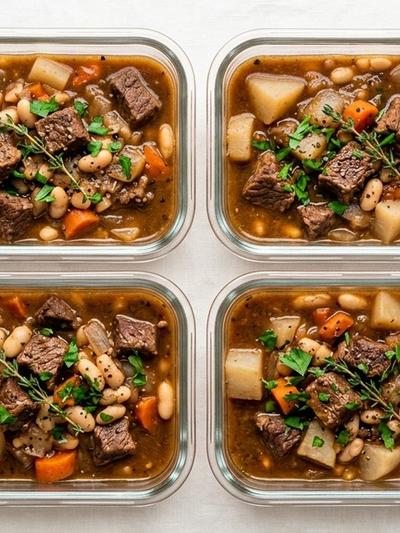
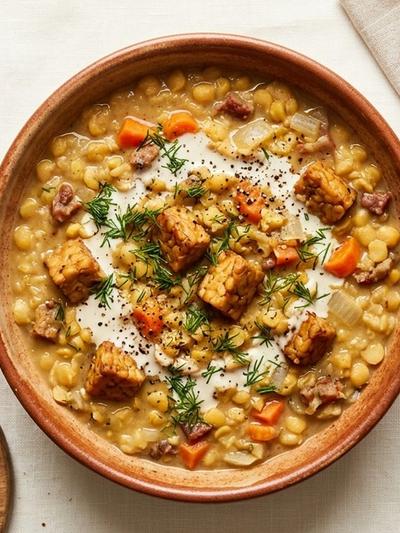
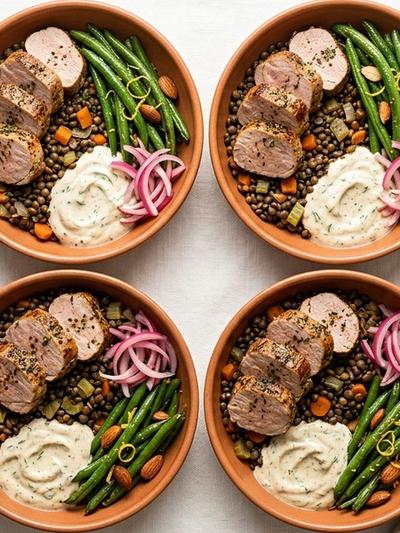
Each serving of this Flemish carbonnade packs 36 grams of protein and just 370 calories, making it one of the most efficient protein-per-calorie dinners you can batch cook. Lean sirloin braised low and slow with onions, dark beer, and cannellini beans creates a complete meal that stores and reheats without losing a thing. The white beans contribute 7 grams of fiber per serving alongside an additional 6 grams of plant protein. This is a full weekly dinner solved in a single afternoon cooking session.
Carbonnade flamande is Belgium's answer to beef bourguignon — deeply savory, sweet from long-cooked onions, and enriched by the malty depth of dark beer rather than wine. The Dijon mustard stirred in at the end adds a sharp counterpoint that lifts every bite. What you get is fall-apart tender beef in a glossy, almost velvety sauce that clings to the beans and makes even a modest portion feel deeply satisfying.
For GLP-1 users, this recipe solves the reheating problem that plagues so many meal prep dishes. Braised beef actually improves overnight as the sauce thickens and flavors meld further. The portions are concentrated — rich enough in protein and flavor that a smaller serving satisfies completely, which matters when your appetite is genuinely reduced.
Why This Works on GLP-1
Muscle preservation is one of the central nutritional challenges during GLP-1-assisted weight loss. Research consistently shows that adults on medications like Mounjaro lose both fat and lean mass, making adequate protein intake essential. At 36 grams per serving, this carbonnade delivers roughly 40 percent of the daily protein target most dietitians recommend for people on GLP-1 therapy. The slow braising breaks down the connective tissue in lean sirloin, making the protein easy to chew and digest — a real advantage when gastric emptying is already slowed by medication.
The 7 grams of fiber per serving come primarily from the cannellini beans and softened vegetables. Because everything is braised until very tender, the fiber is gentle on the digestive system rather than harsh or gas-producing. This is important for Wegovy and Ozempic users who already experience delayed stomach emptying and can be sensitive to raw or crunchy high-fiber foods.
The B-vitamin profile of lean beef — particularly B12 and iron — supports energy levels that can sometimes flag during weight loss. The onions contribute prebiotic fructans that support gut bacteria, and the modest amount of dark beer (most of the alcohol cooks off during the two-hour braise) adds B vitamins from the brewing yeast without meaningful caloric impact.
Ingredients (serves 4)
For the carbonnade:
- 1 lb (450g) lean beef sirloin or top round, cut into 1.5-inch (4cm) chunks
- 2 teaspoons olive oil
- 3 large yellow onions (about 1.25 lb / 570g), halved and thinly sliced
- 2 medium carrots (about 5 oz / 140g), peeled and cut into half-moons
- 2 cloves garlic, minced
- 1 tablespoon tomato paste
- 3/4 cup (180ml) dark Belgian-style beer (such as dubbel or brown ale)
- 1 cup (240ml) low-sodium beef broth
- 1 tablespoon red wine vinegar
- 1 bay leaf
- 4 sprigs fresh thyme (or 1 teaspoon dried thyme)
- 1/4 teaspoon fine sea salt
- 1/4 teaspoon black pepper
For the beans and finish:
- 1 can (15 oz / 425g) cannellini beans, drained and rinsed
- 2 teaspoons Dijon mustard
- 1 tablespoon fresh flat-leaf parsley, chopped (for serving)
Instructions
Brown the beef:
- Pat the beef chunks thoroughly dry with paper towels — surface moisture prevents browning and creates steam instead of a sear. Season all sides with salt and pepper.
- Heat 1 teaspoon of olive oil in a large Dutch oven or heavy-bottomed pot over medium-high heat. Working in two batches to avoid crowding, sear the beef for about 2 minutes per side until deeply browned on at least two faces. Transfer to a plate. The fond (browned bits) left on the pot is essential flavor — do not wipe it out.
Build the base:
- Reduce heat to medium and add the remaining teaspoon of olive oil. Add the sliced onions and a pinch of salt. Cook, stirring occasionally, for 12 to 15 minutes until the onions are soft, golden, and significantly reduced in volume. They will deglaze the pot naturally as they release moisture, pulling up the beef fond.
- Add the carrots and garlic, stirring for 1 minute until fragrant. Push the vegetables to one side and add the tomato paste directly to the exposed pot surface. Let it cook for 30 seconds until it darkens slightly — this caramelization adds depth without extra sugar.
- Pour in the dark beer and scrape the bottom of the pot with a wooden spoon to dissolve any remaining browned bits. Let the beer simmer for 2 minutes to cook off the sharpest alcohol notes.
Braise:
- Return the beef and any accumulated juices to the pot. Add the beef broth, red wine vinegar, bay leaf, and thyme sprigs. The liquid should come about two-thirds of the way up the beef — it does not need to cover it completely, as the onions create their own moisture.
- Bring to a gentle simmer, then cover with a tight-fitting lid. Reduce heat to the lowest possible setting (or transfer to a 300°F / 150°C oven). Braise for 1 hour and 45 minutes, checking once at the halfway point to ensure a gentle bubble. The beef is done when it yields easily to a fork but is not yet falling apart.
Finish with beans and mustard:
- Remove the bay leaf and thyme stems. Gently fold in the drained cannellini beans and the Dijon mustard, stirring to distribute the mustard evenly through the sauce. Cover and cook for an additional 10 minutes on low heat so the beans absorb some of the braising liquid and warm through completely.
- Taste and adjust seasoning — the vinegar and mustard should provide enough acidity, but add another small splash of vinegar if the sauce tastes flat. Scatter chopped parsley over each serving.
Nutrition per Serving
| Nutrient | Amount (approx.) |
|---|---|
| Calories | ~370 kcal |
| Protein | ~36g |
| Fat | ~7g |
| Carbohydrates | ~33g |
| Fiber | ~7g |
Estimates based on lean beef sirloin (trimmed of visible fat), canned cannellini beans, and standard dark beer. Actual values may vary depending on specific cuts and brands used.
Practical Notes
Meal prep storage. Divide the finished carbonnade into four individual airtight containers while still warm. Refrigerate within one hour. The stew keeps for 5 days in the fridge and freezes well for up to 3 months — thaw overnight in the refrigerator before reheating. The sauce actually thickens and improves after a day in the fridge.
Reheating for best results. Microwave individual portions for 2 to 3 minutes, stirring halfway through. Add a tablespoon of water or broth if the sauce has thickened too much. Stovetop reheating over medium-low heat works equally well and takes about 5 minutes. The braised beef stays tender through multiple reheat cycles because the collagen has already broken down.
Beer substitution. If you prefer to cook without alcohol, replace the dark beer with an equal amount of low-sodium beef broth plus 1 tablespoon of Worcestershire sauce and 1 teaspoon of molasses. This mimics the malty sweetness and depth that the beer provides. The alcohol in beer cooks off almost entirely during the long braise, but the non-alcoholic version works well for anyone avoiding it entirely.
Start small if your appetite is low. A full serving is generous — about 1.5 cups. If you are in the early weeks of GLP-1 treatment and eating very small volumes, divide the batch into 6 portions instead of 4. You will still get roughly 24 grams of protein per smaller serving, which is meaningful. The stew is nutrient-dense enough that even a half portion delivers substantial nutrition.
Beef cut options. Top round and sirloin are the leanest choices and work best here. Chuck roast has more marbling and will produce a richer result, but it adds roughly 4 grams of fat per serving. If using chuck, trim all visible fat before cutting into chunks. Avoid pre-cut "stew meat" packages, which often include inconsistent cuts and excessive fat.
Frequently Asked Questions
Will this dish upset my stomach on GLP-1 medication?
Can I make this with a different protein or make it vegetarian?
How should I store and reheat frozen portions?
What if I can only eat very small amounts in my first weeks on GLP-1?
Can I make this in a slow cooker instead of on the stovetop?
This article provides general food and nutrition guidance only. It does not constitute medical advice. Always consult your healthcare provider regarding your GLP-1 medication and individual nutritional needs.