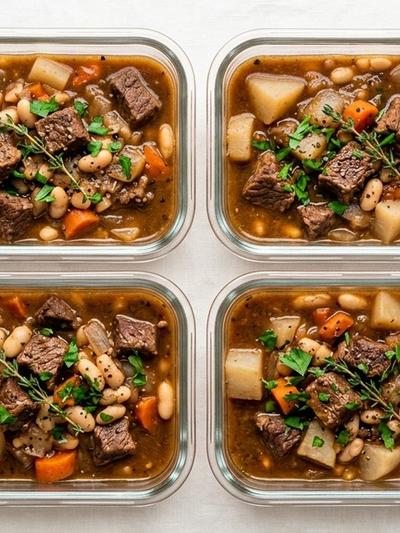
Each serving of this Mediterranean beef and pepper ragù delivers roughly 35 grams of protein and 9 grams of fiber while staying under 400 calories — a nutrient density that makes it one of the most efficient meal prep dinners you can batch-cook in an hour. The cannellini beans add slow-digesting carbohydrates and nearly half the fiber count, while 93% lean ground beef provides the bulk of the protein without excess saturated fat. Iron from the beef and vitamin C from the roasted peppers work in tandem, since vitamin C significantly enhances non-heme iron absorption from the beans.
The flavor here is pure southern Italian comfort — a slow-simmered ragù built on a soffritto of onion, garlic, and fennel, deepened with fire-roasted tomatoes and sweet roasted red peppers. A generous pour of dried oregano and a bay leaf bring herbal backbone, while a splash of red wine vinegar at the end brightens every spoonful. The cannellini beans melt slightly at the edges during cooking, thickening the sauce into something rich and spoonable without any cream or butter.
For GLP-1 users who find their appetite reduced but still need concentrated nutrition, this ragù is ideal. A modest bowl — roughly one cup — packs a full meal's worth of protein and fiber without the heavy, overstuffed feeling that larger portions can trigger. The batch format means you cook once on Sunday and reheat portions through Thursday, removing daily cooking decisions when appetite and energy are unpredictable.
Why This Works on GLP-1
Preserving lean muscle mass is one of the most important nutritional goals during GLP-1-assisted weight loss, and it requires consistent, adequate protein at every meal. This ragù delivers 35 grams per serving, primarily from lean ground beef — a complete protein source containing all essential amino acids plus highly bioavailable iron and B12. For people on Mounjaro or similar GLP-1 medications, hitting 25–40 grams of protein per meal helps counteract the muscle loss that can accompany rapid weight reduction. The cannellini beans add another 7 grams of plant protein, creating a complementary amino acid profile.
The 9 grams of fiber per serving come from a gentle combination of cannellini beans and cooked vegetables — sources that are typically well-tolerated even when gastric emptying is slowed. Unlike raw high-fiber foods that can cause bloating on GLP-1 medications, these fibers are softened through long cooking, making them easier to digest while still supporting gut health and blood sugar stability.
The overall macronutrient balance — moderate protein, moderate carbohydrates from beans and vegetables, and controlled fat from lean beef — supports steady energy without the blood sugar spikes that can worsen nausea. Wegovy users who experience reduced appetite in the evenings will find that even half a portion still provides meaningful nutrition. The lycopene from cooked tomatoes and the polyphenols from red peppers add anti-inflammatory benefits that complement GLP-1 therapy.
Ingredients (serves 4)
For the ragù:
- 1¼ lb (560g) 93% lean ground beef
- 1 can (15 oz / 425g) cannellini beans, drained and rinsed
- 1 can (14.5 oz / 410g) fire-roasted diced tomatoes
- 1 cup (150g) jarred roasted red peppers, drained and diced
- 1 medium yellow onion, finely diced
- ½ medium fennel bulb, cored and finely diced
- 4 cloves garlic, minced
- 2 tsp dried oregano
- 1 tsp sweet paprika
- ½ tsp ground cumin
- 1 bay leaf
- 1 tbsp tomato paste
- 1 tbsp red wine vinegar
- 2 tsp extra-virgin olive oil
- ½ cup (120ml) low-sodium beef broth
- ¼ tsp red pepper flakes (optional)
- Salt and freshly ground black pepper to taste
For serving:
- 2 tbsp crumbled feta cheese per bowl (30g total)
- Fresh parsley or basil, roughly chopped
- Lemon wedges
Instructions
Build the flavor base:
Heat the olive oil in a large Dutch oven or deep skillet over medium heat. Add the diced onion and fennel and cook for 5–6 minutes, stirring occasionally, until softened and beginning to turn translucent. The fennel adds a subtle anise sweetness that mellows completely during cooking.
Add the garlic and cook for 30 seconds until fragrant. Stir in the tomato paste and cook for another minute — this caramelizes the paste slightly and deepens the umami foundation of the ragù.
Brown the beef:
Increase the heat to medium-high and add the ground beef, breaking it into small crumbles with a wooden spoon. Cook for 6–7 minutes until browned and no pink remains. Using 93% lean beef means very little fat renders out, but if you see more than a tablespoon of liquid fat, tilt the pan and blot it with a paper towel.
Season with the oregano, paprika, cumin, red pepper flakes if using, and a generous pinch of salt and pepper. Stir to coat the beef evenly in the spices and cook for 1 minute to bloom the dried herbs.
Simmer the ragù:
Add the fire-roasted tomatoes with their juices, the diced roasted red peppers, beef broth, and bay leaf. Stir everything together and bring to a gentle simmer.
Reduce the heat to medium-low, cover the pot with the lid slightly ajar, and simmer for 20 minutes. The sauce will reduce and thicken as the tomatoes break down. Stir every 7–8 minutes to prevent sticking.
Add the drained cannellini beans, stir gently to incorporate without crushing them, and continue simmering uncovered for another 10 minutes. The beans will absorb flavor from the ragù and their edges will soften slightly, contributing natural starch that thickens the sauce.
Finish and portion:
Remove the bay leaf. Stir in the red wine vinegar — this brightens the entire dish and cuts through the richness of the beef. Taste and adjust salt and pepper.
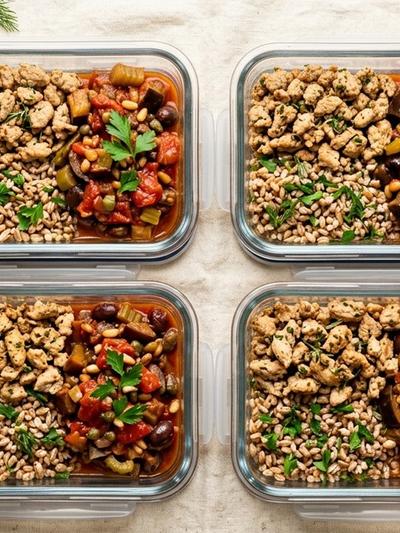
Divide the ragù evenly among four meal prep containers (approximately 1 heaped cup per portion). Top each with a scant tablespoon of crumbled feta and a pinch of fresh parsley. Allow to cool uncovered for 15 minutes before sealing lids.
Nutrition per Serving
| Nutrient | Amount (approx.) |
|---|---|
| Calories | ~385 kcal |
| Protein | ~35g |
| Fat | ~14g |
| Carbohydrates | ~27g |
| Fiber | ~9g |
Estimates based on 93% lean ground beef, canned cannellini beans, fire-roasted diced tomatoes, and 7.5g feta per serving. Actual values may vary by brand.
Practical Notes
Meal prep storage. This ragù keeps well in airtight containers in the refrigerator for up to 5 days. It also freezes beautifully for up to 3 months — freeze in individual portions so you can thaw only what you need. The flavor actually improves on day two as the spices meld further into the sauce.
Reheating for best texture. Reheat on the stovetop over medium-low heat with a splash of water or broth (1–2 tablespoons) to loosen the sauce, which thickens as it cools. Microwave works in a pinch — cover and heat in 90-second intervals, stirring between. Add the feta after reheating so it stays crumbly rather than melting into the sauce.
Serving base options. This ragù is satisfying on its own, but if your appetite allows, serve it over cauliflower rice for a low-carb option (adds roughly 25 calories) or a small portion of cooked orzo or farro (adds roughly 100 calories and 3g protein). For very small appetites, the ragù alone in a bowl with a squeeze of lemon is a complete meal.
Ground beef substitutions. You can swap the beef for 93% lean ground turkey if you prefer, though the iron content will be lower. For a richer flavor with slightly more fat, use 90% lean beef — this adds roughly 3g fat and 25 calories per serving. Avoid fattier grinds, as the excess grease can cause digestive discomfort on GLP-1 medications.
Scaling up for larger batches. This recipe doubles perfectly in a large Dutch oven. Double batches yield 8 portions — keep 4 in the fridge for the current week and freeze the remaining 4. Label containers with the date and "385 cal / 35g protein" so you can grab them without guessing the macros.
Frequently Asked Questions
Will this ragù be too heavy if my GLP-1 medication is suppressing my appetite strongly?
Can I make this dairy-free or swap the feta?
How should I store and reheat frozen portions?
What if I find the portion too small for dinner?
Can I use dried beans instead of canned cannellini beans?
This article provides general food and nutrition guidance only. It does not constitute medical advice. Always consult your healthcare provider regarding your GLP-1 medication and individual nutritional needs.