 By Gerald
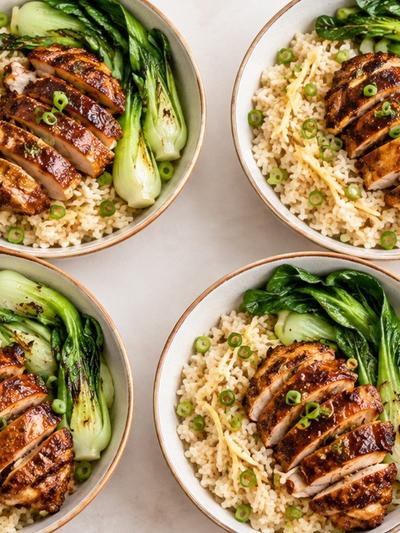
Each serving of these Korean sesame chicken bowls packs 40 grams of protein from lean chicken breast, 8 grams of fiber from sweet potato and broccoli, and just 9 grams of fat — all for under 400 calories. The sweet potato provides a slow-release carbohydrate base rich in beta-carotene, while the broccoli brings sulforaphane and additional fiber. This is a complete, macro-balanced dinner that you build once on Sunday and eat four times during the week.
The flavor draws from a short list of Korean pantry essentials: toasted sesame oil, soy sauce, garlic, and fresh ginger. The honey in the marinade caramelizes against the chicken in a hot skillet, building savory-sweet depth without the sugar load of bottled teriyaki sauces. Quick pickled cucumber adds cold, vinegary crunch that cuts the richness and keeps each reheated bowl tasting fresh rather than like leftovers.
For GLP-1 users, this format works because every component is designed to reheat well — nothing goes soggy or rubbery by Thursday. The portions are nutrient-dense rather than volume-heavy: you get a full day's worth of several micronutrients in a bowl you can finish comfortably even on a low-appetite day. Keeping the sweet potato and broccoli in distinct sections means you can eat the chicken first if your appetite fades halfway through and still hit your protein target.
Why This Works on GLP-1
Forty grams of protein per serving puts these bowls at the high end of what a single meal should deliver during GLP-1-assisted weight loss. Muscle preservation depends on consistent protein intake across the day, and many people on Mounjaro or Ozempic find themselves skipping meals or nibbling crackers because cooking feels like too much effort. Having four ready-to-reheat dinners removes that barrier entirely. The chicken breast is sliced thin before cooking, which both speeds up cook time and makes each piece tender enough to eat without effort — important when GLP-1 medications slow gastric emptying.
The 8 grams of fiber per serving come from two gentle, well-tolerated sources: roasted sweet potato and steamed broccoli. Neither is raw, gas-producing, or hard to break down. Roasting the sweet potato softens its cell walls, and steaming the broccoli until just tender makes it far easier on a slower digestive system than raw florets would be. This combination supports steady blood sugar without the bloating that high-fiber supplements or raw vegetable plates can trigger.
The sesame oil provides healthy unsaturated fats without adding volume, and the low overall fat content (9 grams) means the meal empties from the stomach at a reasonable pace rather than sitting heavy. The pickled cucumber adds digestive-friendly acidity — rice vinegar stimulates gastric juices, which can help when your medication has dampened your natural digestive signals.
Ingredients (serves )
For the sesame chicken:
- 1¼ lb (570g) boneless skinless chicken breast
- 3 tbsp (45ml) low-sodium soy sauce
- 1 tbsp (15ml) toasted sesame oil
- 1 tbsp (21g) honey
- 1 tbsp (15ml) rice vinegar
- 3 cloves garlic, minced
- 1 tbsp (6g) fresh ginger, grated
- cooking spray
For the roasted sweet potato:
- 2 medium sweet potatoes, about 1 lb (480g), peeled and cut into ¾-inch (2cm) cubes
- cooking spray
- ¼ tsp salt
- pinch of black pepper
For the steamed broccoli:
- 3 cups (240g) broccoli florets
- pinch of salt
For the quick pickled cucumber:
- 1 English cucumber, about 10 oz (300g), sliced into thin half-moons
- 3 tbsp (45ml) rice vinegar
- 1 tsp (4g) granulated sugar
- ¼ tsp salt
- pinch of red pepper flakes (optional)
For garnish:
- 4 scallions, thinly sliced
- 4 tsp (12g) toasted sesame seeds
Instructions
Amounts in the method are for 4 servings.
Prepare the marinade and start the sweet potatoes:
Preheat the oven to 425°F (220°C) and line a sheet pan with parchment paper. Spread the sweet potato cubes in a single layer, mist with cooking spray, sprinkle with salt and pepper, and roast for 25 minutes, flipping once at the halfway mark. You want golden edges with a soft interior — that slight caramelization improves the flavor significantly after reheating.
While the sweet potatoes go in, whisk together the soy sauce, sesame oil, honey, rice vinegar, garlic, and ginger in a medium bowl. Slice the chicken breast against the grain into strips about ½ inch (1cm) thick, then add them to the marinade and toss to coat. Let this sit at room temperature while the sweet potatoes roast — even 15 minutes makes a noticeable difference in how deeply the flavors penetrate.
Make the pickled cucumber:
- Combine the rice vinegar, sugar, salt, and red pepper flakes in a small bowl and stir until the sugar dissolves. Toss the sliced cucumber in the mixture and set aside. The pickle sharpens as it sits, so making it first gives it the most time. It stays crunchy in the fridge for up to five days, which is exactly the shelf life of these meal prep containers.
Cook the chicken:
Heat a large nonstick skillet or well-seasoned cast-iron pan over medium-high heat and mist with cooking spray. Lift the chicken strips from the marinade, letting excess drip back into the bowl, and arrange them in a single layer — work in two batches if necessary to avoid crowding, which steams the chicken instead of searing it. Cook for 3 to 4 minutes per side until the edges caramelize and the internal temperature reaches 165°F (74°C).
Pour the remaining marinade into the pan after the chicken is cooked through and let it bubble for 60 seconds, stirring to coat the strips. This reduces the sauce into a thin glaze. Remove from heat immediately — the honey burns quickly once the liquid evaporates.
Steam the broccoli:
- Bring about 1 inch (2.5cm) of water to a boil in a pot fitted with a steamer basket. Add the broccoli florets, cover, and steam for 4 to 5 minutes until bright green and just fork-tender. You want slight resistance, not mush — the broccoli will soften further when you microwave the bowls later. Season with a pinch of salt.
Assemble the bowls:
- Divide the roasted sweet potato cubes evenly among four meal prep containers. Arrange the sesame chicken strips beside them, then add the steamed broccoli. Drain the pickled cucumber lightly and add a portion to each container. Scatter sliced scallions and a teaspoon of toasted sesame seeds over the top. Seal and refrigerate. The bowls keep well for up to four days.
Nutrition per Serving
| Nutrient | Amount (approx.) |
|---|---|
| Calories | ~394 kcal |
| Protein | ~40g |
| Fat | ~9g |
| Carbohydrates | ~41g |
| Fiber | ~8g |
Calculated from USDA data for raw boneless skinless chicken breast, baked sweet potato, steamed broccoli, and measured condiment quantities. Actual values vary with ingredient brands and cooking method.
Practical Notes
Reheat with the lid cracked. Microwave each bowl for 2 to 2½ minutes with the container lid slightly ajar. The steam escaping keeps the chicken from going rubbery. If you have time, pull the pickled cucumber out and add it back cold after reheating — the temperature contrast makes the bowl taste more like a freshly assembled meal.
Swap the broccoli if it causes discomfort. Steamed green beans, sugar snap peas, or thinly sliced zucchini all work in the same slot. If cruciferous vegetables give you gas on your current GLP-1 dose, try bok choy instead — it is milder and still common in Korean cooking.
Double the chicken, freeze half. The sesame chicken freezes exceptionally well for up to two months. Cook a full 2½ pounds, portion the extra into freezer bags with a spoonful of the reduced glaze, and thaw overnight in the fridge when you need a shortcut dinner. The sweet potatoes and broccoli are better made fresh each week.
Scale down if your appetite is very small. On days when you can manage only half a bowl, eat the chicken and pickled cucumber first — that prioritizes the protein and the digestion-stimulating vinegar. The sweet potato reheats fine a second time, so you can finish it later or fold it into the next day's bowl.
Skip the honey for lower carbs. Leaving out the tablespoon of honey drops each serving by about 5 grams of carbohydrate and 16 calories. You lose some caramelization on the chicken, but the soy-sesame-ginger base still carries plenty of flavor. Add a teaspoon of gochujang per serving instead if you want depth without sweetness — just go easy, since the heat can irritate a GLP-1-sensitive stomach at higher doses.
Frequently Asked Questions
Can I use chicken thighs instead of breast?
Is this too much food for someone just starting Ozempic or Wegovy?
How long do these bowls last in the fridge?
What if I experience nausea after eating these bowls?
Can I roast the broccoli with the sweet potatoes instead of steaming it?
This article provides general food and nutrition guidance only. It does not constitute medical advice. Always consult your healthcare provider regarding your GLP-1 medication and individual nutritional needs.