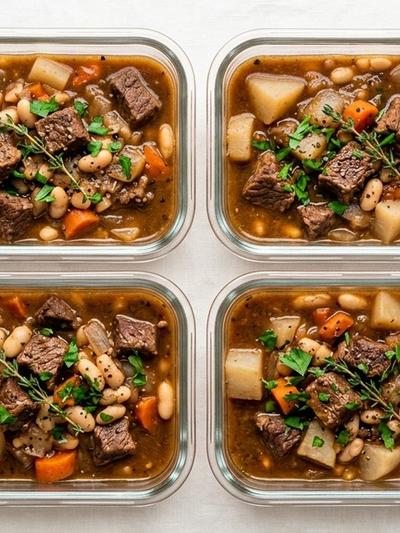
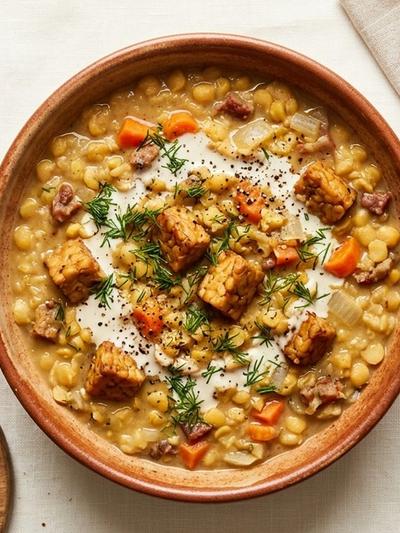
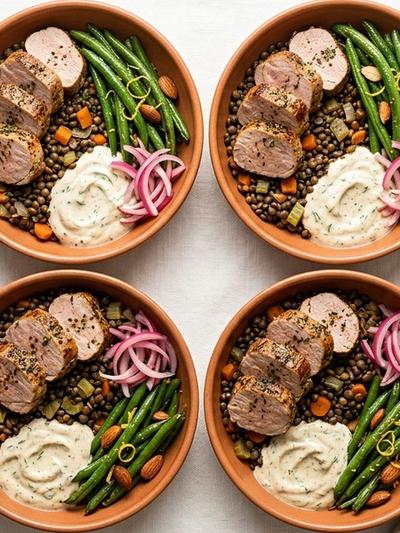
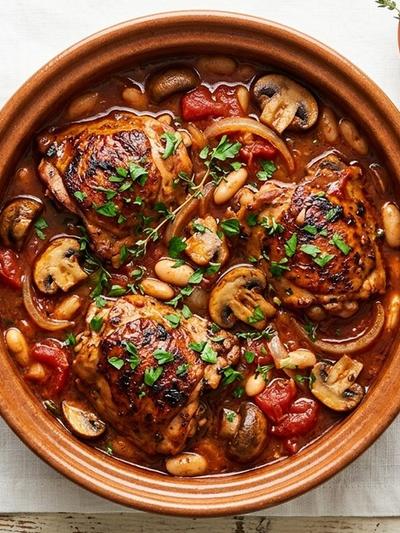
This batch of German-inspired mustard-braised chicken delivers 38 grams of protein and 9 grams of fiber per serving, a combination that supports muscle preservation and steady energy across the work week. Boneless skinless chicken thighs braise in whole grain mustard and chicken broth until fork-tender, while pearl barley and slow-cooked red cabbage contribute complex carbohydrates and soluble fiber. The full prep cooks simultaneously in about 50 minutes, and you walk away with four portioned dinners ready to reheat in under three minutes each.
The flavor profile is unmistakably Central European. Whole grain mustard adds a sharp, slightly sweet heat that mellows into the braising liquid and coats each piece of chicken in a thin savory glaze. Braised red cabbage with apple and cider vinegar brings the classic sweet-sour contrast that balances the mustard's bite, while pearl barley rounds out the bowl with its chewy, almost nutty character that absorbs the pan sauce beautifully.
For anyone on a GLP-1 medication, this recipe solves a common weeknight problem: having something substantial and satisfying ready when your appetite window is unpredictable. The braised chicken stays moist through multiple reheats, and the concentrated flavors mean even a smaller portion feels complete. Both the barley and cabbage are gentle on the stomach, avoiding the raw cruciferous roughness that can aggravate the digestive sensitivity some users experience.
Why This Works on GLP-1
Each serving provides 38 grams of protein, primarily from boneless skinless chicken thighs. That amount matters because GLP-1 medications like Wegovy and Mounjaro reduce overall food intake, and without deliberate protein targeting many users lose lean muscle alongside fat. Research consistently shows that spreading 25 to 40 grams of protein across meals helps preserve muscle mass during weight loss. Having four of these servings ready in the fridge removes the decision fatigue that leads to low-protein convenience meals on busy evenings.
The 9 grams of fiber per serving come from two complementary sources. Pearl barley provides beta-glucan, a soluble fiber that slows glucose absorption and supports the blood sugar regulation GLP-1 medications already promote. Braised red cabbage adds gentler insoluble fiber that has been softened by cooking, making it easier to digest than raw cabbage or heavily fibrous greens.
The caraway seeds and thyme in this recipe are more than flavor choices. Caraway has a long history in German cooking precisely because it aids digestion and reduces bloating, which is particularly relevant when GLP-1 medications slow gastric emptying. The braising method itself breaks down connective tissue in the chicken thighs, producing a softer texture that requires less mechanical digestion than grilled or pan-seared chicken.
Ingredients (serves 4)
For the mustard-braised chicken:
- 1.5 lbs (680g) boneless, skinless chicken thighs
- 1 tablespoon olive oil
- 1 large yellow onion, diced
- 2 medium carrots, diced
- 3 cloves garlic, minced
- 2 tablespoons whole grain mustard
- 1 cup (240ml) low-sodium chicken broth
- 1 tablespoon apple cider vinegar
- 2 sprigs fresh thyme, or 1 teaspoon dried thyme
- 1 teaspoon caraway seeds
- 1/2 teaspoon salt
- 1/4 teaspoon black pepper
For the braised red cabbage:
- 1/2 medium red cabbage (about 1 lb / 450g), cored and thinly sliced
- 1 small tart apple (such as Granny Smith), peeled and diced
- 2 tablespoons apple cider vinegar
- 2 teaspoons honey
- 1/4 cup (60ml) water
- 1/4 teaspoon ground allspice
- Pinch of salt
For the pearl barley:
- 1 cup (200g) pearl barley
- 3 cups (720ml) water
- 1/4 teaspoon salt
Instructions
Start the barley:
- Rinse the pearl barley under cold water and drain. Combine it with 3 cups of water and a pinch of salt in a medium saucepan. Bring to a boil, then reduce heat to low, cover, and simmer for 30 to 35 minutes until the barley is tender but still has a slight chew. Drain any remaining water and set aside. Starting this first means it finishes alongside everything else.
Sear and braise the chicken:
While the barley cooks, pat the chicken thighs dry with paper towels and season both sides with salt, pepper, and half the caraway seeds. Dry thighs sear better, which builds the flavor base for the entire dish.
Heat the olive oil in a Dutch oven or large heavy-bottomed pot over medium-high heat. Sear the chicken thighs for 3 minutes per side until golden brown. They will not be cooked through at this stage, which is intentional. Transfer to a plate.
Reduce heat to medium. Add the diced onion and carrots to the same pot, scraping up any browned bits from the chicken. Cook for 4 to 5 minutes until the onion softens and turns translucent.
Add the garlic, remaining caraway seeds, and thyme. Cook for 1 minute until fragrant. Stir in the whole grain mustard, then pour in the chicken broth and apple cider vinegar. The mustard will dissolve into the liquid and form the braising sauce.
Return the chicken thighs to the pot, nestling them into the liquid. Bring to a gentle simmer, cover with the lid slightly ajar, and cook for 25 to 30 minutes. The chicken is done when it shreds easily with a fork and reads 165°F (74°C) internally.
Braise the red cabbage:
- While the chicken braises, combine the sliced red cabbage, diced apple, vinegar, honey, water, allspice, and salt in a separate large saucepan. Stir to combine, then cover and cook over medium-low heat for 25 to 30 minutes, stirring every 8 to 10 minutes. The cabbage should be tender and deeply purple with a balanced sweet-sour flavor. If it looks dry at any point, add a splash of water.
Assemble for meal prep:
Remove the chicken from the braising liquid. Either shred it with two forks or slice it against the grain into thick strips. Taste the braising sauce and adjust salt if needed. It should be savory with a pronounced mustard bite.
Divide the pearl barley evenly among four airtight meal prep containers. Top each with braised red cabbage, then the shredded or sliced chicken. Spoon 2 to 3 tablespoons of the braising sauce over each container. Let everything cool to room temperature before sealing the lids.
Nutrition per Serving
| Nutrient | Amount (approx.) |
|---|---|
| Calories | ~425 kcal |
| Protein | ~38g |
| Fat | ~9g |
| Carbohydrates | ~50g |
| Fiber | ~9g |
Estimates based on USDA values for boneless skinless chicken thighs, pearl barley, raw red cabbage, and Granny Smith apple, calculated with standard cooking oil and condiment amounts.
Practical Notes
Store containers properly for maximum freshness. Sealed airtight in the refrigerator, these bowls keep well for four days. If you want to extend to five, store the braising sauce separately in a small jar and add it just before reheating. The sauce is what deteriorates first, and keeping it apart slows that process.
Reheat with a splash of water. The barley absorbs moisture over time, so add a tablespoon of water or broth to the container before microwaving for 2 to 2.5 minutes. This restores the texture to something close to freshly cooked rather than the dry, stodgy consistency that barley can develop after a few days in the fridge.
Swap chicken breast if you prefer leaner protein. Cut boneless skinless chicken breasts into thick strips and reduce the braising time to 15 to 18 minutes. You will lose about 2 grams of fat per serving but gain a slightly drier texture on reheating. Adding an extra tablespoon of mustard to the sauce helps compensate.
Eat the protein first. If your appetite is especially limited on a given evening, start with the chicken and braising sauce before moving to the barley and cabbage. This ensures you hit your protein target even if you cannot finish the full portion, which is a common situation in the first weeks of GLP-1 treatment.
Double the cabbage for standalone side use. The braised red cabbage keeps for up to a week on its own and pairs well with almost any protein. Making a full head instead of half gives you extra servings to use with eggs at breakfast or alongside a different protein on the weekend, at virtually no additional prep effort.
Frequently Asked Questions
Can I eat this if I'm experiencing nausea from my GLP-1 medication?
Can I use a different grain instead of pearl barley?
How long do these meal prep containers last in the fridge?
What if I can only eat half a serving right now?
Can I make the entire recipe in a slow cooker?
This article provides general food and nutrition guidance only. It does not constitute medical advice. Always consult your healthcare provider regarding your GLP-1 medication and individual nutritional needs.