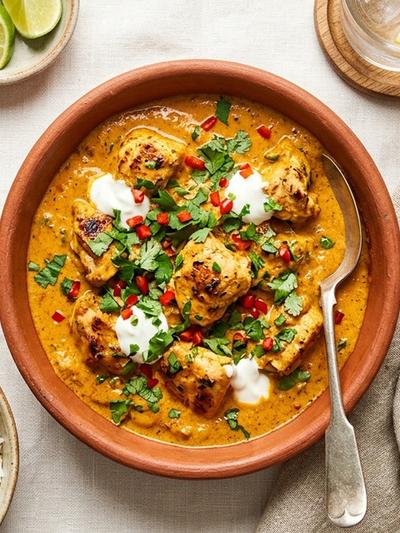
Curry is one of the best meal prep investments in GLP-1 cooking. It improves significantly after a day in the fridge, freezes without any quality loss, and scales easily to larger batches without changing the method. A large pot made on Sunday can produce dinner for four nights, with portions flexible enough to accommodate both reduced-appetite days and better ones.
This version is built to be lighter than a traditional curry — the sauce uses light coconut milk and Greek yogurt rather than full-fat coconut cream or heavy cream, significantly reducing the fat content without losing the creaminess that makes curry satisfying. The spice profile focuses on anti-inflammatory aromatics: turmeric, cumin, coriander, and fresh ginger — a combination that has documented gut-health and anti-inflammatory effects that are directly relevant to GLP-1 users managing GI sensitivity.
Chickpeas are added alongside the chicken, which has two benefits: they add plant protein and fiber, and they bulk up the volume of the dish without adding many calories. A portion of this curry is genuinely filling even in a small serving, because the chickpeas provide resistant starch and fiber that slow digestion and extend satiety.
Why This Works on GLP-1
Turmeric and ginger are two of the most studied anti-inflammatory food compounds. GLP-1 medications such as Wegovy and Mounjaro affect GI motility and can occasionally increase gut sensitivity — an anti-inflammatory diet approach can support better GI tolerance. This isn't a claim about treating symptoms; it's about building a diet that minimizes inflammatory burden while medication does its work.
The sauce in this curry is gentle and smooth — no raw spices, no sharp edges, nothing that aggressively stimulates the GI system. Cooked spices in a coconut-based sauce are generally among the most GLP-1-tolerable preparations of spiced food. If nausea is a concern, this curry is almost always manageable even on moderate-sensitivity days.
Chicken breast provides lean, complete protein. At 38g per serving, this meal alone meets most of the protein target for a single meal window, leaving less pressure on other eating occasions throughout the day.
Ingredients (serves 4)
- 600g (1.3 lb) chicken breast, cut into 3cm (1¼ inch) cubes
- 1 can (400g / 14oz) chickpeas, drained and rinsed
- 300g (10oz) cauliflower florets
- 150g (5oz) baby spinach
- 1 can (400ml) light coconut milk
- 1 can (400g) diced tomatoes
- 1 medium onion, diced
- 3 garlic cloves, minced
- 1 tablespoon fresh ginger, grated
- 1½ teaspoons ground cumin
- 1½ teaspoons ground coriander
- 1½ teaspoons ground turmeric
- ½ teaspoon garam masala
- ½ teaspoon salt
- 1 tablespoon neutral oil
- 2 tablespoons full-fat Greek yogurt (for finishing)
- Fresh cilantro to serve (optional)
Instructions
Sauté the aromatics. Heat oil in a large, deep pan or Dutch oven over medium heat. Add onion and cook, stirring occasionally, for 7–8 minutes until softened and lightly golden. Add garlic and ginger, cook 1 minute until fragrant.
Bloom the spices. Add all ground spices to the pan. Stir constantly for 60 seconds — the spices will darken slightly and become intensely fragrant. This step is what gives the curry depth; raw-added spices taste harsh and flat by comparison.
Add liquids and vegetables. Add diced tomatoes, scraping up any spices stuck to the pan. Add coconut milk and stir to combine. Add cauliflower florets and chickpeas. Bring to a simmer.
Add the chicken. Add chicken breast cubes. Stir to submerge in the sauce. Simmer uncovered over medium-low heat for 18–20 minutes, stirring occasionally, until chicken is cooked through and cauliflower is tender.
Finish. Remove from heat. Stir in baby spinach — it will wilt in the residual heat within 2 minutes. Stir in Greek yogurt and mix through gently. Taste and adjust seasoning with salt.
Serve. Ladle into bowls. Top with fresh cilantro if using. Serve as-is or over a small portion of cauliflower rice or plain yogurt on the side.
Nutrition per Serving
- Calories: ~380
- Protein: ~38g
- Fat: ~12g
- Carbs: ~28g
- Fiber: ~8g
Practical Notes
This improves overnight. Curry is one of the few dishes that genuinely tastes better the next day as the spices develop. Make it the day before if possible and reheat gently over low heat, adding a splash of water if needed.
Freeze in individual portions. This curry freezes very well for up to 3 months. Portion into individual containers before freezing. Thaw overnight in the fridge and reheat gently. Do not freeze portions that contain the Greek yogurt if planning long-term freezing — add yogurt fresh after reheating.
Cauliflower absorbs flavor beautifully. The cauliflower acts as a sponge for the spiced sauce and becomes almost creamy when fully cooked. It also adds volume that makes the dish feel generous even in a modest portion.
Adjust spice level carefully. If GLP-1 nausea is a current issue, reduce or eliminate the garam masala (the most pungent spice here) and increase turmeric slightly instead. The curry will be milder and earthier rather than complex and aromatic.
Frequently Asked Questions
Can I swap chickpeas for something else if legumes cause me digestive discomfort?
How long does this curry keep, and what's the best way to reheat it?
I'm on GLP-1 and can only eat a few bites — is this worth making in a full batch?
Is this curry gentle enough to eat during nausea?
Can I make this vegetarian without losing too much protein?
This article provides general food and nutrition guidance only. It does not constitute medical advice. Always consult your healthcare provider regarding your GLP-1 medication and individual nutritional needs.