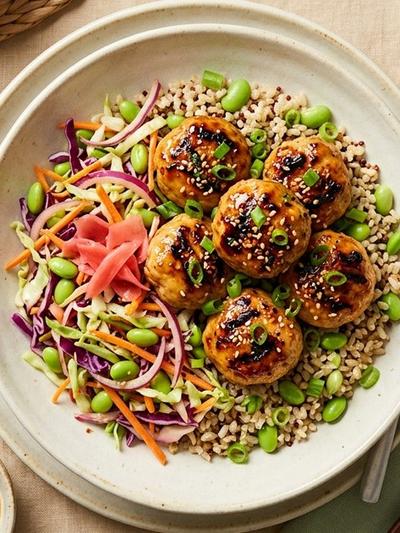
Each serving of these Chinese five-spice chicken bowls delivers roughly 40g of complete protein from lean chicken breast, paired with ginger-scented brown rice and a colorful mix of bok choy, shiitake mushrooms, carrots, and snap peas. The full recipe produces four ready-to-store lunches at approximately 400 calories each, with 9g of fat and 5g of fiber. Iron from the dark leafy bok choy, B vitamins from the mushrooms, and beta-carotene from the carrots round out a nutritionally dense midday meal.
The warm, slightly sweet notes of Chinese five-spice powder — a blend of star anise, cinnamon, cloves, Sichuan peppercorn, and fennel — turn ordinary chicken breast into something deeply savory without adding a single calorie. A light glaze of soy sauce, rice vinegar, and a touch of honey caramelizes against the seared chicken, while the ginger rice underneath absorbs those juices as the bowl sits in the fridge. The contrast between tender chicken, crisp-tender snap peas, silky bok choy, and earthy shiitake keeps each bite interesting even on day four.
This bowl is designed around the realities of eating on GLP-1 medication. The portions are moderate but satisfying — enough protein to sustain you through an afternoon without the heaviness that can trigger nausea. Bok choy and snap peas are among the gentlest vegetables on a sensitive stomach, and the ginger in the rice is a traditional digestive aid that many GLP-1 users find genuinely soothing. Because everything stores and reheats well, you cook once on Sunday and eat without thinking all week.
Why This Works on GLP-1
With 40g of protein per serving, these bowls directly support muscle preservation — the single most important nutritional priority during GLP-1-assisted weight loss. Research consistently shows that patients on medications like Ozempic or Mounjaro lose both fat and lean mass, and adequate protein at every meal is the primary dietary lever to slow that muscle loss. Spreading your protein intake across meals rather than loading it into dinner gives your body a more consistent supply of amino acids for muscle protein synthesis throughout the day. At 40g, this lunch alone covers roughly a third of the daily protein target most dietitians recommend for GLP-1 patients.
The gentle fiber from bok choy, carrots, snap peas, and brown rice totals about 5g per serving — enough to support digestion without the bloating that high-fiber meals can cause when gastric emptying is already slowed. Fresh ginger, which appears in both the rice and the cooking process, has well-documented anti-nausea properties that align well with the gastrointestinal side effects many people experience in their first months on GLP-1 therapy.
Brown rice provides a steady, slow-digesting source of complex carbohydrates that avoids the blood sugar spikes associated with white rice or refined grains. The fat content is deliberately restrained at 9g per serving, almost entirely from a small amount of sesame oil and the natural fat in chicken breast. This keeps the bowl light enough to eat comfortably even on days when your appetite is particularly suppressed.
Ingredients (serves 4)
For the five-spice chicken:
- 1¼ lb (570g) boneless skinless chicken breast, sliced into ½-inch strips
- 2 tbsp (30ml) low-sodium soy sauce
- 1 tbsp (15ml) rice vinegar
- 1 tsp five-spice powder
- 1 tsp honey
- 2 cloves garlic, minced
- 1 tsp freshly grated ginger
For the ginger rice:
- ⅔ cup (130g) dry brown rice
- 1⅓ cups (315ml) water
- 1 tbsp freshly grated ginger
- ¼ tsp salt
For the vegetables:
- 4 baby bok choy (~400g), quartered lengthwise
- 5 oz (150g) shiitake mushrooms, stemmed and sliced
- 2 medium carrots (~120g), sliced thinly on the diagonal
- 1 cup (100g) sugar snap peas, trimmed and halved
- 2 tsp (10ml) avocado oil or other neutral cooking oil
For the finishing sauce:
- 2 tbsp (30ml) low-sodium soy sauce
- 1 tbsp (15ml) rice vinegar
- 1 tsp honey
- 1 tsp cornstarch mixed with 2 tbsp cold water
- 1 tsp toasted sesame oil
For serving:
- 2 scallions, thinly sliced
- 1 tsp sesame seeds
- Sriracha or chili-garlic sauce (optional)
Instructions
Start the ginger rice:
- Rinse the brown rice under cold water until the water runs mostly clear — this removes surface starch and prevents gummy, clumped rice after reheating. Combine the rice, water, grated ginger, and salt in a small saucepan. Bring to a boil, then reduce heat to low, cover tightly, and simmer for 25–30 minutes until the water is absorbed. Remove from heat and let it steam, covered, for 5 minutes while you finish the chicken and vegetables.
Marinate and cook the chicken:
While the rice starts, toss the sliced chicken breast with the soy sauce, rice vinegar, five-spice powder, honey, garlic, and ginger in a medium bowl. Let it sit for at least 10 minutes — the acid in the vinegar begins to tenderize the surface, which helps the chicken stay moist after reheating.
Heat 1 tsp of the avocado oil in a large nonstick skillet or wok over medium-high heat. Add the chicken in a single layer, working in two batches if necessary to avoid crowding — steamed chicken tastes flat, while properly seared chicken develops a caramelized crust that holds up in the fridge. Cook for 3–4 minutes per side until golden and cooked through (internal temperature 165°F / 74°C). Transfer the chicken to a clean plate.
Stir-fry the vegetables:
Return the skillet to medium-high heat and add the remaining 1 tsp of oil. Add the carrots and shiitake mushrooms first, since they take the longest — cook for 2–3 minutes, stirring occasionally, until the mushrooms release their liquid and begin to brown.
Add the bok choy and snap peas. Stir-fry for another 2 minutes until the bok choy wilts slightly but the stems still have bite and the snap peas turn bright green. Overcooked bok choy turns mushy after a few days in the fridge, so pull it while it still has structure.
Build the sauce and assemble:
Whisk together the soy sauce, rice vinegar, honey, cornstarch slurry, and sesame oil. Push the vegetables to the edges of the pan, pour the sauce into the center, and stir until it thickens — roughly 30 seconds. Return the chicken to the pan and toss everything to coat evenly.
Fluff the ginger rice with a fork. Divide it among four meal prep containers, then top each with the chicken and vegetable mixture. Scatter the scallions and sesame seeds over the top. Let the bowls cool to room temperature before sealing and refrigerating.
Nutrition per Serving
| Nutrient | Amount (approx.) |
|---|---|
| Calories | ~400 kcal |
| Protein | ~40g |
| Fat | ~9g |
| Carbohydrates | ~39g |
| Fiber | ~5g |
Estimates based on USDA data for raw boneless skinless chicken breast, dry brown rice, and fresh vegetables. Actual values vary slightly depending on specific brands and produce sizes.
Practical Notes
Refrigerator life and reheating. These bowls keep well for 4 days in the fridge, stored in airtight containers. Reheat in the microwave for 2–2½ minutes, loosely covered, stirring halfway through. The ginger rice actually improves overnight as it absorbs the sauce — day-two bowls often taste better than day one.
Freeze the chicken separately for longer storage. If you want to extend the prep beyond four days, cook and slice the chicken, then freeze it in portions with a spoonful of sauce. Thaw overnight in the fridge and assemble with fresh rice and vegetables on the day you need them. The vegetables do not freeze well and should always be made fresh.
Brown rice is worth the extra cook time. White jasmine rice cooks faster but digests quickly and can cause a sharper blood sugar response. If you are short on time, make a double batch of brown rice on the weekend and refrigerate the extra — cold leftover rice reheats perfectly and actually has a slightly lower glycemic impact than freshly cooked rice due to resistant starch formation.
Swap the vegetables based on what you have. Broccolini, zucchini, snow peas, or napa cabbage all work in place of any of the vegetables listed. Keep at least one leafy green (bok choy or napa cabbage) for volume and one crunchy element (snap peas or broccoli) for texture contrast after reheating. Avoid very watery vegetables like cucumber or tomato, which break down in storage.
Start smaller if your appetite is low. On days when GLP-1 medication suppresses your appetite heavily, eat the chicken and vegetables first to prioritize protein, and save the rice for later or the next day. You can also portion the recipe into five or six smaller containers instead of four — the protein per serving drops to about 27–32g, still well above the minimum threshold for a productive meal.
Frequently Asked Questions
Can I use chicken thighs instead of breast?
Is this too heavy for lunch on Mounjaro or Wegovy?
How do I prevent the vegetables from getting soggy after a few days?
Can I make this with pre-cooked rotisserie chicken to save time?
What if I cannot find five-spice powder?
This article provides general food and nutrition guidance only. It does not constitute medical advice. Always consult your healthcare provider regarding your GLP-1 medication and individual nutritional needs.