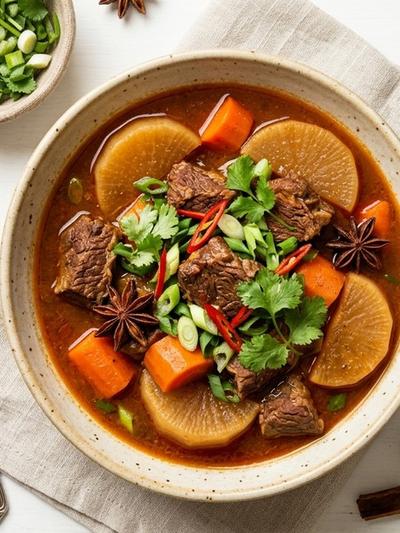
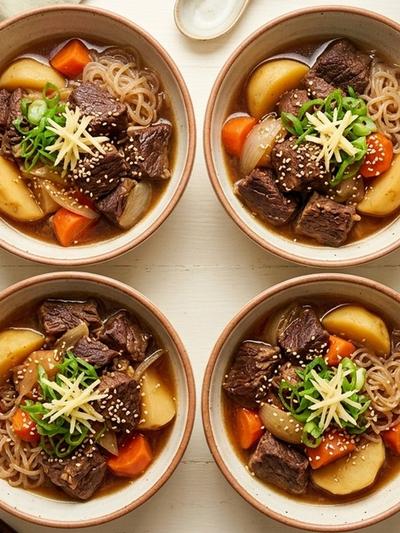
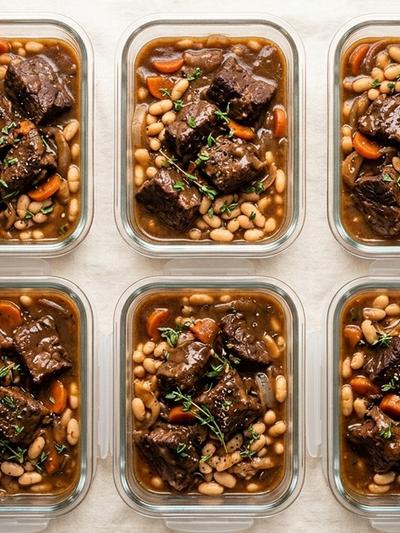
Each serving of this Chinese-inspired poached beef delivers 37 grams of protein and just 275 calories, making it one of the most efficient protein-per-calorie meals you can batch-prepare. Eye of round — one of the leanest beef cuts available — stays remarkably tender when poached gently in an aromatic broth built on fresh ginger, garlic, star anise, and low-sodium soy sauce. The broth itself becomes a flavorful cooking liquid that doubles as a light sauce for reheating, so nothing goes to waste.
The flavor profile here borrows from Chinese clear-simmered beef traditions, where gentle heat coaxes deep savory notes from the meat while aromatics infuse everything with warmth. Fresh ginger and a single star anise pod give the broth a fragrant, slightly sweet backbone without any heaviness. Shiitake mushrooms add umami depth, while baby bok choy brings a clean, mild crunch that holds up well through several days of storage.
This is an ideal meal prep format for GLP-1 users because every component — protein, vegetables, and broth — stores together in one container. The broth keeps the beef moist during reheating, solving the common problem of dry leftover meat. Small portions feel complete and satisfying because the warm, savory liquid adds volume without adding significant calories.
Why This Works on GLP-1
At 37 grams of protein per serving, this recipe provides roughly half the daily protein target most GLP-1 users need to preserve lean muscle mass during weight loss. Protein preservation is critical because GLP-1 medications such as Ozempic and Zepbound can cause rapid weight reduction, and without adequate protein intake, a meaningful portion of that loss can come from muscle rather than fat. Eye of round delivers this protein with minimal accompanying fat — just 4 grams from the beef itself per serving — making it exceptionally protein-dense.
The ginger in the broth serves a functional purpose beyond flavor. Ginger has well-documented anti-nausea properties, which is particularly relevant for GLP-1 users who experience gastrointestinal side effects during dose titration. The gentle poaching method also means no added cooking oils, and the vegetables are soft enough to digest easily without causing bloating.
The broth-based format naturally supports hydration, which many GLP-1 users neglect. Adequate fluid intake helps mitigate constipation — one of the most common side effects of GLP-1 medications — and warm liquids can feel soothing when appetite is suppressed. The moderate sodium from soy sauce also aids electrolyte balance, which matters when overall food intake is reduced.
Ingredients (serves 4)
For the poaching broth:
- 6 cups (1.4L) low-sodium beef broth
- 2 tablespoons low-sodium soy sauce
- 1 tablespoon rice vinegar
- 1 piece fresh ginger, about 3 inches (7cm), sliced into coins
- 4 cloves garlic, lightly smashed
- 1 whole star anise pod
- 1 teaspoon sesame oil
- 1/2 teaspoon white pepper
For the beef and vegetables:
- 1.5 lbs (680g) eye of round roast, trimmed of visible fat
- 8 oz (225g) shiitake mushrooms, stems removed, caps halved
- 4 heads baby bok choy, about 12 oz (340g), halved lengthwise
- 2 medium carrots, about 6 oz (170g), sliced on the diagonal 1/4 inch thick
- 2 scallions, thinly sliced, for garnish
Instructions
Build the poaching broth:
Combine the beef broth, soy sauce, rice vinegar, ginger coins, smashed garlic, star anise, sesame oil, and white pepper in a large Dutch oven or heavy-bottomed pot. Bring to a gentle simmer over medium heat. Let the aromatics steep for 5 minutes before adding the beef — this gives the ginger and star anise time to release their essential oils into the liquid.
While the broth heats, pat the eye of round completely dry with paper towels. This removes surface moisture so the beef doesn't dilute the broth when it enters the pot.
Poach the beef:
Lower the whole roast into the simmering broth. The liquid should mostly cover the meat — if not, add hot water until it does. Adjust the heat so the broth maintains the barest simmer, with small bubbles breaking the surface occasionally. You do not want a rolling boil, which toughens lean cuts like eye of round.
Poach the beef for 35 to 40 minutes, turning it once halfway through. For medium doneness — slightly pink in the center, which gives the best texture for meal prep — the internal temperature should reach 140°F (60°C). Use an instant-read thermometer inserted into the thickest part to check.
Remove the beef to a cutting board and tent loosely with foil. Let it rest for at least 10 minutes. The internal temperature will rise another 5 degrees during resting, and the fibers will relax, making slicing easier and the texture more tender.
Cook the vegetables in the broth:
While the beef rests, bring the poaching broth back to a steady simmer. Add the sliced carrots first and cook for 3 minutes — carrots take the longest and starting them early ensures even doneness across all vegetables.
Add the shiitake mushroom caps and cook for another 2 minutes. Shiitakes release additional umami into the broth as they soften, enriching the liquid that will become your reheating sauce.
Add the halved bok choy, cut side down, and cook for just 2 minutes until the stems are tender-crisp and the leaves are wilted but still bright green. Overcooking bok choy turns it mushy and bitter, so watch this step closely.
Remove and discard the ginger coins and star anise pod from the broth using a slotted spoon. They have done their job and would become unpleasantly intense if left in during storage.
Slice and assemble:
Slice the rested beef against the grain into thin pieces, roughly 1/4 inch (6mm) thick. Cutting against the grain shortens the muscle fibers, which is essential for tenderness in a lean cut like eye of round.
Divide the sliced beef and vegetables evenly among four meal prep containers. Ladle approximately 3/4 cup (180ml) of broth into each container. Garnish with sliced scallions. Allow to cool completely before sealing and refrigerating.
Nutrition per Serving
| Nutrient | Amount (approx.) |
|---|---|
| Calories | ~275 kcal |
| Protein | ~37g |
| Fat | ~8g |
| Carbohydrates | ~14g |
| Fiber | ~3g |
Estimates based on USDA data for trimmed eye of round roast, low-sodium beef broth, and fresh vegetables. Actual values may vary slightly depending on how thoroughly the beef is trimmed and the specific brand of broth used.
Practical Notes
Meal prep storage and shelf life. These containers keep well in the refrigerator for up to 4 days. The broth actually improves the beef's flavor over the first day or two as the aromatics continue to permeate the meat. For longer storage, freeze individual portions for up to 3 months — the broth protects the beef from freezer burn far better than dry storage would.
Reheating for best texture. Microwave each container for 2 to 3 minutes, stirring the broth halfway through to distribute heat evenly. Alternatively, pour the entire contents into a small saucepan and warm gently over medium-low heat for about 4 minutes. The stovetop method gives you more control and keeps the beef from overcooking at the edges.
Beef cut substitutions. If eye of round is unavailable, top round or bottom round work nearly as well — they are comparably lean and respond to poaching in the same way. Avoid chuck or brisket, which have significantly more marbling and would push the fat content well above what is listed here. Sirloin tip is another good option, though it costs a bit more.
Add a small carb component if needed. On its own, this meal is lower in carbohydrates, which works well for many GLP-1 users. If you find you need more sustained energy — particularly on active days — add 1/2 cup (90g) cooked brown rice or a small handful of cooked rice noodles to each container. This adds roughly 110 calories and 23 grams of carbohydrates per serving.
Adjust for very small appetites. If you are in the early weeks of GLP-1 treatment and cannot finish a full portion, divide this recipe into 6 servings instead of 4. Each smaller portion will still provide about 25 grams of protein, and the broth-based format makes it easier to eat a little at a time without the food going cold or dry.
Frequently Asked Questions
Will the ginger in this recipe help with GLP-1 nausea?
Can I use a different protein instead of beef?
How do I prevent the beef from getting tough during poaching?
What if I can only eat very small amounts right now?
Can I make this in a slow cooker instead?
This article provides general food and nutrition guidance only. It does not constitute medical advice. Always consult your healthcare provider regarding your GLP-1 medication and individual nutritional needs.