 By Gerald
Each serving of this Berber chicken omelette delivers 39 grams of protein from a combination of lean chicken breast, whole eggs, and egg whites. The vegetable base of bell pepper, tomato, and zucchini adds vitamins A and C, potassium, and a modest dose of fiber without heavy bulk. At 355 calories, it is a nutrient-dense breakfast that covers nearly half the daily protein target many GLP-1 users aim for.
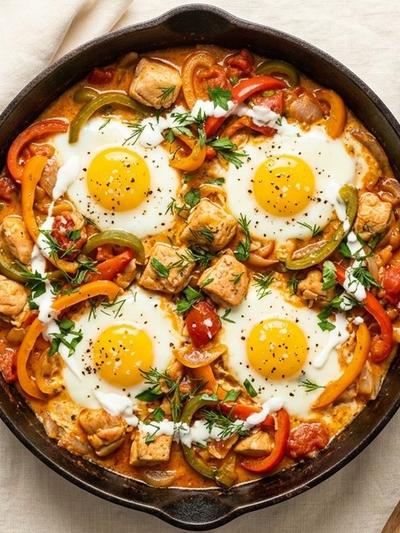
The Berber omelette — omelette berbère — is a staple across Morocco and Algeria, traditionally a flat, open-faced egg dish loaded with diced peppers, tomatoes, and onions spiced with cumin and paprika. Unlike a French omelette, it is never folded — the eggs are poured over the sautéed vegetables and cooked through in the skillet, producing a thick, golden slab that slices like a pie. The warm earthiness of cumin, the gentle smokiness of paprika, and the brightness of fresh tomato and cilantro create a flavor profile that is distinctly North African.
For GLP-1 users, this format works well. The flat omelette holds together in a single piece, which makes it easy to eat a small portion and save the rest. It is gentle on digestion — no heavy cream, no fried crust, no dense bread — and the protein-to-calorie ratio means a modest breakfast still delivers meaningful satiety.
Why This Works on GLP-1
Each serving provides 39 grams of protein, primarily from chicken breast and eggs. Maintaining adequate protein intake during GLP-1-assisted weight loss is critical for preserving lean muscle mass, and many healthcare providers recommend 25 to 40 grams per meal. For people on Mounjaro or Wegovy who find their appetite sharply reduced in the morning, a single slice of this omelette delivers that target without requiring a large volume of food.
The vegetables contribute 3 grams of fiber per serving — not a high-fiber meal, but enough to support steady digestion without the bloating that large doses of legumes or raw cruciferous vegetables can cause. Bell peppers and zucchini are among the best-tolerated vegetables for people experiencing the gastric slowing that GLP-1 medications produce.
At 14 grams of fat per serving, most of it coming from egg yolks and a small amount of olive oil, this breakfast avoids the heaviness of butter-laden or fried egg dishes. The moderate fat content supports satiety hormones without the discomfort that high-fat meals can trigger when gastric emptying is delayed.
Ingredients (serves )
For the spiced chicken:
- 7 oz (200g) boneless, skinless chicken breast, diced into 1/2-inch pieces
- 1 teaspoon ground cumin
- 1 teaspoon smoked paprika
- 1/2 teaspoon ground turmeric
- 1/4 teaspoon salt
- Pinch of black pepper
For the omelette:
- 3 large eggs
- 3 large egg whites
- 1 medium red bell pepper, diced
- 1 medium tomato, diced
- 1/2 medium yellow onion, diced
- 1 small zucchini, diced
- 2 cloves garlic, minced
- 1 teaspoon harissa paste
- 2 teaspoons olive oil
- 2 tablespoons fresh cilantro, chopped
- 2 tablespoons fresh flat-leaf parsley, chopped
- Salt and black pepper to taste
Instructions
Amounts in the method are for 2 servings.
Season and cook the chicken:
- Toss the diced chicken breast with the cumin, smoked paprika, turmeric, salt, and pepper in a small bowl. Seasoning the chicken before cooking builds the spice crust directly onto the meat rather than diluting it into the vegetables.
- Heat the olive oil in a 10-inch nonstick or well-seasoned cast-iron skillet over medium-high heat. Add the chicken in a single layer and cook without stirring for 2 minutes, then stir and cook for another 2 minutes until golden on the outside and cooked through. Transfer to a plate and set aside.
Sauté the vegetables:
- In the same skillet over medium heat, add the onion and cook for 2 minutes until it begins to soften. Add the garlic and cook for 30 seconds until fragrant.
- Add the bell pepper, zucchini, and tomato. Stir in the harissa paste. Cook for 3 to 4 minutes, stirring occasionally, until the peppers have softened and the tomato has broken down into a loose sauce. The mixture should be moist but not swimming in liquid — if it looks watery, cook for another minute to reduce.
Build and cook the omelette:
- Return the chicken to the skillet and distribute it evenly across the vegetables. Reduce the heat to medium-low.
- Whisk the eggs and egg whites together with a pinch of salt until just combined — no need to beat them frothy. Pour the egg mixture evenly over the chicken and vegetables in the skillet.
- Cover the skillet with a lid and cook for 5 to 6 minutes without stirring. The omelette is done when the edges are set and the center no longer looks wet. The residual heat will finish cooking the top once you remove it from the burner.
Finish and serve:
- Remove the lid and scatter the cilantro and parsley over the top. Let the omelette rest in the skillet for 1 minute — this makes it easier to slice. Cut in half and serve directly from the pan.
Nutrition per Serving
| Nutrient | Amount (approx.) |
|---|---|
| Calories | ~355 kcal |
| Protein | ~39g |
| Fat | ~14g |
| Carbohydrates | ~13g |
| Fiber | ~3g |
Calculated from USDA values for raw chicken breast, large eggs, egg whites, and fresh vegetables. Actual values may vary with specific ingredient brands and sizes.
Practical Notes
Harissa heat is adjustable. One teaspoon of harissa paste adds a gentle warmth without real spiciness. If you are early in your GLP-1 treatment and finding that spicy foods cause discomfort, replace the harissa with an extra half teaspoon of smoked paprika for depth without heat. If you want more kick, stir a second teaspoon into the vegetables.
Use a lid, not the broiler. Many flat omelette recipes finish under the broiler, but the covered-skillet method gives you a more reliable result and keeps the top moist rather than rubbery. The steam from the vegetables does the work of setting the surface.
This reheats well for a second day. Let the omelette cool completely, wrap individual portions tightly, and refrigerate for up to 2 days. Reheat in a dry skillet over medium-low heat for 3 to 4 minutes per side, or microwave covered for 60 to 90 seconds. The flat shape means it heats evenly — a folded omelette tends to get rubbery in the microwave.
Swap the chicken for leftover rotisserie. If you have leftover roasted or rotisserie chicken, skip the seasoning and searing step entirely. Shred or dice about 3.5 oz (100g) per serving, toss it with the spices, and add it directly with the vegetables. This cuts the active cook time to about 10 minutes.
Eat half now, half later. On mornings when GLP-1 appetite suppression is strongest, eat one quarter of the omelette and refrigerate the rest. At 39 grams of protein for the full serving, even half a portion delivers nearly 20 grams — enough to support muscle preservation while respecting what your body can handle.
Frequently Asked Questions
Can I eat this omelette on the same morning I take my GLP-1 injection?
Can I make this egg-free or reduce the eggs further?
How long does this keep, and can I freeze it?
What if I can only manage very small portions right now?
Do I need a nonstick skillet, or will cast iron work?
This article provides general food and nutrition guidance only. It does not constitute medical advice. Always consult your healthcare provider regarding your GLP-1 medication and individual nutritional needs.