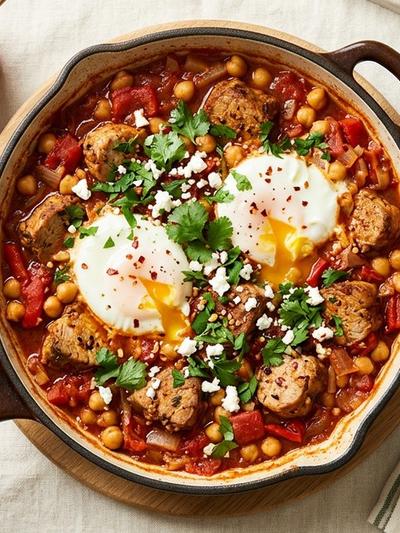
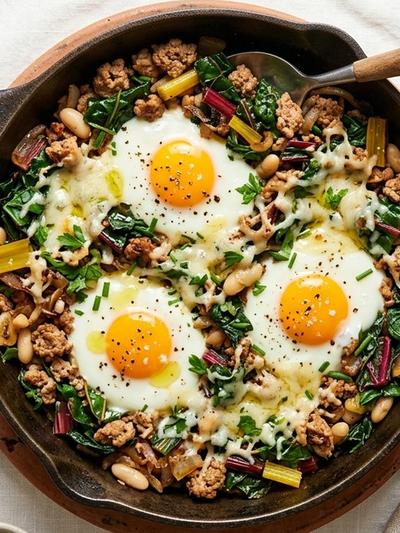
Each serving of this Moroccan-spiced breakfast skillet delivers 28 grams of protein from a combination of eggs, egg whites, chickpeas, and crumbled feta. The chickpeas contribute both protein and slow-digesting complex carbohydrates, while the spinach adds iron, folate, and volume without significant calories. At roughly 355 calories per portion, this is a nutrient-dense breakfast that covers nearly half your daily protein target in one sitting.
The flavor profile draws from classic Moroccan cooking: warm cumin and sweet paprika form the base, brightened by a squeeze of preserved lemon and a scattering of fresh cilantro. Tomatoes break down into a rich, slightly thick sauce that cradles the eggs as they poach, while the chickpeas add a satisfying bite against the soft spinach and creamy yolks. A crumble of tangy feta across the top ties everything together with salt and richness.
This one-pan format is ideal for GLP-1 mornings when appetite is unpredictable and cooking energy is low. Everything happens in a single skillet in under 25 minutes, and the soft-poached eggs with their gentle sauce are easy on a sensitive stomach. The high protein-to-calorie ratio means even a half portion delivers meaningful nutrition on low-appetite days.
Why This Works on GLP-1
Preserving lean muscle mass is one of the most important nutritional priorities during GLP-1-assisted weight loss, and that requires consistent protein intake at every meal. This skillet delivers 28 grams per serving — a meaningful dose that supports muscle protein synthesis even when total food volume is reduced. For people on Wegovy or similar GLP-1 medications who find themselves eating significantly less, concentrating protein into each small meal becomes essential rather than optional.
The fiber content of roughly 6 grams per serving comes primarily from chickpeas and spinach — both gentle, well-tolerated sources that are unlikely to cause the bloating or discomfort that higher-fiber legumes sometimes trigger. The tomato-based sauce adds lycopene and vitamin C, which supports iron absorption from both the spinach and the chickpeas.
The fat content stays moderate at 17 grams per serving, with most of it coming from egg yolks and feta rather than added cooking oil. This keeps the dish from sitting heavily in a stomach where gastric emptying is already slowed. The combination of protein, fiber, and moderate fat creates steady satiety without the uncomfortable fullness that richer breakfasts can produce.
Ingredients (serves 4)
For the spiced tomato-chickpea base:
- 1 tablespoon (15ml) extra-virgin olive oil
- 1 medium yellow onion, finely diced — about 1 cup (150g)
- 3 cloves garlic, minced
- 1½ teaspoons ground cumin
- 1 teaspoon sweet paprika
- ½ teaspoon ground turmeric
- ¼ teaspoon cayenne pepper (optional — omit for sensitive stomachs)
- 1 can (14 oz / 400g) diced tomatoes, with juices
- 1 can (15 oz / 425g) chickpeas, drained and rinsed — about 1½ cups
- 3 cups (90g) fresh baby spinach, loosely packed
- 1 tablespoon finely chopped preserved lemon rind (or zest of 1 lemon plus a pinch of salt)
- ¼ teaspoon fine sea salt, plus more to taste
- Freshly ground black pepper
For the eggs:
- 4 large whole eggs
- 4 large egg whites (from about 4 eggs, or ½ cup / 120ml liquid egg whites)
For serving:
- 2 oz (60g) crumbled feta cheese
- 2 tablespoons fresh cilantro leaves, roughly chopped
- 1 teaspoon za'atar (optional)
Instructions
Build the spiced base:
Heat the olive oil in a large (12-inch / 30cm) skillet over medium heat. Add the diced onion and cook for 4–5 minutes, stirring occasionally, until softened and just beginning to turn golden. The onion provides the aromatic foundation and natural sweetness that balances the acidity of the tomatoes.
Add the garlic, cumin, paprika, turmeric, and cayenne. Stir constantly for 30–45 seconds until the spices are fragrant and have coated the onion — this brief toasting in oil blooms the spices and deepens their flavor significantly compared to adding them later.
Pour in the diced tomatoes with their juices and the drained chickpeas. Stir to combine, then bring to a gentle simmer. Cook for 6–7 minutes, stirring once or twice, until the sauce has thickened slightly and the chickpeas are heated through.
Add the spinach in two handfuls, stirring each batch until wilted before adding the next — this takes about 1–2 minutes total. Stir in the preserved lemon rind, salt, and black pepper. Taste and adjust seasoning.
Poach the eggs:
Using the back of a spoon, create 8 small wells in the sauce — 4 slightly larger wells for the whole eggs and 4 smaller ones between them for the egg whites. The wells keep the eggs contained so the whites set evenly rather than spreading across the pan.
Crack one whole egg into each of the 4 larger wells. Pour the egg whites into the remaining 4 wells, dividing them evenly. Season the eggs lightly with salt and pepper.
Reduce the heat to medium-low, cover the skillet with a lid, and cook for 5–7 minutes. Check at the 5-minute mark: the egg whites should be fully set and opaque, while the yolks should still be slightly soft and jiggly. If you prefer firmer yolks, cook for an additional 1–2 minutes with the lid on.
Finish and serve:
- Remove from heat and scatter the crumbled feta, chopped cilantro, and za'atar (if using) over the top. Serve directly from the skillet, portioning one whole egg plus one section of egg whites with a generous scoop of the chickpea-tomato sauce per person.
Nutrition per Serving
| Nutrient | Amount (approx.) |
|---|---|
| Calories | ~355 kcal |
| Protein | ~28g |
| Fat | ~17g |
| Carbohydrates | ~22g |
| Fiber | ~6g |
Estimates based on standard USDA values for large eggs, canned chickpeas, canned diced tomatoes, and feta cheese. Actual values may vary based on specific brands and egg size.
Practical Notes
Preserved lemon makes a difference. If you can find preserved lemons at a Middle Eastern grocery or online, use them — the fermented, floral-salty flavor is distinctly Moroccan and impossible to replicate with fresh lemon alone. If substituting fresh lemon zest, add it at the very end along with a small pinch of extra salt to approximate the salinity.
This reheats well for meal prep. Store individual portions of the chickpea-tomato-spinach base (without eggs) in airtight containers for up to 4 days. When ready to eat, reheat the base in a small skillet, create wells, and poach fresh eggs — this adds only 7 minutes and ensures the eggs have the best texture.
Start with a half portion on high-nausea days. If your Mounjaro or Zepbound dose was recently increased and your appetite is very low, serve yourself one egg well plus a few spoonfuls of the base. Even a half portion delivers roughly 14 grams of protein, which is far better than skipping breakfast entirely.
Boost the protein further with a simple swap. Replace two of the whole eggs with an additional 4 egg whites for a version that reaches about 31 grams of protein per serving while dropping the fat to around 13 grams. This is especially useful if you are pairing this breakfast with a higher-fat lunch.
Serve with something for scooping. A small piece of whole wheat pita or a thin slice of crusty bread adds about 70–80 calories and makes the dish more satisfying to eat. For a lower-carb option, use endive leaves or thick cucumber slices as edible spoons.
Frequently Asked Questions
Can I eat this shakshuka-style breakfast if I experience acid reflux on GLP-1 medication?
What can I use instead of chickpeas for a lower-carb version?
How should I store and reheat leftovers with the eggs already cooked?
I can only eat very small amounts in the morning — how do I adapt this?
Can I use a different type of cheese instead of feta?
This article provides general food and nutrition guidance only. It does not constitute medical advice. Always consult your healthcare provider regarding your GLP-1 medication and individual nutritional needs.