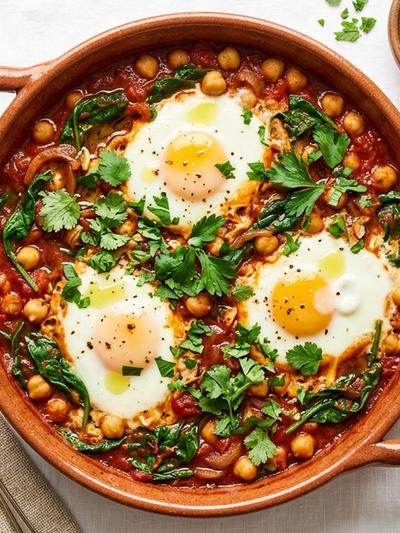
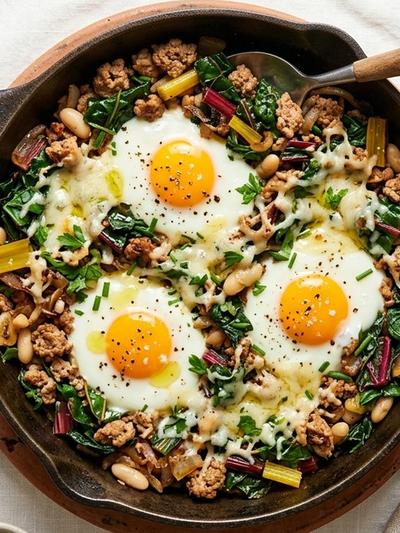
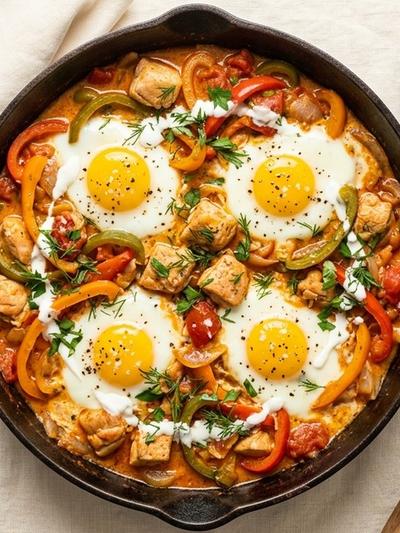
This one-skillet Tunisian breakfast delivers 35 grams of protein per serving by combining lean pork tenderloin with chickpeas and eggs poached directly in the sauce. The base of harissa-spiced tomatoes provides lycopene and vitamin C while keeping calories under 350 per portion. Every macronutrient earns its place here — the pork supplies the bulk of the protein, chickpeas contribute complex carbohydrates and fiber, and the eggs add richness without excess fat.
The flavor profile draws from Tunisian home cooking, where harissa paste, caraway, and cumin form a fragrant backbone for braised dishes. Diced pork tenderloin absorbs the spiced tomato sauce as it cooks, developing a savory depth that pairs beautifully with the runny yolk of the poached egg on top. A squeeze of lemon and fresh cilantro at the end brightens everything, cutting through the warm spices with a clean finish.
For GLP-1 users, this skillet format is ideal. A single moderate portion feels complete and satisfying thanks to the protein density and the visual abundance of the dish. The soft textures — tender pork, creamy chickpeas, silky egg — are gentle on a sensitive stomach, and the one-pan approach means breakfast takes less time than your appetite takes to arrive.
Why This Works on GLP-1
Each serving provides roughly 35 grams of protein from three complementary sources: pork tenderloin, chickpeas, and a whole egg. That protein load matters during GLP-1-assisted weight loss because the medications — whether you take Mounjaro or Wegovy — reduce appetite significantly, and without deliberate protein intake, muscle mass declines alongside fat. Hitting 35 grams at breakfast front-loads your daily protein target, making the remaining meals less pressured. Pork tenderloin is one of the leanest cuts available, comparable to chicken breast in fat content while offering more iron and B vitamins.
The chickpeas in this skillet contribute 5 grams of fiber per serving — enough to support healthy digestion without the bloating risk of very high-fiber meals. Harissa and cumin both have mild carminative properties, which can help ease the digestive sluggishness some GLP-1 users experience in their first weeks on medication.
At 348 calories per serving, this breakfast fits comfortably within the reduced caloric intake typical of Zepbound or Ozempic users without leaving you under-fueled for the morning. The combination of protein, fiber, and healthy fats from the egg yolk creates a slow, steady energy release that complements the appetite-suppressing effects of GLP-1 medications rather than fighting against them.
Ingredients (serves 4)
For the skillet:
- 1 lb (450g) pork tenderloin, trimmed and cut into 1/2-inch (1cm) dice
- 1 can (15 oz / 425g) chickpeas, drained and rinsed
- 1 can (14 oz / 400g) diced tomatoes with juices
- 1 medium yellow onion, finely diced
- 3 cloves garlic, minced
- 1 tablespoon harissa paste (adjust to taste)
- 1 teaspoon ground cumin
- 1/2 teaspoon ground caraway
- 1/4 teaspoon ground coriander
- 1 tablespoon olive oil
- 1/2 teaspoon fine sea salt
- 1/4 teaspoon black pepper
For the eggs and finishing:
- 4 large eggs
- 1 tablespoon fresh lemon juice
- 2 tablespoons fresh cilantro, roughly chopped
- Pinch of flaky sea salt for finishing
Instructions
Sear the pork:
- Pat the diced pork tenderloin dry with paper towels — this is essential for browning rather than steaming. Season with half the salt and all the black pepper.
- Heat the olive oil in a 12-inch (30cm) oven-safe skillet or deep skillet over medium-high heat until it shimmers. Add the pork in a single layer and cook undisturbed for 2 minutes until golden on one side. Stir once and cook another 1–2 minutes until lightly browned all over. Transfer to a plate.
Build the sauce:
- Reduce heat to medium. Add the diced onion to the same skillet and cook for 3 minutes, stirring occasionally, until softened and picking up the browned bits from the pork.
- Add the garlic, harissa paste, cumin, caraway, and coriander. Stir for 30 seconds until fragrant — the spices bloom in the residual fat, intensifying their flavor.
- Pour in the diced tomatoes with their juices and the drained chickpeas. Stir to combine, scraping any remaining fond from the bottom of the pan. Add the remaining salt. Bring to a gentle simmer and cook for 4 minutes until the sauce thickens slightly.
Return the pork and poach the eggs:
- Nestle the seared pork back into the sauce, distributing it evenly. Let it simmer for 2 minutes to finish cooking through and absorb the flavors.
- Using the back of a spoon, create four small wells in the surface of the sauce. Crack one egg into each well. Cover the skillet with a lid (or a baking sheet if you don't have a lid that fits) and reduce heat to medium-low.
- Cook covered for 4–5 minutes until the egg whites are set but the yolks remain runny. For firmer yolks, cook an additional 1–2 minutes.
Finish and serve:
- Remove from heat. Squeeze the lemon juice over the entire skillet and scatter the chopped cilantro on top. Finish with a pinch of flaky sea salt over the eggs.
- Serve directly from the skillet, scooping each portion with one egg and a quarter of the pork-chickpea mixture. Crusty bread or warmed whole wheat pita on the side is optional but not included in the nutrition count.
Nutrition per Serving
| Nutrient | Amount (approx.) |
|---|---|
| Calories | ~348 kcal |
| Protein | ~35g |
| Fat | ~12g |
| Carbohydrates | ~22g |
| Fiber | ~5g |
Estimates based on USDA data for pork tenderloin, canned chickpeas, canned diced tomatoes, large eggs, and measured olive oil. Actual values may vary by brand.
Practical Notes
Harissa heat levels vary widely. Start with 1 tablespoon of a mild harissa paste if you're new to it or if GLP-1 medication has made your stomach more sensitive to spice. You can always drizzle more on your individual portion. Rose harissa (common in Tunisian cooking) adds floral complexity without extra heat.
This skillet reheats well for meal prep. Cook the pork-chickpea base in full, portion into containers, and refrigerate for up to 4 days. When ready to eat, reheat a portion in a small skillet and poach a fresh egg on top — the fresh egg takes only 4 minutes and makes the dish taste just-cooked.
Small appetite strategy. If a full quarter of this skillet feels like too much, serve yourself a half portion (about 175 calories, 17g protein) and save the rest. The base reheats better than the eggs, so you're better off cooking fewer eggs and adding a fresh one when you eat the leftovers.
Pork tenderloin substitutions. Lean ground pork (93% lean or higher) works if you prefer — brown it crumbled in step 2 and skip the transfer to a plate, just push it aside while you cook the onion. The texture changes from distinct cubes to a more integrated, saucy consistency, but the nutrition stays comparable.
Toast or flatbread pairing. A small piece of whole wheat pita or sourdough toast alongside this skillet adds about 80–100 calories and helps soak up the sauce. For GLP-1 users who find plain protein heavy in the morning, the bread can make the first few bites easier to manage.
Frequently Asked Questions
Is this too spicy for someone early in their GLP-1 treatment?
Can I make this with a different protein instead of pork?
How should I store and reheat leftovers?
What if I can only eat a very small portion right now?
Can I use dried chickpeas instead of canned?
This article provides general food and nutrition guidance only. It does not constitute medical advice. Always consult your healthcare provider regarding your GLP-1 medication and individual nutritional needs.