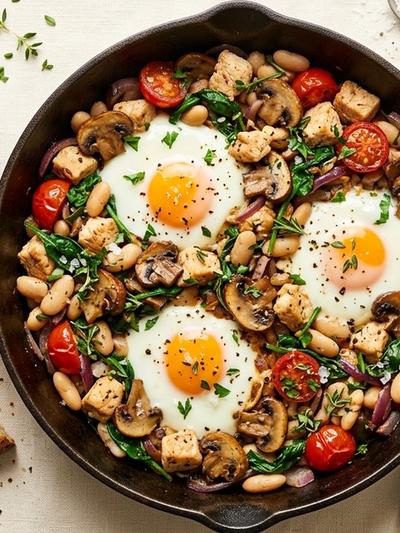
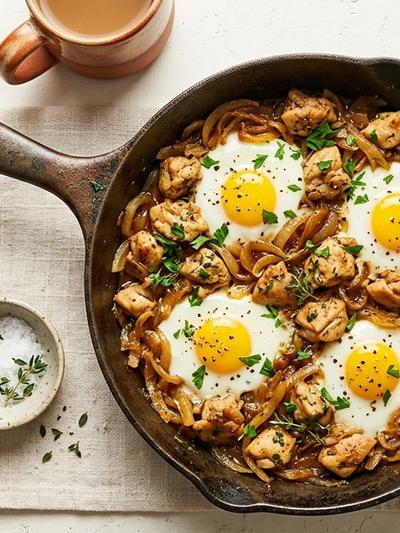
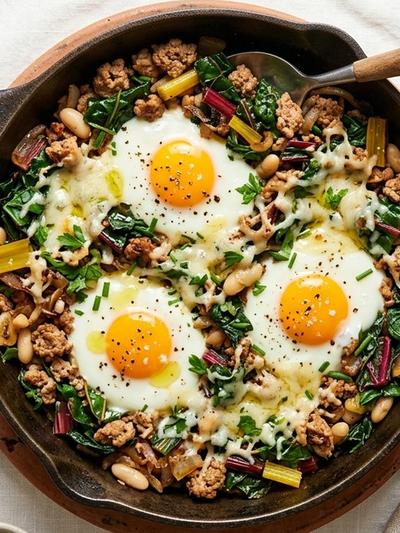
This Hungarian-inspired breakfast skillet delivers 41 grams of protein per serving from a combination of lean chicken breast and whole eggs, all for just 310 calories. Sweet Hungarian paprika provides a warm, earthy backbone while bell peppers and tomatoes contribute vitamin C and gentle fiber. The dish comes together in a single pan in under 30 minutes, making it practical for weekday mornings when protein goals still matter.
The flavor here is deeply savory without being heavy. Sweet paprika blooms in the hot pan with garlic and onion, coating every piece of chicken in that signature brick-red warmth that defines Hungarian cooking. Ripe tomatoes break down into a light, saucy base, and the eggs set gently on top — their runny yolks mixing into the vegetables to create a natural, silky sauce you eat straight from the skillet.
For GLP-1 users, this is a breakfast that solves a common problem: getting enough protein in the morning when your appetite is at its lowest. The portions are concentrated rather than voluminous, so each forkful carries real nutritional weight. A single skillet means less cleanup on mornings when energy is limited, and the soft textures are easy on a digestive system slowed by medication.
Why This Works on GLP-1
Each serving of this skillet provides 41 grams of complete protein from two complementary sources — chicken breast and whole eggs. Maintaining adequate protein intake is one of the most important nutritional strategies during GLP-1-assisted weight loss, because the reduced calorie intake that comes with medications like Mounjaro and Ozempic can lead to muscle loss if protein falls too low. Most clinical guidance suggests aiming for 25 to 40 grams of protein per meal, and this breakfast meets that target comfortably. Starting the day with a protein-dense meal also helps stabilize blood sugar through the morning, complementing the glucose-regulating effects of GLP-1 medications.
The vegetables in this skillet provide 4 grams of fiber per serving — enough to support digestion without overwhelming it. Bell peppers and tomatoes are among the gentler fiber sources, unlikely to cause the bloating or discomfort that high-fiber grains and legumes sometimes trigger when gastric emptying is already slowed. The dish avoids raw cruciferous vegetables and dense whole grains that some GLP-1 users find difficult in the morning.
At 310 calories and only 10 grams of fat per serving, this skillet is nutrient-dense without being calorie-heavy. The small amount of olive oil used for cooking provides just enough fat to absorb the fat-soluble compounds in paprika, which include carotenoids and vitamin E. Hungarian paprika itself is surprisingly rich in antioxidants — it is one of the highest food sources of capsanthin, a carotenoid linked to anti-inflammatory effects.
Ingredients (serves 4)
For the skillet:
- 1 lb (450g) boneless, skinless chicken breast, cut into 1/2-inch (1 cm) dice
- 4 large eggs
- 1 tablespoon (15ml) extra-virgin olive oil
- 1 large yellow onion, finely diced — about 1 cup (160g)
- 2 medium bell peppers (1 red, 1 yellow), cut into 1/2-inch (1 cm) pieces — about 2 cups (250g)
- 2 medium ripe tomatoes, cored and diced — about 1 cup (200g)
- 2 cloves garlic, minced
- 2 tablespoons sweet Hungarian paprika
- 1 teaspoon smoked paprika
- 1/2 teaspoon fine sea salt, plus more to taste
- 1/4 teaspoon freshly ground black pepper
For serving:
- 4 tablespoons (60g) plain Greek yogurt (2% fat)
- 2 tablespoons fresh chives, finely sliced
- Flaky salt (optional)
Instructions
Cook the chicken and build the base:
Season the diced chicken breast with half the salt and all the black pepper. Toss to coat evenly. Seasoning the chicken before cooking ensures the flavor penetrates rather than sitting only on the surface.
Heat the olive oil in a 12-inch (30 cm) nonstick or well-seasoned cast-iron skillet over medium-high heat. Add the seasoned chicken in a single layer and cook without stirring for 3 minutes, until the pieces develop light golden edges. Stir once and cook for 1 more minute. The chicken does not need to be fully cooked through at this stage — it will finish in the sauce. Transfer to a plate.
Reduce the heat to medium. Add the diced onion to the same skillet and cook for 2 minutes, stirring occasionally, until it begins to soften and turn translucent. The residual fond from the chicken adds depth here.
Add the garlic, sweet paprika, and smoked paprika. Stir constantly for 30 seconds. Paprika burns easily, so keeping it moving is important — you want it to bloom in the oil, releasing its fragrant compounds, without scorching.
Build the sauce and set the eggs:
Add the diced bell peppers and tomatoes to the skillet along with the remaining salt. Stir to combine everything with the paprika-coated onions. Cook for 4 minutes, stirring once or twice, until the tomatoes begin to break down and release their juice. This natural liquid becomes the cooking medium for the eggs.
Return the chicken and any accumulated juices to the skillet. Stir to distribute the chicken evenly through the vegetables. The mixture should be saucy but not soupy — if it looks dry, add 2 tablespoons of water.
Use the back of a spoon to create 4 shallow wells in the mixture, spacing them evenly. Crack one egg into each well. Sprinkle a tiny pinch of salt over each egg.
Cover the skillet with a lid or a sheet of aluminum foil. Reduce the heat to medium-low and cook for 5 to 6 minutes. Check at 5 minutes — the whites should be set but the yolks still soft and runny. If you prefer firmer yolks, add 1 to 2 minutes of covered cooking time.
Finish and serve:
- Remove the skillet from the heat. Dollop 1 tablespoon of Greek yogurt next to each egg. Scatter the chives over the entire skillet and finish with flaky salt if desired. Serve directly from the pan, giving each person one egg and a quarter of the chicken and vegetables.
Nutrition per Serving
| Nutrient | Amount (approx.) |
|---|---|
| Calories | ~310 kcal |
| Protein | ~41g |
| Fat | ~10g |
| Carbohydrates | ~13g |
| Fiber | ~4g |
Estimates based on USDA data for raw chicken breast, large eggs, standard bell peppers, and 2% Greek yogurt. Actual values vary with ingredient brands and exact portion sizes.
Practical Notes
Store and reheat individual portions. This skillet keeps well in airtight containers in the refrigerator for up to 3 days. Reheat gently in a covered skillet over low heat with a splash of water to prevent the chicken from drying out. The eggs will firm up during storage — if runny yolks matter to you, cook fresh eggs when reheating and warm only the chicken-pepper base.
Scale down for smaller appetites. If you are in the early weeks of GLP-1 treatment and eating smaller volumes, serve yourself half a portion (about 155 calories, 20g protein) and save the rest. The protein density of this dish means even a small serving delivers meaningful nutrition, which matters when you can only manage a few bites at breakfast.
Choose good paprika. The quality of Hungarian paprika matters more here than in most recipes because it is the dominant flavor. Look for tins or bags labeled "édes" (sweet) from Hungarian brands like Szeged or Kalocsai. Supermarket paprika from a plastic jar will work but produces a much milder result. Store paprika in the freezer to preserve its color and potency.
Swap the chicken for turkey. Ground turkey or diced turkey breast works identically in this recipe if you want to rotate proteins. The cooking time stays the same. Avoid using chicken thighs unless you adjust the fat count — thighs add roughly 4 extra grams of fat per serving compared to breast meat.
Add gentle carbs on the side if needed. A thin slice of rye toast or a small boiled potato alongside this skillet brings the meal to around 400 calories without disrupting the protein-to-calorie ratio. This can be helpful on days when your appetite allows a fuller breakfast, particularly if you have an active morning planned.
Frequently Asked Questions
Can I eat this skillet if I experience nausea on GLP-1 medications?
Can I make this dairy-free or egg-free?
How long does this keep in the fridge, and can I freeze it?
What if I can only manage a very small breakfast on my current GLP-1 dose?
Why do you bloom the paprika in the pan instead of adding it later?
This article provides general food and nutrition guidance only. It does not constitute medical advice. Always consult your healthcare provider regarding your GLP-1 medication and individual nutritional needs.