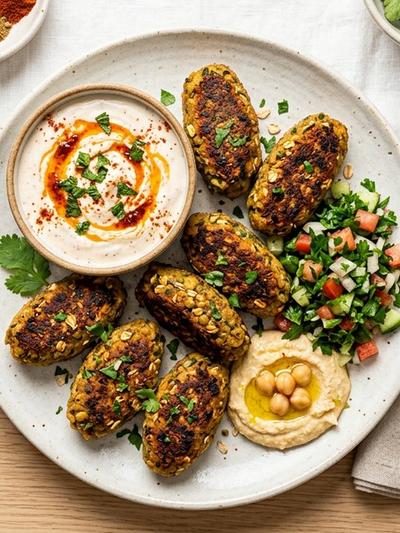
Each serving of these steamed black bean cakes delivers 32 grams of protein from a combination of black beans, cottage cheese, and Greek yogurt. Black beans provide iron, folate, and magnesium — minerals that GLP-1 users sometimes fall short on when eating smaller portions. The berbere spice blend adds warmth without the heavy oil base typical of Ethiopian stews, keeping the fat content to just 8 grams per serving.
The flavor here draws from Ethiopian wot traditions: warm berbere spice with its layered notes of paprika, coriander, fenugreek, and a touch of cinnamon. Cottage cheese blended into the bean mixture adds moisture and richness without heaviness, creating cakes that are tender and almost custard-like inside. The turmeric yogurt sauce brings a cool, tangy contrast that cuts through the warm spices beautifully.
Steaming is the key technique that makes this recipe work for GLP-1 users. Unlike pan-fried bean cakes, steamed versions are softer, lighter on the stomach, and far lower in fat. Wrapping the cakes in blanched collard green leaves before steaming adds a layer of gentle fiber and keeps everything moist — the result is a dinner that feels satisfying in a small portion without the digestive burden of fried or heavily oiled food.
Why This Works on GLP-1
The 32 grams of protein per serving comes from three complementary sources: black beans provide slow-digesting plant protein along with resistant starch, cottage cheese adds complete animal protein with all essential amino acids, and the Greek yogurt sauce contributes an additional protein boost. This combination matters during GLP-1-assisted weight loss on Ozempic or Wegovy because maintaining lean muscle mass requires consistent, adequate protein intake at every meal — and plant-only sources often fall short on leucine, the amino acid that triggers muscle protein synthesis. The cottage cheese fills that gap.
Black beans are one of the most GLP-1-friendly legumes because their fiber is largely soluble, meaning it forms a gel in the digestive tract rather than producing the gas and bloating associated with some high-fiber foods. The 13 grams of fiber per serving supports steady blood sugar and feeds beneficial gut bacteria. Steaming the beans in a mashed, seasoned form makes them even gentler on the stomach than eating whole beans.
The berbere spice blend contains turmeric and fenugreek, both of which have documented anti-inflammatory properties. Fenugreek has also been studied for its potential to support blood sugar regulation, making it a particularly smart addition for people managing weight and metabolic health on GLP-1 medications.
Ingredients (serves 4)
For the black bean cakes:
- 2 cans (15 oz / 425g each) black beans, drained and rinsed
- 1 cup (225g) low-fat cottage cheese
- 2 large eggs, lightly beaten
- 1/2 cup (45g) oat flour (or blitz rolled oats in a blender)
- 1 medium yellow onion, finely diced
- 3 cloves garlic, minced
- 1 tablespoon berbere spice blend
- 1/2 teaspoon ground turmeric
- 1/2 teaspoon salt
- 1 teaspoon olive oil (for sautéing)
- 8 large collard green leaves, stems trimmed
For the turmeric yogurt sauce:
- 1 1/2 cups (345g) plain nonfat Greek yogurt
- 1/2 teaspoon ground turmeric
- 1 tablespoon lemon juice
- 1 small clove garlic, grated
- 1/4 teaspoon salt
- Pinch of black pepper
For serving:
- 2 cups (60g) baby spinach or chopped kale
- Lemon wedges
Instructions
Prepare the collard green wrappers:
Bring a large pot of water to a boil. Blanch the collard green leaves for 60 to 90 seconds until they turn bright green and become pliable. Transfer immediately to a bowl of ice water to stop the cooking. Pat dry with a clean towel. Blanching softens the leaves so they wrap without cracking and removes some of the raw bitterness.
Use a paring knife to shave down the thick center rib on each leaf so it sits flat — do not cut through the leaf. Set the prepared leaves aside.
Make the bean mixture:
Heat the olive oil in a skillet over medium heat. Cook the diced onion for 5 to 6 minutes until softened and translucent. Add the garlic and berbere spice and stir for 30 seconds until fragrant. The brief bloom in oil activates the fat-soluble flavor compounds in the spice blend. Remove from heat and let cool for 5 minutes.
In a large bowl, mash the drained black beans with a fork or potato masher until about two-thirds are broken down but some chunks remain. This mixed texture gives the cakes structure while keeping them tender inside.
Add the cottage cheese, beaten eggs, oat flour, turmeric, salt, and the cooled onion mixture to the mashed beans. Stir until everything is evenly combined. The mixture should be thick and scoopable — not pourable.
Wrap and steam the cakes:
Lay a collard green leaf flat on your work surface. Scoop about 1/2 cup of the bean mixture into the center. Fold the sides of the leaf over the filling, then roll from the stem end toward the tip to create a neat parcel. Place seam-side down. Repeat with the remaining leaves and filling — you should get 8 parcels total.
Set up a steamer: place a steamer basket or rack in a large pot with 2 inches of water. Arrange the parcels seam-side down in the basket, leaving a little space between each for steam to circulate. Cover tightly. Bring to a boil, then reduce to medium heat and steam for 20 to 22 minutes. The cakes are done when they feel firm to gentle pressure and the internal temperature reaches 160°F (71°C). The eggs need to set fully for the cakes to hold their shape.
Make the turmeric yogurt sauce:
- While the cakes steam, whisk together the Greek yogurt, turmeric, lemon juice, grated garlic, salt, and pepper in a small bowl. Taste and adjust the lemon or salt as needed. Let it sit at room temperature while the cakes cook so the flavors meld.
Assemble and serve:
- Divide the baby spinach or kale between four plates. Place two steamed bean cake parcels on each bed of greens — the residual heat will gently wilt the leaves underneath. Spoon the turmeric yogurt sauce generously over the top and serve with lemon wedges on the side.
Nutrition per Serving
| Nutrient | Amount (approx.) |
|---|---|
| Calories | ~385 kcal |
| Protein | ~32g |
| Fat | ~8g |
| Carbohydrates | ~44g |
| Fiber | ~13g |
Based on two bean cake parcels per serving with approximately 1/3 cup turmeric yogurt sauce, using canned black beans, low-fat cottage cheese, and nonfat Greek yogurt.
Practical Notes
Berbere spice is easy to find or make. Most grocery stores carry berbere in the spice aisle, and it is widely available online. If you cannot find it, combine 1 tablespoon sweet paprika with 1/2 teaspoon each of ground coriander, fenugreek, cumin, and cinnamon plus a pinch of cayenne. This homemade version is milder and lets you control the heat level.
These freeze exceptionally well. Steam the parcels, let them cool completely, then freeze individually on a sheet pan before transferring to a freezer bag. They keep for up to three months. Reheat from frozen by steaming for 8 to 10 minutes or microwaving covered with a splash of water for 2 to 3 minutes.
Start with one parcel if you are in early GLP-1 weeks. During dose titration, appetite suppression can be intense. One parcel with a generous spoonful of the yogurt sauce provides about 16 grams of protein and is enough for a smaller dinner. Save the second parcel for the next day — it reheats perfectly.
The yogurt sauce doubles as a dip throughout the week. Make a full batch and store it in the refrigerator for up to five days. It works as a dip for raw vegetables, a spread on toast, or a sauce for grilled chicken. The turmeric stains containers, so use glass jars rather than plastic.
Eat these slowly and chew thoroughly. Even though the cakes are soft, the fiber and protein combination works best when eaten at a measured pace. GLP-1 medications slow gastric emptying, and rushing through a fiber-rich meal can trigger nausea or bloating. Take at least 15 to 20 minutes to finish your plate.
Frequently Asked Questions
Will the berbere spice cause stomach upset on GLP-1 medication?
Can I use a different type of bean instead of black beans?
How should I store and reheat leftover bean cakes?
What if my appetite is very low and I cannot finish a full serving?
Do I need a special steamer to make these?
This article provides general food and nutrition guidance only. It does not constitute medical advice. Always consult your healthcare provider regarding your GLP-1 medication and individual nutritional needs.