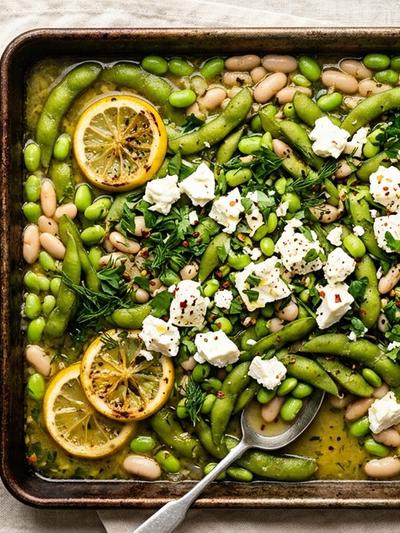
Each serving of this sheet pan braise delivers 29 grams of protein from two complementary plant sources: shelled edamame and cannellini beans. Edamame provides all nine essential amino acids in a single ingredient, making it one of the few complete plant proteins available. The cannellini beans add another layer of protein alongside resistant starch, a type of carbohydrate that feeds beneficial gut bacteria and supports steady blood sugar. Combined with the anti-inflammatory compounds in harissa peppers and cumin, this is a nutritionally dense meal that punches well above its modest calorie count.
The flavor profile draws from North African cooking traditions, where warm spices meet tangy tomato sauces and gentle heat. Harissa paste brings a smoky, slightly fruity warmth rather than sharp spiciness, while cumin and coriander add earthy depth. The braising liquid reduces during cooking, concentrating into a thick, glossy sauce that coats every bean and vegetable. Roasted zucchini and bell pepper soften into sweet, caramelized pieces that balance the savory spice base.
This recipe is built for GLP-1 users who want a complete dinner from a single pan with minimal cleanup. The braised format means everything is tender and easy to digest — no tough, chewy textures that can feel heavy on a suppressed appetite. A half-portion still provides nearly 15 grams of protein, so even on low-appetite days you can eat less and still meet meaningful protein targets.
Why This Works on GLP-1
The 29 grams of protein per serving come primarily from edamame (18g per cup shelled) and cannellini beans (9g per half can), both of which are well-tolerated by most GLP-1 users — including those on Wegovy or Mounjaro —. Maintaining protein intake during GLP-1-assisted weight loss is essential for preserving lean muscle mass. Research consistently shows that people who under-eat protein during rapid weight loss lose a higher proportion of muscle relative to fat, which slows metabolism and makes weight regain more likely. This meal hits nearly half the daily protein target most dietitians recommend for active weight loss.
The 14 grams of fiber per serving come from both the edamame and the beans, and the braised preparation makes this fiber gentler on digestion than raw or lightly cooked legumes. Slow oven braising breaks down some of the oligosaccharides that cause bloating, making the beans easier on a GLP-1-sensitive stomach.
The modest fat content — 14 grams per serving, mostly from olive oil and the natural fats in edamame — keeps the meal satiating without the heaviness that high-fat dishes bring. Edamame's fat is predominantly polyunsaturated, including alpha-linolenic acid (an omega-3 precursor), which supports heart health during weight loss when cardiovascular markers can fluctuate.
Ingredients (serves 2)
For the braising sauce:
- 1 cup (240ml) crushed tomatoes (canned, no salt added)
- 1½ tablespoons harissa paste (not harissa powder)
- 2 cloves garlic, minced
- 1 teaspoon ground cumin
- ½ teaspoon ground coriander
- ½ teaspoon smoked paprika
- 1 tablespoon olive oil
- ¼ teaspoon fine sea salt
- ¼ teaspoon black pepper
For the sheet pan:
- 2 cups (310g) shelled edamame, frozen (thawed)
- 1 can (15 oz / 425g) cannellini beans, drained and rinsed
- 1 medium zucchini (about 200g), cut into ¾-inch half-moons
- 1 red bell pepper, cut into 1-inch pieces
- 1 small red onion, cut into thin wedges
- ½ cup (120ml) low-sodium vegetable broth
For serving:
- 2 tablespoons fresh cilantro, roughly chopped
- 1 tablespoon fresh lemon juice
- ¼ teaspoon flaky sea salt (optional)
Instructions
Preheat and prepare the braising sauce:
- Position a rack in the center of the oven and preheat to 375°F (190°C). Line a rimmed sheet pan (half-sheet size, 18×13 inches) with parchment paper for easier cleanup.
- In a small bowl, whisk together the crushed tomatoes, harissa paste, minced garlic, cumin, coriander, smoked paprika, olive oil, salt, and pepper. The harissa paste varies in heat between brands — start with 1 tablespoon if you are sensitive to spice, then taste and add more.
Assemble and braise:
- Spread the thawed edamame, drained cannellini beans, zucchini, bell pepper, and red onion wedges across the prepared sheet pan. Distribute them in an even layer so everything braises uniformly.
- Pour the braising sauce over the vegetables and beans, then add the vegetable broth. Use a spatula or your hands to toss everything gently until the sauce coats all the ingredients evenly.
- Cover the sheet pan tightly with aluminum foil. The foil traps steam, creating a braising environment inside the oven that keeps everything moist and tender rather than drying out.
- Braise covered for 25 minutes. The liquid will bubble and the vegetables will begin to soften in the spiced sauce.
Uncover and finish:
- Remove the foil carefully — the steam is hot. The sauce should be loose and bubbling, with the vegetables partially softened.
- Return the uncovered sheet pan to the oven for 12–15 minutes. This evaporates excess liquid and concentrates the sauce into a thick, glossy coating. The edges of the zucchini and pepper should begin to caramelize slightly.
- Remove from the oven and let rest for 3 minutes. Squeeze the lemon juice over the top, scatter the cilantro, and finish with flaky salt if using.
Nutrition per Serving
| Nutrient | Amount (approx.) |
|---|---|
| Calories | ~420 kcal |
| Protein | ~29g |
| Fat | ~14g |
| Carbohydrates | ~46g |
| Fiber | ~14g |
Estimates based on 2 servings using no-salt-added crushed tomatoes, standard frozen shelled edamame, and one 15-oz can of cannellini beans. Actual values will vary with specific harissa paste and broth brands.
Practical Notes
Harissa paste selection matters. Look for harissa paste in a tube or jar (not dry powder), as the paste has oil and roasted peppers blended in, which creates a smoother braising sauce. Common brands include DEA and Le Phare du Cap Bon. Mild harissa works best for GLP-1 users — you can always add heat, but you cannot remove it once braised in.
Meal prep stores well for 4 days. Divide into two airtight containers and refrigerate. The braise actually improves overnight as the spices meld. Reheat in the microwave for 2 minutes, or return to a 350°F oven covered for 10 minutes. Add a small squeeze of fresh lemon juice after reheating to brighten the flavors.
Frozen edamame does not need full thawing. If your edamame is still partially frozen when you assemble the pan, that is fine — the 25-minute covered braise will cook them through completely. Just avoid using fully frozen edamame straight from the bag, as the excess ice will dilute the braising sauce.
Serve over a small base if you want more volume. A quarter cup of cooked couscous or quinoa underneath the braise adds texture and stretches the meal without significantly changing the protein ratio. This is useful on days when your appetite allows a slightly larger portion.
Eat protein components first. On days when your appetite drops mid-meal, prioritize eating the edamame and beans before the vegetables. This front-loads the protein, ensuring you hit your minimum even if you cannot finish the full serving. The vegetables keep well as leftovers for the next day.
Frequently Asked Questions
Will the harissa spice cause nausea or stomach issues on GLP-1 medications?
Can I substitute the cannellini beans for another legume?
How should I store and reheat leftovers?
What if I can only eat a very small portion right now?
Can I use a deep baking dish instead of a sheet pan?
This article provides general food and nutrition guidance only. It does not constitute medical advice. Always consult your healthcare provider regarding your GLP-1 medication and individual nutritional needs.