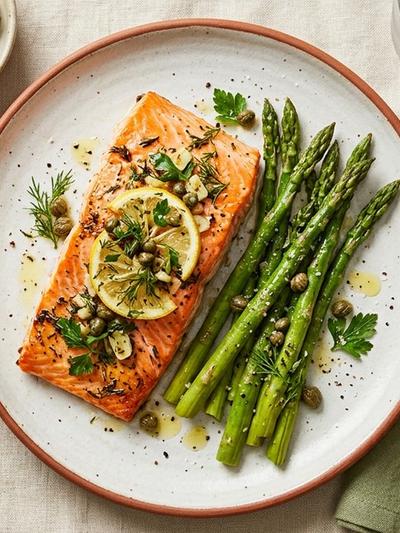
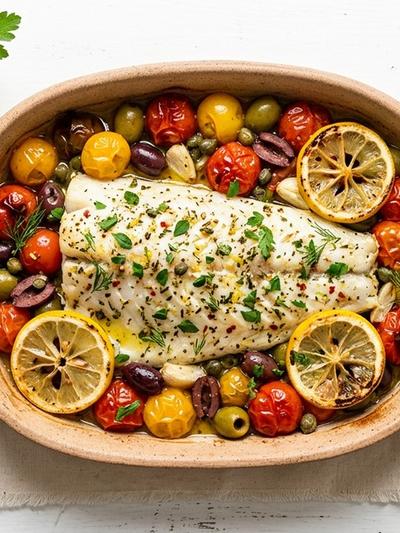
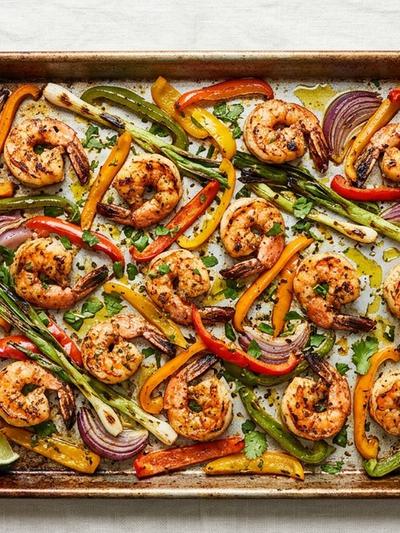
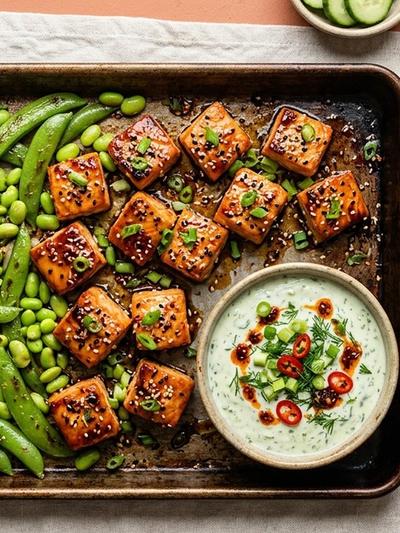
Each serving of this Spanish-inspired sheet pan halibut delivers 38 grams of complete protein from one of the leanest, most digestible white fish available. Halibut's firm, meaty texture holds up beautifully to high-heat roasting, developing a light golden crust while staying tender and flaky inside. Paired with cannellini beans, roasted bell peppers, and a quick romesco drizzle, this dish provides a full spectrum of nutrients — iron, selenium, B vitamins, and potassium — in a single pan.
The romesco sauce is what makes this unmistakably Spanish. Roasted red peppers, toasted almonds, smoked paprika, and a splash of sherry vinegar create a smoky, slightly sweet sauce with real depth. It clings to the halibut and pools around the beans, turning simple sheet pan cooking into something that tastes like it came from a tapas bar in Barcelona.
For GLP-1 users, this recipe checks every practical box. The entire meal cooks on one pan in under 25 minutes, which matters on evenings when appetite is unpredictable and energy is low. Portions are compact but deeply satisfying — the combination of lean protein, gentle fiber from white beans, and the rich-tasting romesco means you feel genuinely nourished even eating a smaller amount.
Why This Works on GLP-1
Halibut is one of the best protein sources for people on Mounjaro or Wegovy because it delivers exceptional protein density with very little fat. A single six-ounce fillet provides over 30 grams of protein at roughly 160 calories — making it easy to hit your daily protein target without overloading on volume. During GLP-1-assisted weight loss, maintaining adequate protein intake is critical for preserving lean muscle mass, and halibut's bioavailability means your body absorbs and uses that protein efficiently.
The cannellini beans add 5 grams of gentle, soluble fiber per serving without the bloating that high-fiber cruciferous vegetables can cause. Soluble fiber slows glucose absorption, which complements the blood sugar regulation that GLP-1 medications already support. For Ozempic users who sometimes experience constipation as a side effect, this moderate fiber content helps maintain regularity without digestive discomfort.
The fat in this dish comes primarily from heart-healthy sources — a small amount of olive oil and toasted almonds in the romesco. At 14 grams total fat per serving, this meal avoids the heaviness that can trigger nausea during the GLP-1 adjustment period while still providing enough fat for satiety and fat-soluble vitamin absorption.
Ingredients (serves 2)
For the halibut and vegetables:
- 2 halibut fillets, about 6 oz (170g) each, skin removed
- 1 cup (180g) canned cannellini beans, drained and rinsed
- 1 medium red bell pepper, cut into 1-inch strips
- 1 medium zucchini, sliced into half-moons, about 1/2 inch thick
- 1/2 cup (75g) cherry tomatoes, halved
- 2 teaspoons extra-virgin olive oil
- 1/2 teaspoon smoked paprika (pimentón)
- 1/4 teaspoon garlic powder
- 1/4 teaspoon fine sea salt
- Freshly ground black pepper
For the quick romesco:
- 1/3 cup (50g) jarred roasted red peppers, well-drained
- 1 tablespoon (10g) toasted almonds
- 1 small garlic clove
- 1 teaspoon sherry vinegar (or red wine vinegar)
- 1/2 teaspoon smoked paprika
- Pinch of cayenne pepper (optional)
- 1 teaspoon extra-virgin olive oil
- Salt to taste
For serving:
- 1 tablespoon fresh flat-leaf parsley, roughly chopped
- Lemon wedges
Instructions
Make the romesco:
- Add the drained roasted red peppers, toasted almonds, garlic clove, sherry vinegar, smoked paprika, cayenne if using, and olive oil to a small blender or mini food processor. Pulse until you get a slightly chunky sauce — you want some texture, not a smooth purée. Season with a pinch of salt. Set aside. The romesco can be made up to three days ahead and refrigerated.
Prepare the sheet pan:
Preheat your oven to 425°F (220°C) and line a rimmed sheet pan with parchment paper. Position a rack in the upper third of the oven so the fish gets direct, concentrated heat for a light crust.
Toss the bell pepper strips, zucchini half-moons, cherry tomatoes, and cannellini beans on the prepared sheet pan with 1 teaspoon of olive oil, the garlic powder, and a pinch of salt. Spread them in a single layer around the edges and center of the pan, leaving two open spaces for the fish fillets. The vegetables need space between them to roast rather than steam.
Slide the pan into the oven and roast the vegetables for 8 minutes. This head start ensures the peppers and zucchini soften properly, since the halibut cooks much faster than the vegetables.
Roast the halibut:
While the vegetables roast, pat the halibut fillets thoroughly dry with paper towels. Dry fish is essential — surface moisture creates steam and prevents browning. Brush each fillet with the remaining teaspoon of olive oil, then season with smoked paprika, salt, and pepper.
Remove the pan from the oven, push the vegetables aside slightly, and nestle the halibut fillets into the cleared spaces. The fish should sit directly on the parchment, not on top of vegetables, so the bottom gets direct heat.
Return the pan to the oven and roast for 10 to 12 minutes, until the halibut is opaque throughout and flakes easily when pressed gently with a fork. The internal temperature should reach 130–135°F (55–57°C). Halibut dries out quickly past this point, so check at 10 minutes.
Assemble and serve:
- Spoon a generous tablespoon of romesco sauce over each halibut fillet and scatter the rest across the vegetables and beans. Finish with chopped parsley and serve with lemon wedges on the side. The acid from the lemon brightens every element on the plate.
Nutrition per Serving
| Nutrient | Amount (approx.) |
|---|---|
| Calories | ~385 kcal |
| Protein | ~38g |
| Fat | ~14g |
| Carbohydrates | ~24g |
| Fiber | ~6g |
Based on 6 oz skinless halibut fillets, 1/2 cup cannellini beans per serving, and the full romesco recipe split between two portions.
Practical Notes
Romesco doubles as a weekly condiment. Make a double or triple batch of the romesco sauce and store it in a jar in the fridge for up to five days. It works brilliantly on grilled chicken, roasted eggs, or stirred into grain bowls — an easy way to add flavor without adding much volume when your appetite is small.
Choose thick-cut fillets for even cooking. Look for halibut fillets that are at least one inch thick. Thinner pieces overcook in the time it takes the vegetables to finish, leaving you with dry, chalky fish. If your fillets are uneven, fold the thinner tail end underneath to create a uniform thickness.
Frozen halibut works perfectly here. Thaw fillets overnight in the refrigerator on a plate lined with paper towels. Frozen-at-sea halibut is often fresher than the "fresh" fish at the counter, since it is processed immediately after catching. Pat it thoroughly dry before seasoning — frozen fish releases extra moisture.
Store and reheat with care. Leftover halibut keeps in an airtight container in the fridge for up to two days. Reheat gently in a 300°F (150°C) oven for 6 to 8 minutes, loosely covered with foil. Microwaving tends to make white fish rubbery. Alternatively, eat it cold over greens — the romesco works as a dressing.
Start with half a portion if you are in your first weeks on Zepbound or another GLP-1 medication. Plate one fillet with half the vegetables and save the rest. You can always eat more if your appetite allows, but starting small prevents the discomfort of overeating when your satiety signals are still adjusting.
Frequently Asked Questions
Will this recipe cause nausea if I am adjusting to my GLP-1 medication?
Can I substitute another fish for the halibut?
How long does this meal keep, and can I meal prep it?
What if I can only eat a very small portion right now?
Can I make the romesco without a blender?
This article provides general food and nutrition guidance only. It does not constitute medical advice. Always consult your healthcare provider regarding your GLP-1 medication and individual nutritional needs.