Twenty minutes. That is the total time from refrigerator to table for baked salmon with asparagus — a meaningful consideration when GLP-1 users have narrow eating windows, low energy from caloric restriction, or simply reduced motivation to cook elaborate meals. Salmon is one of the most nutrient-dense proteins available, and baking it alongside asparagus on a single sheet requires minimal preparation and almost no cleanup.
For people on GLP-1 medications, salmon serves a purpose beyond protein. The omega-3 fatty acids in wild or farmed Atlantic salmon support cardiovascular health, which is often a primary treatment concern alongside weight management. Omega-3s also have documented anti-inflammatory effects that may benefit the metabolic environment GLP-1 medications are working to improve. This is not background nutrition — it is front-line benefit from a meal that takes the same time to prepare as ordering delivery.
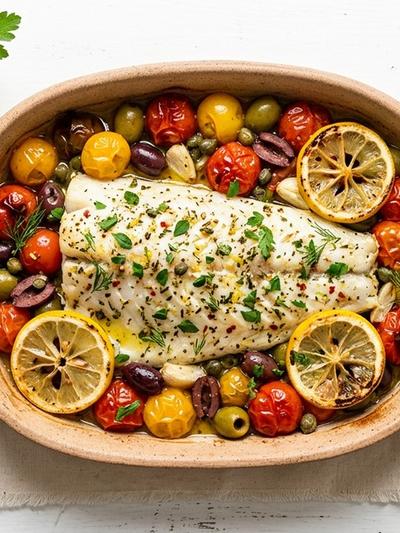
The seasoning here is deliberately restrained: garlic, lemon, capers, and a thread of olive oil. Capers bring a briny, slightly acidic note that lifts the flavor of the fish without adding any significant caloric load. The preparation works equally well whether you are eating immediately after cooking or packing it for lunch the next day.
Why This Works on GLP-1
Salmon is approximately 20 grams of protein per 100 grams of fish, making it one of the most protein-dense whole foods available. At a standard 200g (7 oz) fillet, you are close to your daily single-meal protein target without touching supplemental protein sources. This matters enormously on GLP-1 medication, where a reduced appetite means you may only feel comfortable eating a small amount at any given sitting.
The fat profile of salmon — predominantly unsaturated — is less likely to cause the prolonged gastric discomfort that can come with saturated fat when gastric emptying is already slowed. Asparagus contributes inulin, a prebiotic fiber that supports gut microbiome diversity. The combination of lean protein, healthy fat, and prebiotic fiber in a single dish is exceptionally well-suited to Wegovy or Mounjaro users managing both weight and metabolic markers.
The lemon juice adds acidity that subtly supports digestion, and the brief roasting time (14–16 minutes) keeps the fish moist rather than dry and difficult to eat.
Ingredients (serves 2)
Protein
- 2 salmon fillets, skin-on or skinless (about 200g / 7 oz each)
Vegetables
- 1 bunch asparagus (about 400g / 14 oz), woody ends trimmed
Seasoning
- 2 tablespoons (30ml) extra-virgin olive oil, divided
- 3 garlic cloves, minced
- 2 tablespoons (20g) capers, drained and roughly chopped
- Zest and juice of 1 lemon
- 1/2 teaspoon fine sea salt
- 1/4 teaspoon black pepper
- 1 tablespoon fresh dill or flat-leaf parsley, chopped (optional)
Instructions
Preheat the oven to 200°C (400°F). Line a rimmed baking sheet with parchment paper.
Place the asparagus spears on one half of the baking sheet. Drizzle with 1 tablespoon of the olive oil, season lightly with salt and pepper, and toss to coat. Spread into a single layer.
Place the salmon fillets on the other half of the baking sheet, skin-side down if using skin-on fillets.
In a small bowl, combine the remaining olive oil, garlic, capers, lemon zest, and half the lemon juice. Spoon this mixture over the salmon fillets, spreading to cover the surface.
Roast for 14–16 minutes, until the salmon is opaque and flakes easily when pressed with a fork at the thickest point, and the asparagus is tender with slight color at the tips. Thicker fillets (over 3cm / 1.2 inches) may need an additional 2 minutes.
Squeeze the remaining lemon juice over everything. Scatter fresh herbs over the top if using. Serve immediately, or cool and refrigerate within 30 minutes.
Nutrition per Serving
| Nutrient | Approximate Value |
|---|---|
| Calories | 390 kcal |
| Protein | 40g |
| Fat | 22g |
| Carbohydrates | 7g |
| Fiber | 3g |
Values are for Atlantic farmed salmon. Wild salmon is slightly leaner; adjust fat estimate down by 3–4g.
Practical Notes
Check the fillet thickness before timing. Salmon fillets vary significantly in thickness. A thin tail piece may be done in 12 minutes; a thick center-cut fillet may take 18. The visual test — flesh turning from translucent to opaque — is more reliable than a fixed timer.
Refrigerate quickly if meal prepping. Cooked salmon degrades faster than cooked chicken or beef. Cool the fillet uncovered for no more than 20 minutes before refrigerating in an airtight container. Consume within 2 days for best texture and safety.
Cold salmon is underrated. Many GLP-1 users find cold protein easier to eat than reheated protein, which can develop a strong smell. Cold salmon with asparagus, a squeeze of lemon, and a few extra capers makes an excellent next-day lunch with no reheating required.
Asparagus thickness matters. Thin asparagus spears roast more quickly and may be done before the salmon. If your asparagus is very thin (pencil-width), add it to the pan 5 minutes after the salmon goes in.
The capers are functional, not decorative. Their acidity supports digestion and provides flavor complexity that replaces heavier sauces. If you dislike capers, substitute chopped green olives or a tablespoon of Dijon mustard thinned with lemon juice.
Serve with a simple starch if tolerated. A small portion of roasted sweet potato or a few crackers alongside adds carbohydrate for those who need more caloric density. This does not compromise the protein ratio for most GLP-1 users' needs.
Frequently Asked Questions
Can I use frozen salmon fillets for this recipe?
I dislike capers — what can I substitute?
How should I store and reheat leftovers if I cook both servings but only eat one?
Is salmon appropriate for people managing high triglycerides on GLP-1?
My asparagus burns before the salmon is done — what am I doing wrong?
This article provides general food and nutrition guidance only. It does not constitute medical advice. Always consult your healthcare provider regarding your GLP-1 medication and individual nutritional needs.