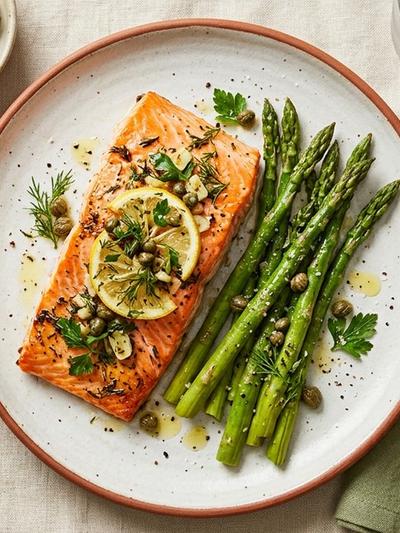
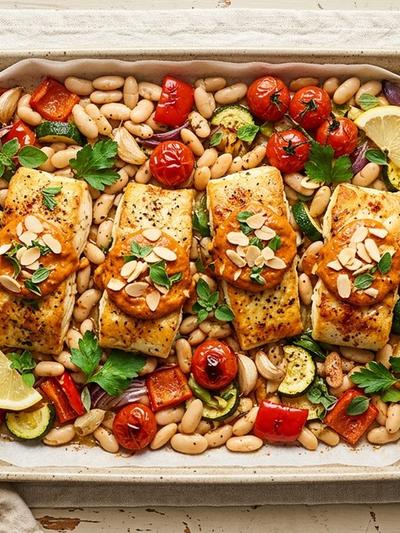
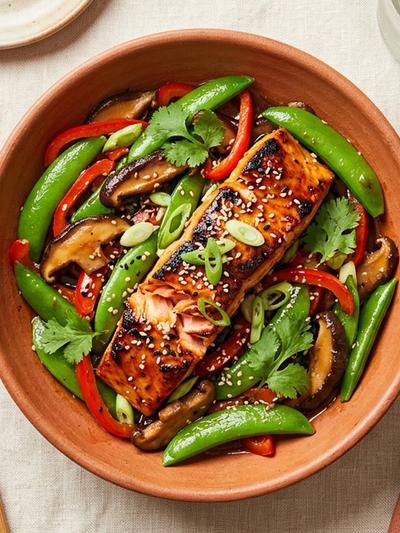
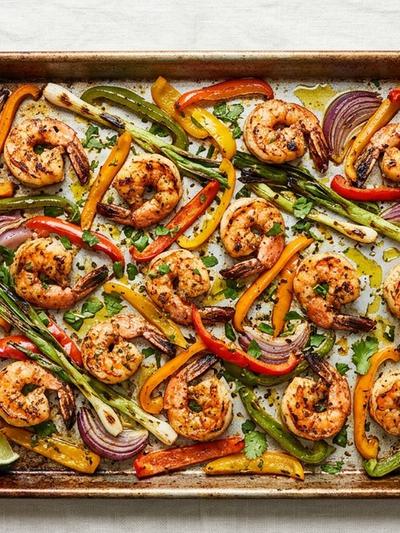
Mediterranean cooking arrived at the same conclusions about eating that GLP-1 nutrition is grounded in: protein, olive oil, vegetables, bright acids, and restraint with heavy fats. The flavor profile — lemon, garlic, tomato, herbs, a note of brine from capers or olives — works across all appetite states. On days when appetite is limited, it is bright enough to be appealing. On days when you're eating more normally, it satisfies completely without any sense of restriction.
This baked white fish dish is a 20-minute meal with almost no active cooking time. You assemble the components in a baking dish, slide it in the oven, and it takes care of itself. The fish sits on a bed of cherry tomatoes, olives, and capers that slowly roast and release their juices, creating a natural sauce without any additional liquid or thickening. It is the kind of dinner that feels effortful in presentation but is genuinely minimal in preparation.
Any white fish works here: sea bass, cod, tilapia, halibut, sea bream, or grouper. The dish adapts to whatever is freshest or most accessible. The only variable is cooking time, which adjusts with thickness.
Why This Works on GLP-1
White fish is among the most protein-dense, calorie-light foods available. A 180g fillet of sea bass or cod provides approximately 34g of protein in 160–180 calories, with minimal fat. For GLP-1 users — including those on Zepbound or Ozempic — focused on hitting protein targets in small eating windows, this protein-to-calorie ratio is exceptional.
The Mediterranean preparation specifically suits GLP-1 eating because it avoids the common pitfalls of fish preparation that cause problems: no heavy butter sauces, no cream, no breadcrumb crusts that add carbohydrates and density. Instead, the fish is dressed in olive oil (a moderate amount of healthy fat), acids (lemon, capers, tomato), and aromatics that enhance flavor without adding burden.
Olives and capers add significant flavor in small quantities — you don't need much to create a briny, complex backdrop. For GLP-1 users who find that flavors need to be interesting to motivate eating, the intensity of Mediterranean ingredients achieves this with minimal caloric cost.
Ingredients (serves 2)
- 2 white fish fillets, 180g (6oz) each (cod, sea bass, tilapia, or halibut)
- 200g (7oz) cherry tomatoes
- 60g (⅓ cup) pitted Kalamata olives, halved
- 2 tablespoons capers, drained
- 3 garlic cloves, thinly sliced
- 2 tablespoons extra-virgin olive oil
- 1 lemon, half sliced into rounds, half reserved for juice
- 4 sprigs fresh thyme (or 1 tsp dried)
- Salt and black pepper
- Optional: small handful of fresh flat-leaf parsley to finish
Instructions
Preheat the oven to 190°C (375°F).
Build the base. In a baking dish large enough to hold both fillets without crowding, scatter the cherry tomatoes, halved olives, capers, and sliced garlic. Drizzle with 1 tablespoon of olive oil and season lightly with salt and pepper. Toss briefly to combine.
Place the fish. Nestle the fish fillets into the vegetable mixture. They can sit on top of the tomatoes — the elevated position helps them cook evenly and allows the juices to collect around them.
Season and dress. Drizzle the remaining tablespoon of olive oil over the fish. Season with salt and pepper. Lay lemon rounds over the fillets and tuck thyme sprigs around them.
Bake. Place in the preheated oven. Bake for 14–18 minutes depending on thickness. The fish is done when it flakes easily with a fork and is opaque all the way through. A 2.5cm (1 inch) thick fillet will take approximately 16 minutes.
Finish and serve. Remove from the oven. Squeeze the juice of the remaining half-lemon over everything. Scatter fresh parsley if using. Serve directly from the baking dish, spooning the tomato-olive pan juices over each portion.
Nutrition per Serving
- Calories: ~310
- Protein: ~34g
- Fat: ~14g
- Carbs: ~8g
- Fiber: ~2g
Practical Notes
Bring fish to room temperature. Remove the fish from the fridge 15 minutes before baking. Cold fish placed directly in the oven takes longer to cook unevenly — the outside overcooks before the center reaches temperature.
One baking dish, no pots. This entire dish requires one baking dish and produces minimal washing up. On evenings when energy is limited, the low-cleanup nature of this recipe is a practical advantage.
Vary the fish freely. This recipe works with essentially any firm white fish. Thicker fillets (halibut, sea bass) at 3cm will need 18–20 minutes. Thinner fillets (tilapia, sole) at 1.5cm will need 12–14 minutes. Check at the minimum time.
The pan juices are valuable. After serving the fish, the tomato-olive juices in the pan are intensely flavored. Spoon them over the fish portions generously. On a day when appetite is very low and you're mostly eating the protein, these juices make the fish more appealing and easier to eat.
Serve with what suits the day. On a full-appetite day, serve alongside roasted vegetables or a small portion of quinoa. On a reduced-appetite day, the fish alone is a complete, satisfying meal.
Frequently Asked Questions
Which white fish is best for GLP-1 users — cod, tilapia, sea bass, or halibut?
Can I make this ahead of time for meal prep?
I find the olives and capers too salty and briny — can I reduce or omit them?
How do I know when the fish is cooked through without a thermometer?
Is this meal appropriate if I can only eat a half portion due to early satiety?
This article provides general food and nutrition guidance only. It does not constitute medical advice. Always consult your healthcare provider regarding your GLP-1 medication and individual nutritional needs.