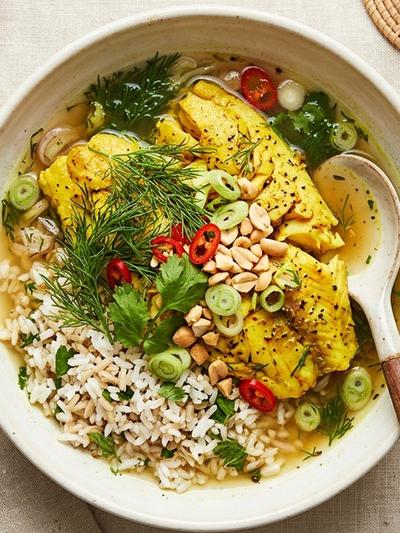
Each bowl of this Vietnamese-inspired sour fish soup delivers 33 grams of lean protein from cod fillets that gently poach in a slow-simmered tamarind broth. The dish is based on canh chua cá, one of southern Vietnam's most beloved home-cooked soups, where white fish meets a tangy, sweet-sour broth built on tamarind paste, ripe tomatoes, and fresh pineapple. At 275 calories per serving with only 4 grams of fat, the macros are exceptionally efficient for anyone prioritizing protein density during weight loss.
The flavor hits a balance that most Western soups never attempt — sour from tamarind, sweet from pineapple, savory from fish sauce, and bright from a generous handful of fresh herbs piled on at the table. Okra adds a silky body to the broth without cream or starch, and taro root provides tender, starchy bites that make the bowl feel substantial. The overall effect is refreshing rather than heavy, which explains why this soup is eaten year-round in Vietnam even in tropical heat.
This broth-forward format is ideal for GLP-1 users because it delivers significant protein in a form that feels light and hydrating. The tangy, aromatic quality of the soup stimulates appetite gently rather than overwhelming it, and the soft-poached fish requires minimal chewing effort on days when eating feels like a chore. You control the portion by adjusting how much broth versus solid ingredients you serve yourself.
Why This Works on GLP-1
Consistent protein intake at every meal is critical for preserving lean muscle during GLP-1-assisted weight loss, and this bowl delivers 33 grams per serving from one of the leanest protein sources available. Cod is nearly pure protein — over 90 percent of its calories come from protein rather than fat — making it an ideal choice for people on medications like Zepbound or Wegovy who need to maximize nutrition within a reduced calorie budget. The amino acid profile of white fish supports muscle protein synthesis effectively, which becomes increasingly important as body weight decreases.
The 4 grams of fiber per serving comes from the okra, taro, and tomatoes — a deliberately moderate amount. GLP-1 medications slow gastric emptying, so aggressive fiber loads can create uncomfortable bloating and prolonged fullness. The soluble fiber in okra is particularly gentle, forming a soothing gel rather than the rough bulk that raw vegetables or bran would create. This is fiber that supports digestion without fighting against it.
Tamarind provides meaningful potassium and magnesium, two electrolytes that GLP-1 users sometimes run low on due to reduced food intake. The broth itself contributes hydration alongside nutrition, addressing another common challenge during Mounjaro or Ozempic treatment. The overall anti-inflammatory profile of this soup — from the turmeric-adjacent compounds in tamarind and the lycopene in cooked tomatoes — supports metabolic health during active weight loss.
Ingredients (serves 4)
For the slow cooker broth:
- 4 cups (960ml) low-sodium chicken broth
- 2 tablespoons tamarind paste (seedless concentrate)
- 1 tablespoon fish sauce
- 1 teaspoon granulated sugar
- 2 medium tomatoes, each cut into 6 wedges (about 10 oz / 280g total)
- 1 cup (165g) fresh pineapple, cut into 1/2-inch chunks
- 4 oz (115g) taro root, peeled and cut into 1/2-inch cubes
- 2 cloves garlic, minced
- 1-inch (2.5cm) piece fresh ginger, peeled and thinly sliced
- 1/4 teaspoon white pepper
For the fish:
- 1.25 lbs (560g) skinless cod fillets, cut into 2-inch pieces
- 1/2 teaspoon fine sea salt
- Pinch of white pepper
For the bowls:
- 6 whole okra pods (about 3 oz / 85g), sliced into 1/2-inch rounds
- 1 cup (100g) bean sprouts
- 1/2 cup (15g) fresh Vietnamese coriander or regular cilantro, roughly torn
- 1/4 cup (8g) fresh Thai basil leaves
- 2 scallions, thinly sliced
- 1 lime, cut into 4 wedges
- 1 small red chili, thinly sliced (optional)
Instructions
Build the broth base:
- Dissolve the tamarind paste in the chicken broth by whisking them together in a measuring jug or directly in the slow cooker insert. Tamarind paste can be thick and sticky, so breaking it up in liquid first ensures it distributes evenly rather than clumping at the bottom.
- Add the tomato wedges, pineapple chunks, taro cubes, garlic, ginger slices, fish sauce, sugar, and white pepper to a 4- to 6-quart slow cooker. Pour the tamarind broth over everything and stir gently. The tomatoes and pineapple will break down during cooking, thickening the broth naturally and intensifying the sweet-sour balance.
- Cover and cook on low for 4 to 5 hours, or on high for 2.5 to 3 hours. The broth is ready when the taro is completely tender and the tomatoes have collapsed into the liquid. The taro releases starch as it cooks, giving the soup a subtle body without any added thickener.
Add the okra and fish:
- Add the sliced okra to the slow cooker, pressing the rounds gently into the broth. Okra goes in before the fish because it needs about 10 minutes to soften and release its characteristic silky texture into the soup.
- Season the cod pieces with salt and white pepper. After 10 minutes, nestle them into the broth in a single layer, ensuring the liquid comes at least halfway up each piece. Adding the fish last prevents it from overcooking and falling apart — cod needs only gentle heat to turn opaque and flaky.
- Cover and cook on high for 15 to 20 minutes, until the cod is opaque throughout and flakes easily with a fork. Do not stir during this time. The fish should poach undisturbed so it holds its shape in the finished bowl.
Assemble the bowls:
- Ladle the broth, vegetables, and fish carefully into 4 deep bowls, using a slotted spoon to distribute the cod and taro pieces evenly. Try to keep the fish in large pieces rather than breaking them up.
- Top each bowl with a handful of bean sprouts, torn coriander or cilantro, Thai basil leaves, and sliced scallions. Place a lime wedge on the side of each bowl. The herbs and bean sprouts should be added raw — their fresh crunch contrasts with the soft, warm broth and adds texture that makes each spoonful interesting.
- Squeeze lime juice over the bowl just before eating. The acid brightens the tamarind and pulls all the flavors into sharper focus. Add sliced chili if you want gentle heat.
Nutrition per Serving
| Nutrient | Amount (approx.) |
|---|---|
| Calories | ~275 kcal |
| Protein | ~33g |
| Fat | ~4g |
| Carbohydrates | ~24g |
| Fiber | ~4g |
Estimates based on 5 oz cod per serving, one-quarter of the vegetable and broth base, measured tamarind paste, and low-sodium chicken broth. Using tilapia instead of cod reduces fat by approximately 1g per serving.
Practical Notes
Meal prep storage. This soup refrigerates well for up to 3 days in sealed containers. The broth actually improves overnight as the tamarind and pineapple flavors meld further. Reheat gently on the stovetop over medium-low heat rather than blasting it in the microwave, which can make the cod rubbery. Pack the bean sprouts, herbs, and lime separately and add them fresh after reheating — wilted herbs lose the bright contrast that makes this dish work.
Tamarind paste sourcing. Look for seedless tamarind concentrate in the Asian foods aisle — it comes in small jars or plastic tubs and keeps for months in the refrigerator after opening. Avoid tamarind blocks that contain seeds, as they require soaking and straining. If you cannot find tamarind paste, substitute 1.5 tablespoons of lime juice plus 1 teaspoon of brown sugar, though the flavor will be less complex. Most well-stocked grocery stores now carry it near the soy sauce and fish sauce.
Taro root substitution. If taro is unavailable, use waxy potatoes cut to the same size. Yukon Gold works best — it holds its shape during slow cooking and provides a similar starchy creaminess. Sweet potato is another option, though it will add a sweetness that shifts the flavor balance. The taro is worth seeking out at Asian markets if possible, as its unique purple-flecked texture and mild, nutty flavor are part of what makes this soup distinctive.
Small appetite strategy. On low-appetite days, serve yourself mostly broth with just one or two pieces of fish and skip the taro. A half portion of broth with fish still delivers roughly 17 grams of protein. The sour, tangy quality of this particular broth often stimulates appetite better than rich or creamy soups — many Wegovy users find that tart flavors are more appealing than bland ones during dose-increase weeks. Sip the broth slowly and add solid pieces as your appetite allows.
Freezing the broth separately. The tamarind broth freezes well for up to 2 months. Freeze it without the fish in 2-cup portions for quick future meals — simply thaw, bring to a simmer, and poach fresh cod or tilapia directly in the hot broth for 8 to 10 minutes on the stovetop. The taro and tomatoes freeze within the broth without any texture loss. This makes it easy to batch the broth on a weekend and assemble individual bowls throughout the week.
Frequently Asked Questions
Is tamarind too sour for a sensitive GLP-1 stomach?
Can I use tilapia instead of cod in this recipe?
How long does this soup keep, and can I prep it for a full work week?
What if my appetite is extremely low during a dose increase?
Can I make this in an Instant Pot or on the stovetop instead?
This article provides general food and nutrition guidance only. It does not constitute medical advice. Always consult your healthcare provider regarding your GLP-1 medication and individual nutritional needs.