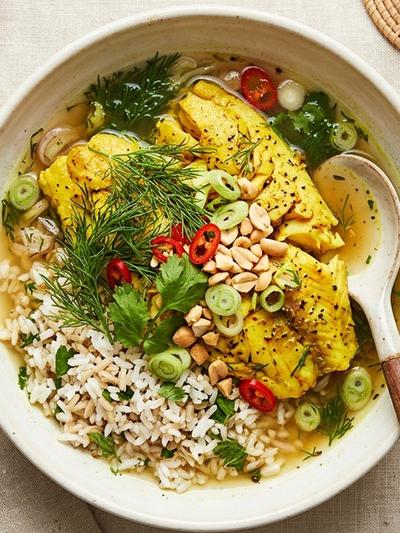
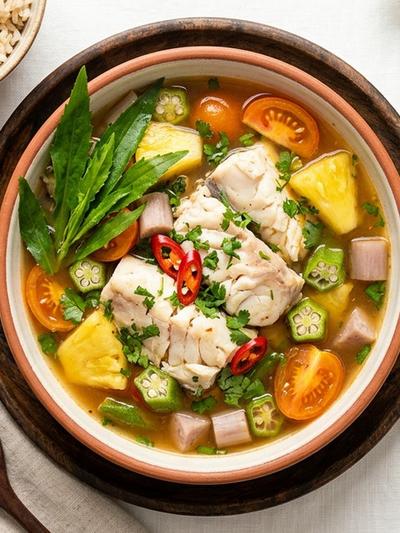
Each bowl of this Vietnamese-inspired ginger fish congee provides 34 grams of lean protein from tilapia fillets that gently break apart in a slow-simmered rice porridge. The dish is built on cháo cá, one of Vietnam's most beloved comfort foods — a silky rice congee enriched with ginger, fish sauce, and a generous crown of fresh herbs. At 325 calories per serving with only 5 grams of fat, this is one of the most protein-efficient warm bowls you can prepare with minimal hands-on effort.
The flavor is deceptively complex for such a simple ingredient list. A heavy hand of fresh ginger gives the porridge a clean, warming backbone, while fish sauce and a touch of white pepper add savory depth that builds as the rice breaks down over hours of slow cooking. Crispy fried shallots scattered on top provide the crunch that every great congee needs, and a final squeeze of lime pulls the entire bowl into sharp focus.
Congee is one of the oldest digestive comfort foods in Asian cooking, and for good reason. The long-cooked rice breaks down into a smooth, almost creamy porridge that requires very little digestive effort — a significant advantage when GLP-1 medications have slowed gastric emptying. Each serving is substantial enough to feel like a full dinner, yet light enough that it rarely triggers the heaviness or nausea that denser meals can cause.
Why This Works on GLP-1
Each serving delivers 34 grams of complete protein primarily from tilapia, one of the leanest white fish options available at roughly 26 grams of protein per 4-ounce fillet with under 2 grams of fat. Maintaining adequate protein intake during GLP-1-assisted weight loss is critical for preserving lean muscle mass, and this congee makes hitting that target easy because the fish practically dissolves into the porridge, making it effortless to eat even when appetite is suppressed. Users of medications like Zepbound or Wegovy often report that warm, brothy meals are among the easiest foods to tolerate during the appetite-adjustment phase.
The slowly broken-down jasmine rice acts almost like a natural thickener, creating a porridge consistency that coats the stomach gently rather than sitting in a dense lump. Fresh ginger is a well-documented digestive aid that may help ease the mild nausea some GLP-1 users experience, particularly in the early weeks of treatment or after dose increases. The overall fiber content is moderate at 3 grams per serving, which is intentional — this is a soothing bowl, not a roughage-heavy meal.
The low fat content of 5 grams per serving means this congee empties from the stomach more efficiently than fattier comfort foods. Since GLP-1 medications already delay gastric emptying, pairing them with low-fat, high-protein meals helps reduce that uncomfortable "food sitting in your stomach" sensation. The electrolytes from the fish sauce and the hydration from the brothy porridge are also practical benefits for users who sometimes struggle with adequate fluid intake.
Ingredients (serves 4)
For the congee base:
- 1 cup (200g) jasmine rice, rinsed thoroughly until water runs clear
- 8 cups (1.9L) low-sodium chicken broth
- 3-inch (7.5cm) piece fresh ginger, peeled and sliced into thin coins
- 3 cloves garlic, smashed
- 2 tablespoons fish sauce, plus more to taste
- 1 teaspoon white pepper
- 2 cups (120g) baby spinach
For the fish:
- 1.5 lb (680g) tilapia fillets (or cod)
- 1 tablespoon fish sauce
- 1 teaspoon ground turmeric
- Pinch of white pepper
For serving:
- 4 scallions, thinly sliced
- 1/2 cup (15g) fresh cilantro leaves
- 2 tablespoons store-bought crispy fried shallots
- 1 lime, cut into wedges
- Freshly cracked black pepper
Instructions
Prepare the congee base:
- Rinse the jasmine rice in a fine-mesh strainer under cold water until the water runs nearly clear, about 1 minute. This removes excess surface starch and prevents the congee from becoming gummy rather than silky.
- Add the rinsed rice, chicken broth, ginger coins, smashed garlic, fish sauce, and white pepper to the slow cooker. Stir once to distribute the rice evenly across the bottom.
- Cover and cook on low for 4 to 5 hours, or on high for 2.5 to 3 hours. The congee is ready when the rice has completely broken down into a thick, porridge-like consistency. Stir it once or twice during the last hour if possible — this helps the rice break apart more evenly.
Prepare and add the fish:
- About 30 minutes before serving, pat the tilapia fillets dry with paper towels. Season on both sides with fish sauce, turmeric, and white pepper. The turmeric adds a subtle golden color and earthy warmth without overpowering the ginger.
- Nestle the seasoned fillets directly into the hot congee, pressing them gently below the surface. Cover and cook for 20 to 25 minutes on high, or until the fish is opaque throughout and flakes easily. Tilapia is thin enough that it cooks quickly even from the residual heat.
- Use a fork to break the fish into large, rustic chunks directly in the pot. Stir gently — you want visible pieces of fish throughout, not a uniform mush.
Finish and serve:
- Add the baby spinach to the pot and stir until just wilted, about 2 minutes. The residual heat is sufficient.
- Taste the congee and adjust seasoning with additional fish sauce if needed. The porridge should taste savory and gingery with a clean, brothy finish.
- Remove and discard the ginger coins if you prefer a milder ginger flavor, or leave them in for extra warmth.
- Ladle the congee into bowls. Top each serving with sliced scallions, cilantro leaves, a pinch of crispy fried shallots, a crack of black pepper, and a lime wedge on the side. Squeeze the lime over the bowl just before eating — the acidity brightens the entire dish.
Nutrition per Serving
| Nutrient | Amount (approx.) |
|---|---|
| Calories | ~325 kcal |
| Protein | ~34g |
| Fat | ~5g |
| Carbohydrates | ~33g |
| Fiber | ~3g |
Based on 4 servings using tilapia fillets, jasmine rice, low-sodium chicken broth, and the topping amounts listed. Actual values may vary slightly depending on fish fillet thickness and broth brand.
Practical Notes
This congee refrigerates exceptionally well for meal prep. Portion the finished congee into individual containers and refrigerate for up to 4 days. It will thicken considerably as it cools — simply add 2 to 3 tablespoons of water or broth when reheating and stir until it loosens back to porridge consistency. Pack the fresh toppings separately so they stay crisp.
Cod works as a direct substitute for tilapia. Use the same weight of skinless cod fillets and add 5 extra minutes to the poaching step, as cod is typically thicker. The protein and calorie counts remain nearly identical. Avoid oily fish like salmon here — the lean, neutral flavor of white fish is essential to the clean taste of the congee.
If nausea is a concern, start with a half portion. Congee is one of the most stomach-friendly formats in this entire recipe collection. Serve yourself half a bowl initially and return for more if your appetite allows. The warm, smooth texture is far easier to tolerate than chunky or fibrous dishes during periods of GLP-1 side effects. Many users on Mounjaro or Ozempic report that ginger-forward dishes like this one are among the first solid foods they can comfortably eat after a dose increase.
Freeze the congee in single-serving portions for up to 2 months. Let it cool completely, then transfer to freezer-safe containers with about an inch of headspace for expansion. Thaw overnight in the refrigerator and reheat on the stove with a splash of broth. The texture recovers well because the rice is already fully broken down — there is no graininess after freezing.
Make it a bigger bowl on higher-appetite days. Add a soft-boiled egg on top for an extra 6 grams of protein and 70 calories. You can also stir in a handful of cooked shelled edamame during the last 5 minutes for a plant-based protein boost. Both additions keep the bowl within the same gentle flavor profile without competing with the ginger and fish sauce.
Frequently Asked Questions
Will this congee cause nausea if I'm in the first few weeks of GLP-1 treatment?
Can I make this with vegetable broth to keep it pescatarian?
How long does this keep in the refrigerator, and does it reheat well?
What if I can only eat very small portions right now?
Can I cook the fish from frozen in the slow cooker?
This article provides general food and nutrition guidance only. It does not constitute medical advice. Always consult your healthcare provider regarding your GLP-1 medication and individual nutritional needs.