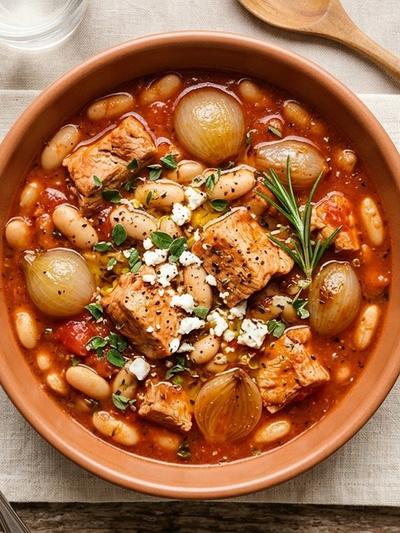
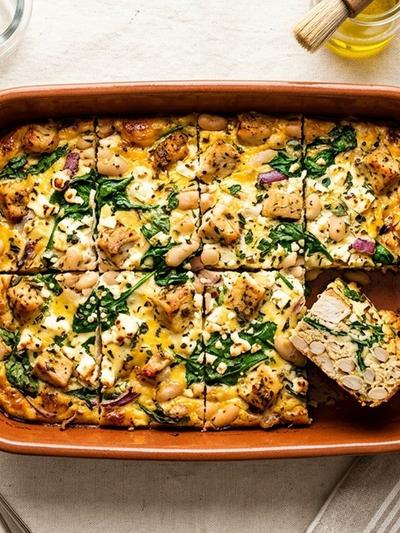
Each generous serving of this slow cooker breakfast casserole provides 38 grams of protein from a trio of lean ground turkey, whole eggs, and chickpeas — all for under 400 calories. It delivers meaningful iron from the turkey and spinach, plus B vitamins from the eggs, nutrients that GLP-1 users often need more of when eating reduced volumes. The chickpeas contribute both plant protein and steady-release carbohydrates that help maintain energy through the morning.
The flavor profile is unmistakably Mediterranean: smoked paprika and dried oregano season the turkey, while roasted red peppers add a sweet depth and Kalamata olives bring a briny counterpoint. Crumbled feta melts into pockets throughout the casserole, and a finish of fresh dill and lemon zest lifts everything with brightness. The texture lands somewhere between a frittata and a savory bread pudding — firm enough to slice but tender enough to eat with a fork.
This casserole cooks on low overnight, so you wake up to a fully finished, protein-dense breakfast that requires zero morning effort. The soft, egg-bound texture is particularly easy on the stomach for GLP-1 users who experience sensitivity early in the day. Each portion is naturally compact and satisfying, which suits the smaller appetite most people develop on these medications.
Why This Works on GLP-1
With 38 grams of protein per serving, this casserole provides roughly a third of the daily protein target most clinicians recommend during GLP-1-assisted weight loss. Preserving lean muscle mass is one of the biggest nutritional priorities when using medications like Mounjaro or Ozempic, because the appetite reduction they create can lead to inadequate protein intake if meals aren't deliberately structured around it. The triple protein source here — turkey, eggs, and chickpeas — ensures a complete amino acid profile with both fast-digesting and slower-digesting proteins working together. Starting the day with this level of protein also helps stabilize blood sugar and reduces the likelihood of energy dips by midmorning.
The chickpeas provide 5 grams of fiber per serving in a gentle, well-cooked form that's unlikely to cause the bloating or discomfort that raw high-fiber foods sometimes trigger in GLP-1 users. Slow cooking softens the chickpeas further, breaking down some of the oligosaccharides that cause digestive distress. The spinach and roasted peppers add micronutrients without adding bulk that might feel heavy.
At 388 calories per serving, this casserole fits comfortably into the reduced caloric intake that most Wegovy and Zepbound users naturally settle into. The moderate fat content — just 16 grams, largely from eggs and a small amount of feta — keeps it satisfying without the heaviness that high-fat breakfasts can cause when gastric emptying is already slowed by GLP-1 medication.
Ingredients (serves 4)
For the turkey base:
- 12 oz (340g) 93% lean ground turkey
- 1 teaspoon olive oil
- 2 cloves garlic, minced
- 1 teaspoon dried oregano
- ½ teaspoon smoked paprika
- ¼ teaspoon salt
- ¼ teaspoon black pepper
For the casserole:
- 8 large eggs
- ¼ cup (60ml) skim milk
- 1 can (15 oz / 425g) chickpeas, drained and rinsed
- 2 cups (60g) baby spinach, roughly chopped
- ½ cup (75g) jarred roasted red peppers, diced
- ¼ cup (25g) Kalamata olives, halved
- 1½ oz (40g) feta cheese, crumbled
- Nonstick cooking spray
For serving:
- 2 tablespoons fresh dill, chopped
- 1 teaspoon lemon zest
- Pinch of flaky sea salt (optional)
Instructions
Brown the turkey:
- Heat the olive oil in a nonstick skillet over medium-high heat. Add the ground turkey and break it into small crumbles with a wooden spoon, cooking for 5–6 minutes until no pink remains. The smaller you break the pieces, the more evenly they'll distribute through the casserole.
- Add the garlic, oregano, smoked paprika, salt, and pepper during the last minute of cooking. Stir well to coat the turkey evenly in the spices, then remove from heat and let cool for 5 minutes.
Assemble the casserole:
- Spray the inside of a 4- to 6-quart slow cooker insert generously with nonstick cooking spray — this prevents the eggs from bonding to the ceramic and makes cleanup far easier.
- In a large bowl, whisk the eggs and skim milk together until fully combined and slightly frothy. The milk adds just enough moisture to keep the texture tender during the long cook without making it watery.
- Add the cooked turkey, chickpeas, chopped spinach, roasted red peppers, and Kalamata olives to the egg mixture. Stir gently to distribute everything evenly.
- Pour the mixture into the prepared slow cooker. Scatter the crumbled feta across the top — pressing it lightly into the surface so it partially melts into the casserole rather than just sitting on top.
Slow cook overnight:
- Place a double layer of paper towels or a clean dish towel between the lid and the slow cooker insert. This absorbs the condensation that would otherwise drip back onto the casserole and make the surface soggy — a critical step for any egg-based slow cooker dish.
- Cook on LOW for 6–7 hours or HIGH for 3–3.5 hours. The casserole is done when the center is fully set and a knife inserted comes out clean. The edges will pull slightly away from the sides of the insert.
- Turn off the slow cooker and let it rest with the lid off for 10 minutes before cutting. This firms up the texture and makes slicing much cleaner.
Finish and serve:
- Cut the casserole into 4 equal portions. Top each serving with fresh dill, a pinch of lemon zest, and a light sprinkle of flaky sea salt if desired. The fresh herbs and citrus zest add a brightness that balances the rich, slow-cooked flavors.
Nutrition per Serving
| Nutrient | Amount (approx.) |
|---|---|
| Calories | ~388 kcal |
| Protein | ~38g |
| Fat | ~16g |
| Carbohydrates | ~22g |
| Fiber | ~5g |
Estimates based on 93% lean ground turkey, large eggs, canned chickpeas, and the listed quantities of vegetables and feta.
Practical Notes
Overnight timing works perfectly. Set the slow cooker on LOW before bed around 10–11 PM and it will be ready by 5–6 AM. If your slow cooker runs hot (many newer models do), test with a 5-hour cook first. An overcooked egg casserole becomes rubbery, so knowing your specific appliance matters.
Store portions for the full week. Wrap individual slices tightly in plastic wrap and refrigerate for up to 5 days. Reheat in the microwave at 50% power for 90 seconds to avoid drying out the eggs. This makes it a true set-and-forget breakfast for the entire workweek.
Start with a half portion if appetite is very low. During the first weeks of GLP-1 treatment, morning appetite is often minimal. Cut a standard portion in half and pair it with a few sips of water or herbal tea. You can always eat the second half an hour later when hunger returns. The protein is dense enough that even half a serving delivers nearly 20 grams.
Swap the turkey for other lean proteins. Extra-lean ground chicken works as a direct substitute with nearly identical macros. For a pork variation, use lean ground pork but expect roughly 3–4 additional grams of fat per serving. The cooking method and times remain exactly the same regardless of the protein swap.
The paper towel trick is non-negotiable. Skipping the condensation barrier between the lid and the insert is the single most common reason slow cooker egg dishes turn out watery. Use two layers of paper towels or a thin cotton dish towel — just make sure the edges don't hang near the heating element.
Frequently Asked Questions
Can I eat this casserole if I experience nausea on my GLP-1 medication?
Can I make this without chickpeas for a lower-carb version?
How long does this keep in the fridge, and can I freeze portions?
What if I'm in the early weeks of GLP-1 treatment and can only eat very small amounts?
My slow cooker is larger than 6 quarts — will this still work?
This article provides general food and nutrition guidance only. It does not constitute medical advice. Always consult your healthcare provider regarding your GLP-1 medication and individual nutritional needs.