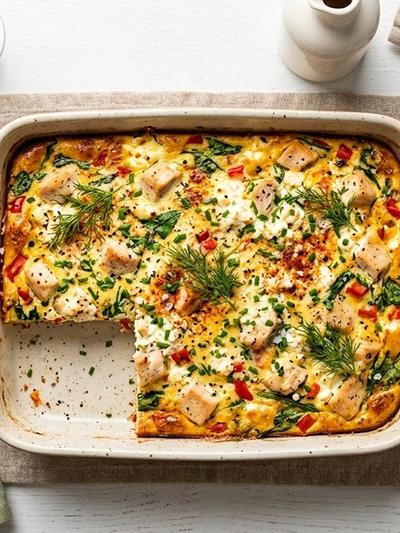
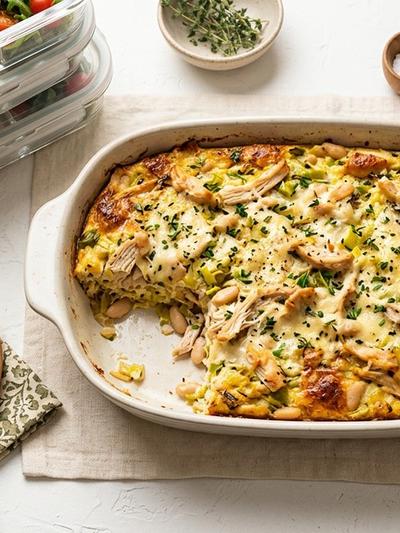
Each generous slice of this Mediterranean egg bake delivers 41 grams of protein from a trio of chicken breast, whole eggs, and cannellini beans. That combination covers roughly 60–80% of most GLP-1 users' daily protein targets in a single breakfast, with just 382 calories per serving. The white beans contribute slow-digesting complex carbohydrates and nearly 5 grams of fiber, while crumbled feta adds calcium and sharp Mediterranean flavor without excessive fat.
Sun-dried tomatoes bring a concentrated sweetness that pairs naturally with the salty tang of feta and the earthy backdrop of oregano and thyme. Wilted baby spinach adds color and a gentle vegetal note, while roasted red peppers contribute smoky sweetness throughout each bite. The result is a firm, sliceable bake with layers of flavor that tastes far more interesting than a typical egg casserole.
As a meal prep breakfast, this bake solves the most common GLP-1 morning problem: low appetite paired with high protein needs. Each slice reheats in under two minutes and can be eaten in small bites over the course of a morning. The soft, moist texture is gentle on a stomach affected by delayed gastric emptying, and the moderate fiber from beans keeps digestion comfortable without the bloating that raw vegetables can cause.
Why This Works on GLP-1
Each serving provides 41 grams of complete protein — a critical amount for preserving lean muscle mass during GLP-1-assisted weight loss. Research consistently shows that muscle loss accounts for 25–40% of total weight lost without adequate protein intake, and many Mounjaro and Ozempic users struggle to hit their protein targets due to reduced appetite. Starting the day with a 41-gram protein breakfast means you can afford lighter meals later without falling short. The combination of animal protein from chicken and eggs with plant protein from cannellini beans provides a complete amino acid profile with high bioavailability.
The 5 grams of fiber per serving comes primarily from cannellini beans, which are among the gentlest legumes for digestion. Unlike high-fiber cereals or raw cruciferous vegetables, cooked white beans break down slowly without producing excessive gas, making them well-suited for the slower digestive transit that GLP-1 medications cause.
At 382 calories per serving, this bake fits comfortably into a 1,200–1,600 calorie daily plan while delivering outsized nutritional value. The moderate fat content of 17 grams — mostly from eggs and feta — provides satiety without the heaviness that fried or butter-laden breakfasts create. The iron from spinach and the B-vitamins from eggs also support the energy levels that can dip during the early weeks of GLP-1 treatment.
Ingredients (serves 4)
For the chicken:
- 1 lb (450g) boneless, skinless chicken breast
- 1 teaspoon dried oregano
- ½ teaspoon garlic powder
- ¼ teaspoon salt
- ¼ teaspoon black pepper
- 1 teaspoon olive oil
For the egg bake:
- 6 large eggs
- ¼ cup (60ml) unsweetened almond milk or skim milk
- 1 can (15 oz / 425g) cannellini beans, drained and rinsed
- 5 oz (140g) baby spinach
- ⅓ cup (55g) drained sun-dried tomatoes (packed in oil), roughly chopped
- ½ cup (70g) roasted red peppers (jarred), chopped
- ½ cup (75g) crumbled feta cheese
- 2 cloves garlic, minced
- 1 teaspoon dried thyme
- ½ teaspoon smoked paprika
- ¼ teaspoon salt
- 1 teaspoon olive oil
- Fresh basil for garnish (optional)
Instructions
Cook the chicken:
- Season the chicken breast on both sides with oregano, garlic powder, salt, and pepper. Heat 1 teaspoon olive oil in a large skillet over medium-high heat and cook the chicken for 5–6 minutes per side until the internal temperature reaches 165°F (74°C). The goal is fully cooked, slightly browned chicken that will hold up through a second round of baking.
- Let the chicken rest for 5 minutes, then dice into small ½-inch (1cm) cubes. Smaller pieces distribute more evenly through the bake, which means every slice gets consistent protein.
Prepare the vegetables:
- Preheat your oven to 375°F (190°C). Lightly grease a 9×9-inch (23×23cm) baking dish with 1 teaspoon olive oil.
- Wilt the baby spinach by placing it in a large bowl and pouring boiling water over it. Let sit for 30 seconds, then drain thoroughly and squeeze out excess moisture with a clean kitchen towel. This step prevents the bake from becoming watery — raw spinach releases too much liquid during baking.
Assemble and bake:
- In a large bowl, whisk together the eggs, milk, thyme, smoked paprika, salt, and minced garlic until fully combined. The milk adds a small amount of moisture that keeps the bake tender after refrigeration and reheating.
- Scatter the diced chicken evenly across the bottom of the prepared baking dish. Layer the drained cannellini beans, wilted spinach, sun-dried tomatoes, and roasted red peppers over the chicken.
- Pour the egg mixture evenly over the layered ingredients. Use a fork to gently press down any ingredients poking above the surface so they cook evenly. Scatter the crumbled feta across the top — placing it on top rather than mixing it in gives each slice a visible, appetizing layer of cheese.
- Bake uncovered for 30–35 minutes, until the center is set and the top is lightly golden. A knife inserted in the center should come out clean. Let the bake cool in the dish for 10 minutes before slicing — this resting period allows the eggs to firm up, producing cleaner slices.
Portion for the week:
- Cut into 4 equal portions. Transfer each portion to an airtight container once fully cooled. Refrigerate for up to 5 days. Each container is a complete, grab-and-go breakfast.
Nutrition per Serving
| Nutrient | Amount (approx.) |
|---|---|
| Calories | ~382 kcal |
| Protein | ~41g |
| Fat | ~17g |
| Carbohydrates | ~16g |
| Fiber | ~5g |
Estimates based on USDA data for boneless skinless chicken breast, large eggs, canned cannellini beans, and standard feta cheese.
Practical Notes
Reheat gently for best texture. Microwave each portion for 60–90 seconds at 70% power, or reheat in a 350°F (175°C) oven for 8–10 minutes. Overheating makes egg bakes rubbery — lower and slower is the key. If your microwave runs hot, start with 60 seconds and check.
Swap the cheese to suit your tolerance. Feta works well because it's lower in fat than cheddar and adds flavor in small amounts. If you find feta too salty, use crumbled goat cheese or part-skim ricotta. For dairy-free eaters, nutritional yeast (2 tablespoons) adds a savory, cheesy note without the dairy.
Double the batch if you prep for two. This recipe scales perfectly in a 9×13-inch (23×33cm) baking dish. Double all ingredients and bake for 40–45 minutes. You'll get 8 portions — enough for two people for four days, or one person for over a week with some frozen.
Freeze individual portions for longer storage. Wrap cooled portions tightly in plastic wrap, then place in a freezer bag. They keep for up to 2 months. Thaw overnight in the refrigerator and reheat the next morning. Frozen portions are invaluable on days when Wegovy or Zepbound side effects make cooking feel impossible.
Eat at your own pace. If your morning appetite is very low, cut your portion in half and eat the rest mid-morning as a second small meal. The protein and fiber combination keeps this bake satisfying even at room temperature, so it works well as desk food or a late-morning snack.
Frequently Asked Questions
Can I eat this if I'm in the early weeks of GLP-1 treatment and have very little appetite?
Can I make this without the white beans for a lower-carb version?
How long does this keep in the fridge, and how do I know if it's gone bad?
What if I experience nausea after eating this on my GLP-1 medication?
Can I use chicken thighs instead of chicken breast?
This article provides general food and nutrition guidance only. It does not constitute medical advice. Always consult your healthcare provider regarding your GLP-1 medication and individual nutritional needs.