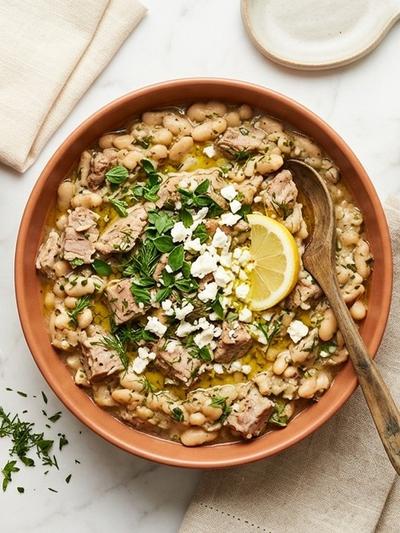
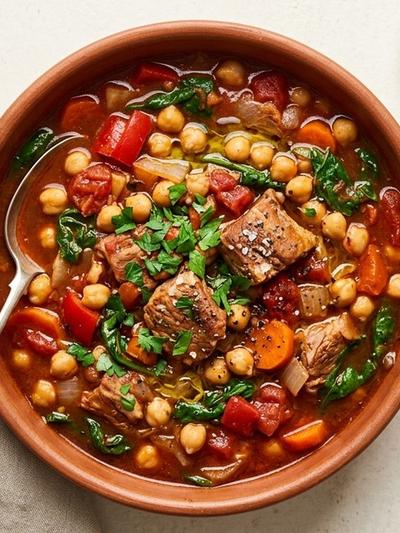
This slow cooker peperonata delivers 37 grams of protein per serving while staying well under 400 calories, making it a nutritionally dense dinner that does most of the work without you standing at the stove. Pork tenderloin provides one of the leanest cuts available — just 3.5 grams of fat per 100 grams of raw meat — while cannellini beans contribute an additional 4 grams of protein and nearly 3 grams of fiber per serving. The combination of slow-cooked sweet peppers, tomatoes, and white beans creates a complete meal with no side dish required.
Peperonata is a Southern Italian staple built on the sweetness of slowly collapsed bell peppers, the acidity of crushed tomatoes, and the fragrance of garlic and fresh oregano. After hours in the slow cooker, the peppers melt into a silky, almost jammy sauce that wraps around each slice of pork tenderloin. A handful of briny capers and a few kalamata olives punctuate the sweetness with savory depth, while the cannellini beans absorb the surrounding flavors and add a creamy, starchy body that rounds out every bite.
For GLP-1 users eating smaller portions, this recipe concentrates nutrition into a bowl that feels abundant without requiring large volume. The long, gentle braise produces extraordinarily tender pork that requires almost no chewing effort — a real advantage when appetite is reduced and digestion is slower. Setting up the slow cooker takes about 15 minutes of hands-on work, then you walk away for four hours and return to a finished dinner.
Why This Works on GLP-1
Each serving provides 37 grams of complete protein from pork tenderloin and cannellini beans, supporting the muscle preservation that becomes critical during GLP-1-assisted weight loss. When medications like Mounjaro or Wegovy reduce overall calorie intake, adequate protein prevents the body from breaking down lean muscle mass for energy. Pork tenderloin is particularly well-suited here because its protein density is among the highest of any whole cut — you get substantial protein without the fat load that can slow an already-delayed gastric emptying process. The beans contribute additional plant-based protein along with resistant starch, which feeds beneficial gut bacteria.
The 7 grams of fiber per serving comes primarily from cannellini beans and the generous quantity of bell peppers and tomatoes. This is enough to support regular digestion without the bloating risk that comes from very high-fiber meals — an important balance for GLP-1 users who already experience slowed gastric motility. The soluble fiber in the beans also helps moderate blood sugar response after the meal.
At 358 calories per serving, this dinner leaves room in the daily budget for breakfast, lunch, and a snack while still providing a genuinely satisfying evening meal. The dish is also naturally low in saturated fat — the small amount of olive oil used contributes heart-healthy monounsaturated fats, and the kalamata olives add the same beneficial profile. For users of Ozempic or Zepbound managing both weight and metabolic health, this combination of lean protein, moderate fiber, and healthy fats supports multiple goals simultaneously.
Ingredients (serves 4)
For the pork:
- 1 1/4 lb (565g) pork tenderloin, trimmed of silver skin
- 1/2 teaspoon fine sea salt
- 1/4 teaspoon freshly ground black pepper
- 1 teaspoon dried oregano
For the peperonata:
- 1 tablespoon (15ml) extra-virgin olive oil
- 1 large yellow onion (200g), halved and thinly sliced
- 4 cloves garlic, thinly sliced
- 3 large bell peppers (500g total) — use a mix of red, yellow, and orange for sweetness
- 1 can (14 oz / 400g) crushed tomatoes
- 2 tablespoons (17g) capers, drained and rinsed
- 12 kalamata olives (48g), halved
- 1 teaspoon smoked paprika
- 1/2 teaspoon red pepper flakes (optional — omit if sensitive to spice)
- 1 can (15 oz / 425g) cannellini beans, drained and rinsed
- 1 tablespoon (15ml) red wine vinegar
For serving:
- 2 tablespoons fresh basil, torn
- 1 tablespoon fresh flat-leaf parsley, chopped
Instructions
Prepare the pork and vegetables:
Pat the pork tenderloin dry with paper towels and season all sides with salt, pepper, and dried oregano. Set aside while you prepare the vegetables — this brief rest lets the salt begin drawing moisture to the surface, which improves flavor absorption during braising.
Slice the bell peppers into strips about 1/2 inch (1.25cm) wide. Halve and thinly slice the onion. Thinly slice the garlic. Drain and rinse the cannellini beans and capers.
Layer the slow cooker:
Drizzle the olive oil across the bottom of a 5- to 6-quart slow cooker. Spread the sliced onion and garlic in an even layer across the bottom — this creates a bed that prevents the pork from sitting directly on the hot surface, which reduces the risk of drying out.
Arrange the bell pepper strips over the onions. Pour the crushed tomatoes evenly over the peppers. Scatter the capers, halved olives, smoked paprika, and red pepper flakes (if using) over the top.
Nestle the seasoned pork tenderloin into the center of the vegetable mixture, pressing it down gently so the peppers and tomatoes come up around the sides. The pork should be partially submerged — the vegetables will release additional liquid as they cook.
Cover and cook on LOW for 3 1/2 to 4 hours. The pork is done when an instant-read thermometer inserted into the thickest part reads 145°F (63°C). Avoid cooking beyond 4 hours on LOW — pork tenderloin is lean and will begin to dry out with extended cooking.
Finish and serve:
During the last 30 minutes of cooking, scatter the drained cannellini beans over the top of the stew and gently press them into the liquid. Replace the lid and continue cooking — adding beans at the end prevents them from becoming mushy.
Transfer the pork tenderloin to a cutting board and let it rest for 5 minutes. Stir the red wine vinegar into the peperonata — this brightens the sweetness of the long-cooked peppers and balances the richness of the dish.
Slice the pork tenderloin into 1/2-inch (1.25cm) medallions. Divide the peperonata and beans among four shallow bowls, fan the pork slices over the top, and finish with torn basil and chopped parsley.
Nutrition per Serving
| Nutrient | Amount (approx.) |
|---|---|
| Calories | ~358 kcal |
| Protein | ~37g |
| Fat | ~10g |
| Carbohydrates | ~27g |
| Fiber | ~7g |
Estimates based on 1.25 lb trimmed pork tenderloin, one 15 oz can cannellini beans, one 14 oz can crushed tomatoes, three large bell peppers, and 1 tablespoon olive oil, divided among 4 servings.
Practical Notes
Meal prep storage. This recipe stores exceptionally well for up to 4 days in the refrigerator. Slice all the pork before storing and keep it submerged in the peperonata sauce to prevent drying. Reheat individual portions in the microwave for 2 minutes or in a covered skillet over medium-low heat for 5 minutes. The flavors actually deepen overnight as the peppers and tomatoes continue to meld.
Pork tenderloin timing matters. The single most important detail in this recipe is not overcooking the tenderloin. Check temperature at 3 1/2 hours — if it reads 145°F (63°C), pull it immediately. Lean pork goes from perfectly tender to dry and chalky within a narrow window. If your slow cooker runs hot, check at 3 hours.
Substitute the protein if needed. Boneless, skinless chicken thighs work as a direct swap — use 1 1/4 lb (565g) and cook the full 4 hours on LOW. Chicken thighs are more forgiving of longer cooking. Turkey tenderloin is another option but follows the same timing rules as pork. Either substitution keeps the protein content within 2-3 grams of the original.
Skip the bread, try cauliflower. If you want something starchy alongside, microwave a cup of riced cauliflower for 3 minutes and spoon the peperonata over it. This adds volume and an extra gram of fiber without significantly increasing calories — a better option for GLP-1 users than bread or pasta, which can feel heavy in a smaller stomach.
Adjust for spice sensitivity. Many GLP-1 users experience increased sensitivity to spicy foods, especially in the first weeks of treatment. The red pepper flakes are entirely optional — the dish has plenty of depth from the smoked paprika, capers, and olives without any heat. If you tolerate mild spice, start with 1/4 teaspoon and increase next time.
Frequently Asked Questions
I feel full quickly on GLP-1 — how much of this should I actually eat?
Can I use a different cut of pork or substitute with ground pork?
How do I freeze this for longer storage?
My appetite is very low in the early weeks of Mounjaro — can I make this work?
Why add the beans at the end instead of the beginning?
This article provides general food and nutrition guidance only. It does not constitute medical advice. Always consult your healthcare provider regarding your GLP-1 medication and individual nutritional needs.