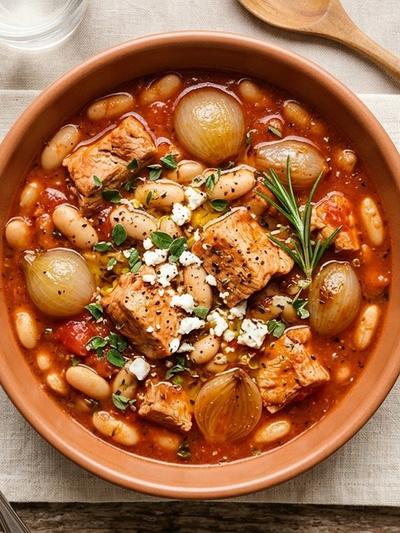
Each serving of this Spanish-style slow cooker stew delivers roughly 37 grams of protein and 9 grams of fiber from just two core ingredients: lean pork tenderloin and chickpeas. The pork provides complete amino acids with minimal saturated fat, while the chickpeas contribute both plant protein and soluble fiber that supports steady blood sugar. At around 350 calories per generous bowl, this is a nutritionally dense lunch that covers your midday protein needs without excess.
The flavor profile here is unmistakably Spanish. Smoked paprika — pimentón de la Vera — gives the broth a deep, woodsy warmth that builds over hours in the slow cooker. Sweet red bell peppers soften into the tomato base, adding natural sweetness that balances the earthiness of the chickpeas. A splash of sherry vinegar stirred in at the end lifts every layer, cutting through the richness and making the whole bowl taste brighter than the sum of its parts.
This stew works exceptionally well for GLP-1 users who struggle with midday meals. The slow cooker breaks the pork down into fork-tender pieces that are easy to chew and digest, while the thick broth coats the chickpeas and vegetables in a way that makes even a small bowl feel substantial. It also divides neatly into four meal-prep containers, which means lunch is handled for most of the work week.
Why This Works on GLP-1
Preserving lean muscle mass is one of the most important nutritional priorities during GLP-1-assisted weight loss. This stew provides 37 grams of protein per serving, almost entirely from pork tenderloin — one of the leanest cuts available, with just 3 grams of fat per 100 grams raw. For people on Mounjaro or similar medications who find their overall food intake has dropped significantly, hitting that protein target at lunch helps protect against the muscle loss that can accompany rapid weight reduction. The chickpeas add another 6 grams of plant protein, boosting the total without adding heaviness.
The 9 grams of fiber per bowl come primarily from chickpeas and bell peppers, both sources of soluble fiber that dissolve gradually in the digestive tract. This matters for GLP-1 users because soluble fiber slows gastric emptying gently rather than creating the bulk and bloating that insoluble fiber can cause. The result is sustained fullness through the afternoon without digestive discomfort.
Smoked paprika is more than a flavor choice. It contains capsanthin, a carotenoid antioxidant that gives pimentón its deep red color and has been associated with reduced oxidative stress. The sherry vinegar adds acetic acid, which may support modest improvements in post-meal blood sugar response — a small but meaningful benefit for people on Wegovy or other GLP-1 medications who are actively managing metabolic health alongside weight loss.
Ingredients (serves 4)
For the stew:
- 1 1/4 lb (567g) pork tenderloin, trimmed and cut into 1 1/2-inch pieces
- 1 can (15 oz / 425g) chickpeas, drained and rinsed
- 1 can (14.5 oz / 411g) diced tomatoes with juices
- 2 large red bell peppers, seeded and cut into 1-inch strips
- 1 medium yellow onion, diced
- 4 cloves garlic, minced
- 2 teaspoons smoked paprika (pimentón)
- 1 teaspoon sweet paprika
- 1/2 teaspoon ground cumin
- 1 tablespoon extra-virgin olive oil
- 1 bay leaf
- 1/2 teaspoon fine sea salt
- 1/4 teaspoon black pepper
To finish:
- 4 cups (120g) baby spinach
- 1 tablespoon sherry vinegar
- 2 tablespoons fresh flat-leaf parsley, roughly chopped
- Lemon wedges for serving
Instructions
Season and assemble the slow cooker:
In a medium bowl, toss the pork tenderloin pieces with the smoked paprika, sweet paprika, cumin, salt, and black pepper until evenly coated. The double-paprika combination builds depth — the smoked variety provides woodsy flavor while the sweet adds color and mild warmth without heat.
Spread the diced onion and minced garlic across the bottom of the slow cooker. This creates an aromatic base that will release moisture first, preventing the pork from sticking.
Scatter the red bell pepper strips over the onions. Layer the seasoned pork pieces on top of the peppers.
Pour the diced tomatoes with their juices evenly over the pork. Add the drained chickpeas, tucking them around and between the pork pieces so they absorb flavor from every direction. Nestle the bay leaf into the center and drizzle the olive oil over the top.
Slow cook:
- Cover and cook on low for 6 hours, or on high for 3 to 3 1/2 hours. The stew is ready when the pork shreds easily with a fork and the peppers have collapsed into the sauce. Resist the urge to lift the lid during cooking — each peek releases heat and can add 15 to 20 minutes to the total time.
Finish and serve:
Remove and discard the bay leaf. Stir in the baby spinach and sherry vinegar. The residual heat will wilt the spinach in about 2 minutes. The vinegar brightens the entire stew, so do not skip this step — it transforms the flavor from flat to vibrant.
Divide among four bowls. Top each with a pinch of fresh parsley and serve with a lemon wedge on the side. A squeeze of lemon just before eating adds a final layer of acidity that sharpens the smoked paprika.
Nutrition per Serving
| Nutrient | Amount (approx.) |
|---|---|
| Calories | ~350 kcal |
| Protein | ~37g |
| Fat | ~9g |
| Carbohydrates | ~29g |
| Fiber | ~9g |
Estimates based on USDA data for raw pork tenderloin, canned chickpeas (drained), canned diced tomatoes, and standard produce. Actual values will vary slightly by brand and pork trim.
Practical Notes
Meal prep storage. This stew refrigerates beautifully for up to 4 days in airtight containers. The flavor actually improves overnight as the smoked paprika continues to bloom in the sauce. Reheat individual portions in the microwave for 2 to 3 minutes, stirring halfway through, or warm gently in a small saucepan over medium-low heat.
Freezer-friendly in portions. To freeze, cool the stew completely, then divide into single-serving freezer-safe containers. It keeps well for up to 3 months. Thaw overnight in the refrigerator and reheat on the stovetop. The pork and chickpeas hold their texture through freezing better than most slow cooker dishes because the braising liquid protects them from freezer dryness.
Small-appetite adjustment. If your appetite is particularly suppressed, serve a half portion (about 3/4 cup) and save the rest. The high protein density means even a smaller serving still delivers nearly 19 grams of protein. You can also serve it over a bed of cooked cauliflower rice to stretch the volume without significantly increasing calories.
Pork cut matters. Tenderloin is specified for a reason — it is the leanest pork cut by a wide margin, at roughly 3 grams of fat per 100 grams. Do not substitute pork shoulder, which has three to four times the fat content and will change the calorie count dramatically. If tenderloin is unavailable, boneless center-cut loin chops are the next best option.
Build it into a bigger lunch. On days when your appetite is stronger, serve the stew with a small piece of crusty whole-grain bread for dipping, or alongside a simple green salad dressed with lemon juice and olive oil. The stew itself is the protein and fiber anchor — the sides just add variety.
Frequently Asked Questions
I feel full quickly on my GLP-1 medication — is this stew easy to eat in small amounts?
Can I use a different legume instead of chickpeas?
How long does this stew last in the fridge, and can I reheat it at work?
My GLP-1 medication causes nausea — will the smoked paprika make it worse?
Can I cook this on high for a shorter time if I start it mid-morning?
This article provides general food and nutrition guidance only. It does not constitute medical advice. Always consult your healthcare provider regarding your GLP-1 medication and individual nutritional needs.