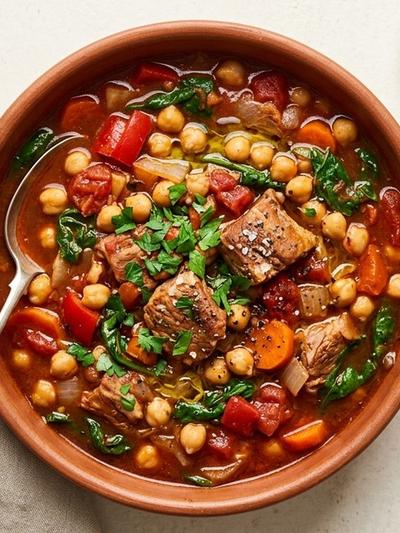
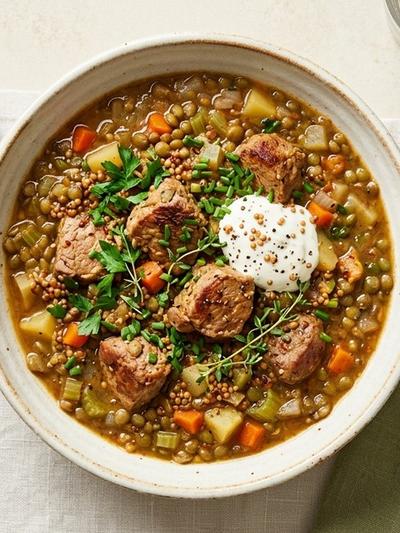
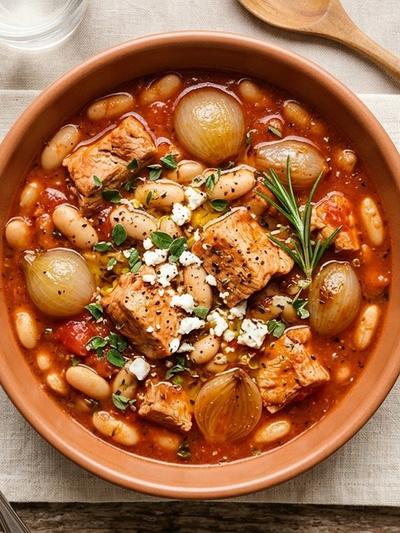
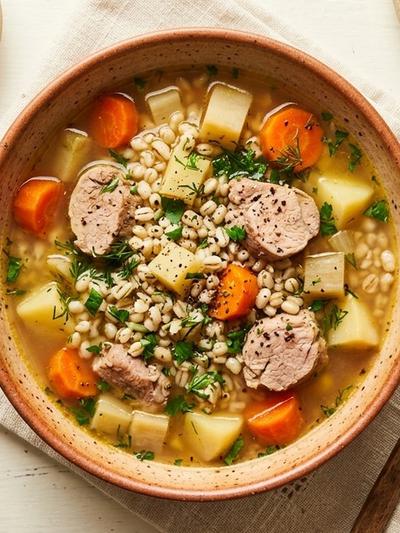
Each bowl of this slow cooker pork and bulgur delivers 37 grams of protein and 9 grams of fiber for just 385 calories. Pork tenderloin is one of the leanest cuts available, carrying only about 3 grams of fat per 100 grams of cooked meat, while bulgur wheat provides more fiber per serving than brown rice or quinoa. The combination creates a nutritionally dense lunch that covers well over half the daily protein target most dietitians recommend during GLP-1 treatment.
The flavor here is unmistakably Mediterranean. Hours in the slow cooker let oregano, thyme, and garlic perfume the pork while canned tomatoes break down into a rich, savory sauce. Briny kalamata olives and tender artichoke hearts add layers of complexity that make each bite interesting. A spoonful of lemon yogurt on top pulls everything together with a cool, tangy contrast to the warm, herb-scented grain bowl underneath.
This recipe works particularly well as a weekday lunch because the slow cooker handles the long cooking while you handle everything else. The portions are moderate but deeply satisfying, packed with enough protein and fiber to keep you fueled through the afternoon without that heavy, overstuffed feeling. And because everything reheats in the microwave in two minutes, you can prep a batch on Sunday and eat well through Thursday.
Why This Works on GLP-1
Preserving lean muscle mass is one of the most important nutritional priorities during GLP-1-assisted weight loss. When the scale moves quickly, a significant portion of that loss can come from muscle rather than fat unless protein intake stays consistently high. At 37 grams of protein per bowl, this lunch provides a substantial anchor for the day. For people on Mounjaro or Wegovy who are eating smaller meals overall, getting that much protein into a single sitting means less pressure to hit targets at dinner.
The 9 grams of fiber per serving come primarily from bulgur wheat, which is gentler on the digestive system than raw vegetables or dense legumes. Bulgur has a soft, almost creamy texture once cooked low and slow, making it easy to eat even when your appetite is limited. The artichoke hearts contribute prebiotic fiber that supports healthy gut bacteria, which research increasingly links to better outcomes during weight management.
Beyond the macros, this bowl offers a broad range of micronutrients. Pork tenderloin is rich in thiamine and selenium. Tomatoes provide lycopene. Olives contribute heart-healthy monounsaturated fats in a controlled amount. The whole-grain bulgur adds B vitamins and magnesium. Together, these ingredients address the nutrient density that becomes especially important when you're eating less food overall.
Ingredients (serves 4)
For the slow cooker:
- 1 1/4 pounds (565g) pork tenderloin, trimmed and cut into 2-inch pieces
- 1 can (14 oz / 400g) diced tomatoes with juice
- 1 can (14 oz / 400g) artichoke hearts, drained and quartered
- 16 kalamata olives (about 1/3 cup / 55g), halved
- 1 medium red onion (150g), diced
- 4 cloves garlic, minced
- 1 cup (240ml) low-sodium chicken broth
- 1 tablespoon (15ml) extra-virgin olive oil
- 1 1/2 teaspoons dried oregano
- 1 teaspoon dried thyme
- 1/2 teaspoon smoked paprika
- 1/4 teaspoon ground cinnamon
- 1/2 teaspoon fine sea salt
- 1/4 teaspoon black pepper
For the bulgur:
- 1 cup (175g) medium-grind bulgur wheat
For the lemon yogurt:
- 1/3 cup (80g) plain nonfat Greek yogurt
- 1 tablespoon fresh lemon juice
- 1 teaspoon lemon zest
- Pinch of salt
For serving:
- 2 tablespoons chopped fresh flat-leaf parsley
- 2 tablespoons chopped fresh mint
- Lemon wedges
Instructions
Build the slow cooker base:
Place the diced red onion in an even layer on the bottom of the slow cooker insert. The onion acts as a bed that prevents the pork from sitting directly on the hot surface, which helps it braise evenly rather than scorch on one side.
Arrange the pork tenderloin pieces on top of the onion. Season with the oregano, thyme, smoked paprika, cinnamon, salt, and pepper.
Scatter the minced garlic, quartered artichoke hearts, and halved olives around the pork. Pour the diced tomatoes with their juice and the chicken broth over everything. Drizzle the olive oil on top.
Cover and cook on low for 3 hours 30 minutes. The pork should be very tender and easy to shred with a fork at this point.
Add the bulgur:
Using two forks, shred the pork directly in the slow cooker. Stir gently to distribute the meat throughout the sauce.
Sprinkle the dry bulgur evenly over the surface and stir it in, making sure all the grains are submerged in liquid. The cooking liquid from the tomatoes and broth provides more than enough moisture for the bulgur to absorb.
Cover and cook on low for 30 more minutes. The bulgur will absorb the flavored liquid and become tender with a slight chew.
Make the lemon yogurt:
- While the bulgur cooks, stir together the Greek yogurt, lemon juice, lemon zest, and a pinch of salt in a small bowl. Refrigerate until ready to serve.
Assemble the bowls:
- Fluff the bulgur-pork mixture with a fork. Taste and adjust salt if needed. Divide evenly among four bowls. Top each bowl with a generous spoonful of lemon yogurt, a scattering of fresh parsley and mint, and a lemon wedge on the side.
Nutrition per Serving
| Nutrient | Amount (approx.) |
|---|---|
| Calories | ~385 kcal |
| Protein | ~37g |
| Fat | ~9g |
| Carbohydrates | ~36g |
| Fiber | ~9g |
Estimates based on USDA values for raw pork tenderloin (trimmed), medium-grind bulgur wheat, canned artichoke hearts in water, and canned diced tomatoes. Actual values may vary with specific brands and pork trim level.
Practical Notes
Meal prep storage. Divide the finished bowls into four airtight containers. Store the lemon yogurt separately in a small jar so it stays cool and fresh. The pork and bulgur keep well in the refrigerator for up to four days. Reheat individual portions in the microwave for 90 seconds to two minutes, stirring halfway through.
High setting shortcut. If you need this ready sooner, cook on high for 1 hour 45 minutes before adding the bulgur, then continue on high for 20 minutes after stirring it in. The pork will be slightly less fall-apart tender than the low-and-slow version, but still plenty good for bowls.
Bulgur substitutions. Farro works as a one-to-one swap but needs more cooking time, so add it an hour before the end rather than 30 minutes. Couscous is too delicate for the slow cooker and will turn to mush. If you need a gluten-free option, try 3/4 cup of quinoa added 25 minutes before the end, though fiber will drop by about 2 grams per serving.
Small appetite strategy. On days when your appetite is especially low, serve yourself a half portion (about 3/4 cup) and refrigerate the rest. A smaller serving still provides nearly 19 grams of protein. You can always go back for more if hunger returns, but starting small prevents the discomfort of eating past your body's signals.
Freezing individual portions. This recipe freezes well for up to two months. Pack single servings into freezer-safe containers, leaving the lemon yogurt out entirely. Thaw overnight in the fridge and reheat gently. Make a fresh batch of lemon yogurt when you defrost, as the frozen yogurt will separate and turn watery.
Frequently Asked Questions
I'm in the first weeks of Zepbound and can barely eat half a portion. How should I approach this recipe?
Can I use a different cut of pork or substitute another protein?
How long do the assembled bowls last in the fridge, and can I reheat them at work?
What if the bulgur absorbs too much liquid and the bowl turns dry?
Can I make this in a Dutch oven instead of a slow cooker?
This article provides general food and nutrition guidance only. It does not constitute medical advice. Always consult your healthcare provider regarding your GLP-1 medication and individual nutritional needs.