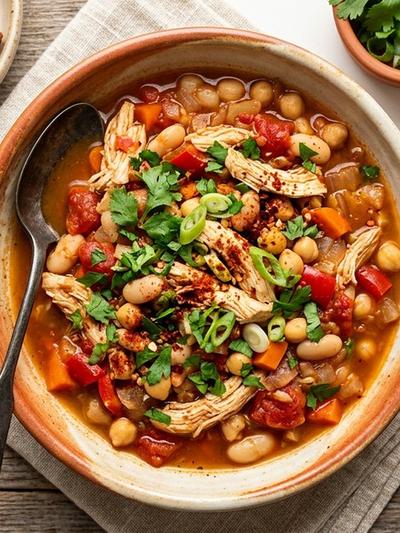
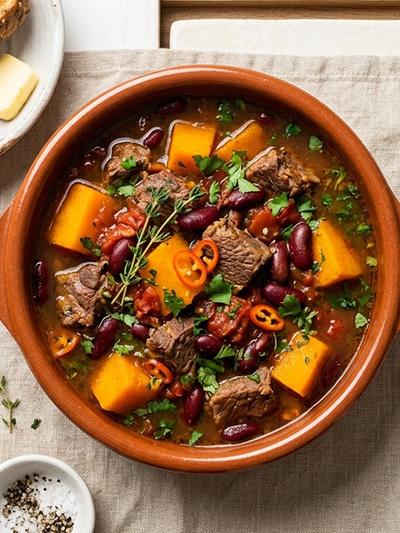
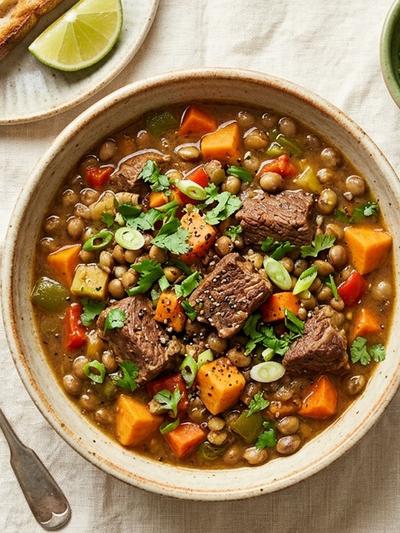
Each serving of this slow cooker Caribbean breakfast delivers 34 grams of protein and 7 grams of fiber from a combination of tender chicken thighs and black-eyed peas braised in a fragrant allspice-and-thyme broth. The black-eyed peas provide folate and iron alongside their protein contribution, while a small sweet potato adds natural sweetness and beta-carotene without excessive carbohydrates. At just 318 calories per bowl, this is a nutrient-dense way to start the day without overwhelming a smaller appetite.
The flavor here is unmistakably Caribbean — warm allspice, fresh thyme, a touch of ginger, and Scotch bonnet heat that you control by leaving the pepper whole. The chicken thighs braise until they fall apart into the stew, creating a rich texture that feels more indulgent than the lean macros suggest. A squeeze of fresh lime and a scatter of scallions at serving time brightens everything and cuts through the warmth of the spices.
This recipe is built for the slow cooker so it does all the work overnight or during a long morning. You wake up to a fully cooked, portion-ready breakfast that requires no active cooking when your appetite is still building. The gentle, well-spiced broth is easy on digestion, and the soft-cooked beans and shredded chicken require minimal chewing — ideal when GLP-1 medications make mornings feel delicate.
Why This Works on GLP-1
The 34 grams of protein per serving come primarily from boneless, skinless chicken thighs, which hold up better than breast meat during the long slow cook without drying out, while still being relatively lean when trimmed. Preserving muscle mass is one of the most important nutritional priorities for people taking Mounjaro or other GLP-1 medications, because rapid weight loss can lead to muscle loss if protein intake falls below adequate levels. Starting the day with over 30 grams of high-quality animal protein sets a strong foundation. The black-eyed peas add another 4 grams of plant protein per serving, bringing the total amino acid profile closer to complete.
The 7 grams of fiber per serving come from the black-eyed peas and sweet potato, both of which are gentle, soluble-fiber sources that support blood sugar stability without causing the bloating that high-fiber cereals or raw vegetables can trigger. The long, slow cooking process breaks down the beans thoroughly, making them easier to digest than stovetop-cooked versions.
The allspice and ginger in this recipe are not just flavor choices — both have mild anti-nausea properties that Caribbean cooking traditions have valued for centuries. For GLP-1 users who experience morning queasiness, a warm, ginger-laced broth can be genuinely soothing. The low fat content of 6 grams per serving also means this breakfast empties from the stomach more efficiently, which matters when gastric emptying is already slowed by medication.
Ingredients (serves 4)
For the stew:
- 1¼ lb (565g) boneless, skinless chicken thighs, trimmed of visible fat
- ¾ cup (130g) dried black-eyed peas, soaked overnight and drained
- 1 medium sweet potato (about 6 oz / 170g), peeled and cut into ½-inch cubes
- 1 can (14 oz / 400g) diced tomatoes with juices
- 1 medium yellow onion, diced
- 3 cloves garlic, minced
- 1 tablespoon fresh ginger, grated
- 1 whole Scotch bonnet pepper, left intact (do not pierce)
- 1½ teaspoons ground allspice
- 1 teaspoon smoked paprika
- ½ teaspoon ground cumin
- 4 sprigs fresh thyme (or 1 teaspoon dried thyme)
- 1½ cups (360ml) low-sodium chicken broth
- 1 tablespoon apple cider vinegar
- ½ teaspoon salt, plus more to taste
- ¼ teaspoon black pepper
For serving:
- 1 lime, cut into wedges
- 3 scallions, thinly sliced
- Fresh thyme leaves (optional)
Instructions
Prep the slow cooker (10 minutes the night before):
Place the soaked and drained black-eyed peas in the bottom of a 4- to 6-quart slow cooker. The peas go in first because they need the most direct heat contact to cook through completely during the long braise.
Scatter the diced sweet potato, onion, and garlic over the peas, then nestle the whole Scotch bonnet pepper among the vegetables. Keeping the pepper whole gives the stew a gentle warmth without searing heat — the capsaicin releases slowly through the skin rather than flooding the broth.
Season the chicken thighs on both sides with the allspice, smoked paprika, cumin, salt, and pepper. Lay them in a single layer on top of the vegetables. Placing the chicken on top lets it braise gently in the steam rather than sitting submerged, which keeps the texture better.
Pour the diced tomatoes with their juices and the chicken broth over everything. Tuck the thyme sprigs along the sides. Add the apple cider vinegar — it brightens the finished stew and helps tenderize the beans.
Slow cook overnight:
Cover and cook on LOW for 7 to 8 hours. If you prefer a shorter cook, use HIGH for 4 to 5 hours, though the low-and-slow method produces the best texture in both the beans and the chicken.
When the cook time is up, remove and discard the Scotch bonnet pepper and thyme sprigs. Use two forks to shred the chicken directly in the slow cooker — it should pull apart with almost no resistance.
Serve:
Stir the shredded chicken back through the stew to distribute evenly. Taste and adjust salt if needed.
Ladle into bowls and finish each serving with a squeeze of fresh lime juice and a generous scatter of sliced scallions. The lime is not optional — its acidity lifts the entire bowl and balances the richness of the allspice.
Nutrition per Serving
| Nutrient | Amount (approx.) |
|---|---|
| Calories | ~318 kcal |
| Protein | ~34g |
| Fat | ~6g |
| Carbohydrates | ~28g |
| Fiber | ~7g |
Estimates based on trimmed boneless skinless chicken thighs, dried black-eyed peas, and all listed ingredients divided into 4 equal portions.
Practical Notes
Overnight soak shortcut. If you forget to soak the black-eyed peas the night before, use the quick-soak method: cover them with water, bring to a boil for 2 minutes, then let them sit covered for 1 hour. Drain and proceed. Unsoaked peas will work but may remain slightly firm even after 8 hours.
Meal prep storage. This stew refrigerates beautifully for up to 5 days in airtight containers. Portion it into individual servings the morning after cooking so you have grab-and-go breakfasts for the week. Reheat gently in the microwave with a splash of water to loosen the broth, as the beans absorb liquid as they sit.
Freezer friendly. Freeze individual portions in freezer-safe containers for up to 3 months. Thaw overnight in the refrigerator and reheat on the stovetop or in the microwave. The texture holds up well to freezing because the chicken is already shredded and the beans are fully soft.
Controlling the heat. The whole Scotch bonnet adds gentle, fruity warmth without scorching heat. If you want no heat at all, omit it entirely or substitute half a bell pepper for a hint of sweetness. If you want more heat, pierce the Scotch bonnet once or twice with a knife before adding it — but go carefully, as a pierced pepper releases significantly more capsaicin.
Small appetite strategy. On mornings when your appetite is especially low, try just the broth and a few spoonfuls of the stew. The broth alone carries protein from the chicken and is easy to sip slowly. You can always eat the remaining solids as a mid-morning meal when hunger returns.
Frequently Asked Questions
Can I use chicken breast instead of thighs?
What can I substitute for black-eyed peas?
How should I reheat this for the best texture?
I am in the first weeks of Wegovy and can barely eat in the morning. Is this still practical?
Can I add additional vegetables to this stew?
This article provides general food and nutrition guidance only. It does not constitute medical advice. Always consult your healthcare provider regarding your GLP-1 medication and individual nutritional needs.