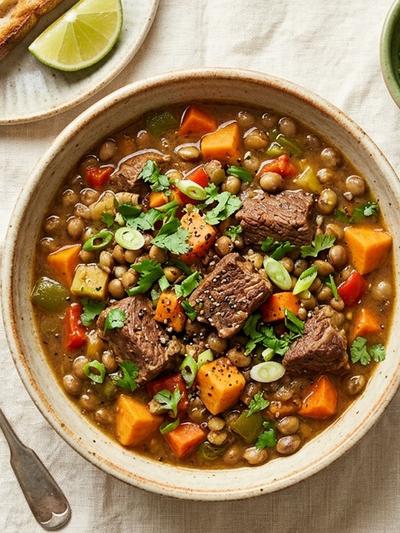
Each bowl of this Caribbean-inspired breakfast stew packs 34 grams of protein from lean ground beef and kidney beans, with only 345 calories per serving. The Caribbean pumpkin adds beta-carotene and natural sweetness while contributing just a fraction of the total calories. Iron from the beef and folate from the beans round out a nutrient profile that supports sustained energy through the morning.
The flavor here is unmistakably Caribbean — warm allspice and fresh thyme build a savory base, while a touch of scotch bonnet pepper adds gentle heat without overwhelming the palate. Butternut squash stands in beautifully for traditional calabaza, breaking down in the slow cooker to thicken the broth into something velvety and rich. A squeeze of lime at serving pulls all the flavors together with brightness that makes this stew taste lighter than it is.
For GLP-1 users who struggle with morning appetite, a small bowl of this stew goes down easily and stays satisfying for hours. The slow cooker does all the work overnight, so breakfast is ready the moment you wake up. The soft-cooked vegetables and tender beef require minimal digestive effort, making it ideal for mornings when heavier textures feel like too much.
Why This Works on GLP-1
With 34 grams of protein per serving, this stew delivers more than half the daily minimum that most nutrition guidelines recommend for people on GLP-1 medications. Adequate protein is critical during Mounjaro or Ozempic-assisted weight loss because it helps preserve lean muscle mass even as the body sheds fat. The combination of animal protein from beef and plant protein from kidney beans provides a complete amino acid profile, which supports tissue repair and keeps metabolic rate from dropping as weight decreases.
The 7 grams of fiber per serving come primarily from kidney beans and pumpkin, both of which are gentle on digestion. Unlike raw cruciferous vegetables or high-inulin foods that can cause bloating — already a concern with slowed gastric emptying — these fiber sources break down during the long cook time into soft, easily tolerated forms.
At 345 calories, each bowl fits comfortably into the reduced calorie intake that most Wegovy and Zepbound users experience naturally. The moderate fat content of 12 grams per serving provides enough richness for satiety without the heaviness that can trigger nausea in the early weeks of GLP-1 treatment.
Ingredients (serves 4)
For the stew base:
- 1½ lb (680g) lean ground beef (93% lean or higher)
- 2 cups (280g) butternut squash or calabaza, peeled and cut into 1-inch cubes
- 1 can (15 oz / 425g) kidney beans, drained and rinsed
- 1 can (14.5 oz / 410g) diced tomatoes, undrained
- 1 medium yellow onion, diced
- 3 cloves garlic, minced
- 1 cup (240ml) low-sodium beef broth
For the seasoning:
- 1½ teaspoons ground allspice
- 1 teaspoon dried thyme (or 4 sprigs fresh thyme)
- ½ teaspoon smoked paprika
- ½ teaspoon ground cumin
- ½ scotch bonnet pepper, seeded and minced (or ¼ teaspoon cayenne)
- 1 teaspoon salt
- ½ teaspoon black pepper
For serving:
- 1 lime, cut into wedges
- 2 tablespoons fresh cilantro, chopped
- 2 scallions, thinly sliced
Instructions
Brown the beef:
Heat a large skillet over medium-high heat. Add the ground beef and break it into small crumbles with a wooden spoon. Cook for 5–6 minutes until no longer pink, draining any excess fat. Browning first develops deeper flavor through the Maillard reaction, which the slow cooker alone cannot achieve.
Transfer the browned beef to the slow cooker insert.
Build the stew:
Add the diced onion, garlic, butternut squash, kidney beans, and diced tomatoes (with their juice) to the slow cooker on top of the beef.
Sprinkle the allspice, thyme, smoked paprika, cumin, scotch bonnet, salt, and black pepper evenly over the ingredients. Pour in the beef broth.
Stir gently to combine everything, making sure the squash pieces are submerged.
Slow cook:
Cover and cook on LOW for 7–8 hours or HIGH for 4–5 hours. The stew is done when the squash is completely tender and beginning to break apart at the edges, naturally thickening the broth.
Remove the lid and use the back of a spoon to lightly mash about a third of the squash pieces against the side of the insert. This creates a thicker, more porridge-like consistency without losing all the texture. Taste and adjust salt if needed.
Serve:
- Ladle into bowls and top with sliced scallions, fresh cilantro, and a generous squeeze of lime juice. The lime is not optional — its acidity balances the richness of the allspice and beef, making the stew taste brighter and easier to eat in the morning.
Nutrition per Serving
| Nutrient | Amount (approx.) |
|---|---|
| Calories | ~345 kcal |
| Protein | ~34g |
| Fat | ~12g |
| Carbohydrates | ~26g |
| Fiber | ~7g |
Estimates based on 93% lean ground beef, canned kidney beans, and butternut squash. Actual values may vary slightly depending on specific brands and how thoroughly the beef is drained.
Practical Notes
Overnight slow cooking. Set this up right before bed — the LOW setting runs for 7–8 hours, which lines up perfectly with a full night of sleep. Breakfast is hot and ready when your alarm goes off. If your slow cooker runs hot, use a timer to switch it to WARM after 7 hours to prevent the edges from drying out.
Meal prep storage. This stew keeps for 5 days in the refrigerator in airtight containers and freezes well for up to 3 months. Portion into individual containers immediately after cooking so you can grab one each morning. The stew actually improves overnight as the spices meld further.
Adjusting the heat level. The scotch bonnet is traditional but potent. For a milder version, omit it entirely and add ¼ teaspoon of cayenne instead — you get warmth without the lingering capsaicin burn that can aggravate GLP-1-related stomach sensitivity. If you enjoy heat, leave the seeds in for a more authentic kick.
Butternut squash substitutions. Caribbean calabaza is the traditional choice, but butternut squash is more widely available and behaves identically in the slow cooker. Kabocha squash also works well. Avoid acorn squash, which holds its shape too firmly and will not create the desired thickened broth.
Reheating for best texture. Microwave individual portions for 2–3 minutes, stirring halfway through. Add a splash of broth or water if the stew has thickened too much overnight. On the stovetop, reheat gently over medium-low heat for 4–5 minutes. Do not boil — the beans can turn mushy and the beef can toughen.
Frequently Asked Questions
Can I eat this stew during the first weeks of starting a GLP-1 medication?
Can I use a different cut of beef instead of ground beef?
How should I store and freeze individual portions?
What can I serve alongside this for extra protein if I need more?
Why do I need to brown the beef before slow cooking?
This article provides general food and nutrition guidance only. It does not constitute medical advice. Always consult your healthcare provider regarding your GLP-1 medication and individual nutritional needs.