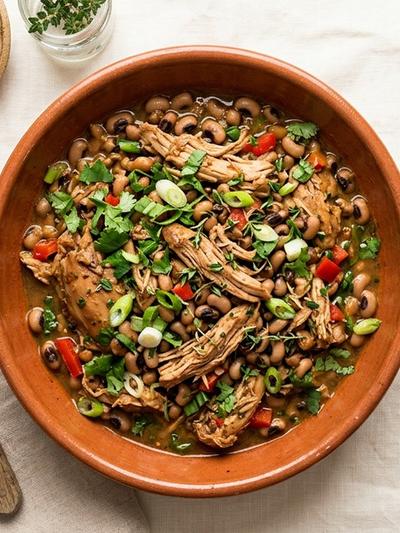
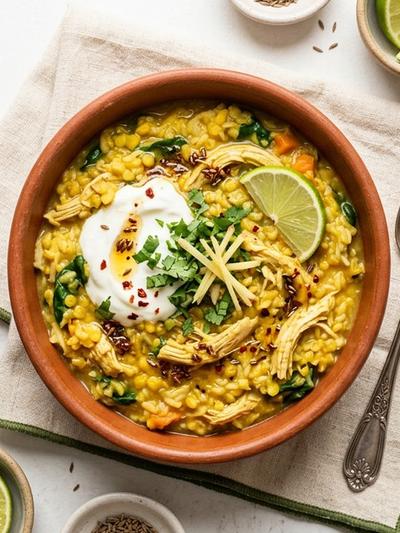
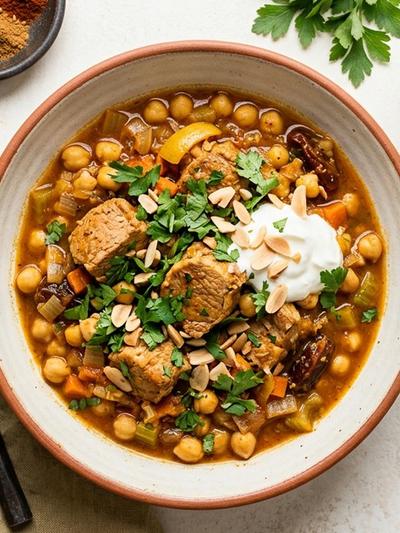
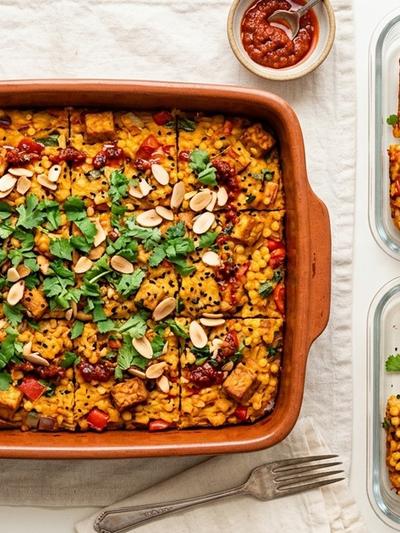
Each serving of this Tunisian-inspired breakfast stew packs 32 grams of protein from a combination of slow-braised chicken breast and cannellini beans, delivering a complete amino acid profile to start the day. The stew provides 7 grams of fiber per bowl — enough to support satiety without the heavy bulk that causes discomfort on GLP-1 medications. Carrots and tomatoes add vitamin A and lycopene, while a small amount of olive oil ensures fat-soluble nutrient absorption without making the dish greasy.
The flavor here is distinctly Tunisian: ground cumin and coriander form the aromatic backbone, while a touch of caraway seed adds the earthy, slightly anise note that separates Tunisian cooking from its Moroccan and Egyptian neighbors. A spoonful of harissa paste brings gentle warmth without aggressive heat, and a squeeze of preserved lemon stirred in at the end lifts every element with bright, fermented citrus. The chicken breaks apart into tender shreds after hours of low braising, and the beans soften into the tomato broth to create a naturally thick, spoonable texture.
This is the kind of breakfast that rewards almost zero morning effort. You load the slow cooker the night before, set it to low, and wake up to a fully cooked, warming bowl that reheats beautifully throughout the week. For GLP-1 users whose appetite is lowest in the morning, a small portion — even half a serving — still delivers meaningful protein without requiring you to eat a large volume.
Why This Works on GLP-1
Protein preservation is one of the most important nutritional priorities during GLP-1-assisted weight loss. When your appetite is suppressed and caloric intake drops, your body can break down muscle tissue for energy unless you consistently meet your protein needs. With 32 grams of protein per serving, this breakfast stew provides roughly a third of the daily target most healthcare providers recommend for patients on medications like Mounjaro or Wegovy. Starting the day with a high-protein meal also helps stabilize blood sugar through the morning hours, reducing the likelihood of energy crashes.
The fiber in this stew comes primarily from cannellini beans and carrots — both gentle, soluble-fiber sources that move through the digestive system without causing the gas and bloating that raw cruciferous vegetables or high-inulin foods can trigger. At 7 grams per serving, the fiber content supports gut motility, which can slow down as a side effect of GLP-1 receptor agonists.
The dish is notably lean at just 7 grams of fat per serving, nearly all of it from a tablespoon of olive oil divided across four portions. Low-fat meals empty from the stomach more predictably on GLP-1 medications, reducing the nausea and fullness that high-fat breakfasts can provoke. The slow-cooked texture also makes the chicken exceptionally easy to chew and digest — there is no seared crust or dense, chewy protein to contend with.
Ingredients (serves 4)
For the stew base:
- 1 lb (450g) boneless, skinless chicken breast
- 1 can (15 oz / 425g) cannellini beans, drained and rinsed
- 1 can (14.5 oz / 400g) diced tomatoes, undrained
- 2 medium carrots, peeled and diced (about 1 cup / 130g)
- 1 medium yellow onion, finely diced
- 3 cloves garlic, minced
- 1 tablespoon (15ml) olive oil
- 1 cup (240ml) low-sodium chicken broth
For the spice blend:
- 1½ teaspoons ground cumin
- 1 teaspoon ground coriander
- ½ teaspoon caraway seeds, lightly crushed
- ½ teaspoon smoked paprika
- ¼ teaspoon ground turmeric
- ¼ teaspoon black pepper
For finishing:
- 1 tablespoon harissa paste (mild or medium)
- 1 tablespoon preserved lemon, finely minced (or zest of 1 lemon plus 1 tablespoon lemon juice)
- 2 tablespoons fresh flat-leaf parsley, chopped
- 2 tablespoons fresh cilantro, chopped
- Pinch of flaky sea salt, to taste
Instructions
Prepare the slow cooker (evening before):
Drizzle the olive oil across the bottom of a 4- to 6-quart slow cooker insert. This thin layer prevents sticking and distributes the fat evenly rather than concentrating it in one spot.
Add the diced onion, minced garlic, and diced carrots to the insert. Scatter the cumin, coriander, crushed caraway seeds, smoked paprika, turmeric, and black pepper directly over the vegetables. Toss briefly with a spoon so the aromatics coat the vegetables — this ensures the spices bloom in the oil as the cooker heats.
Place the whole chicken breasts on top of the vegetable layer. Keeping them whole prevents them from drying out during the long cook; they will shred easily once done.
Pour the diced tomatoes with their juices and the chicken broth over the chicken. Add the drained cannellini beans around the sides of the chicken.
Cover and set the slow cooker to low. Cook for 7 to 8 hours (overnight timing works perfectly — load it at 10 PM, breakfast is ready by 6 AM).
Finish and serve (morning):
Remove the chicken breasts to a cutting board. They should be fall-apart tender. Use two forks to shred the meat into bite-sized pieces.
Stir the harissa paste and preserved lemon into the stew base in the slow cooker. The residual heat is enough to meld these flavors — adding them at the end preserves the brightness of the harissa and the citrus punch of the preserved lemon.
Return the shredded chicken to the slow cooker and stir gently to combine. Taste and adjust salt if needed.
Ladle into bowls and top with chopped parsley and cilantro. Serve warm.
Nutrition per Serving
| Nutrient | Amount (approx.) |
|---|---|
| Calories | ~315 kcal |
| Protein | ~32g |
| Fat | ~7g |
| Carbohydrates | ~29g |
| Fiber | ~7g |
Estimates based on USDA data for raw chicken breast (cooked yield), canned cannellini beans, canned diced tomatoes, and measured olive oil. Actual values may vary by brand.
Practical Notes
Overnight timing is your friend. Set the slow cooker to low before bed and breakfast is ready when you wake up. If your slow cooker runs hot, test it once with water overnight to make sure "low" doesn't scorch after 8 hours — some models benefit from a slow cooker liner for easy cleanup.
This stew is a strong meal prep candidate. Portion into individual containers and refrigerate for up to 5 days. The flavors actually improve on day two as the cumin and harissa deepen. Reheat gently in the microwave for 90 seconds or in a small saucepan over medium-low heat.
Preserved lemon makes a real difference. It adds a tangy, fermented depth that fresh lemon cannot replicate. You can find jars of preserved lemons in most grocery stores near the olives or international aisle. If unavailable, the lemon zest and juice substitute works, but consider picking up a jar for future North African cooking — it keeps for months in the refrigerator.
Adjust the harissa to your tolerance. GLP-1 medications can make your stomach more sensitive to spice. Start with half a tablespoon of harissa and taste before adding more. You can also offer harissa on the side so each person controls their own heat level.
Freeze portions for low-appetite mornings. Freeze individual servings in airtight containers for up to 3 months. Thaw overnight in the refrigerator and reheat in the morning. On days when your appetite is especially low, even a half-portion delivers 16 grams of protein — far better than skipping breakfast entirely.
Frequently Asked Questions
Can I eat this stew if I feel nauseous in the morning on GLP-1 medication?
Can I substitute the chicken breast with chicken thighs?
How long does this stew last in the refrigerator?
What if I can only eat very small portions right now?
Can I use dried beans instead of canned?
This article provides general food and nutrition guidance only. It does not constitute medical advice. Always consult your healthcare provider regarding your GLP-1 medication and individual nutritional needs.