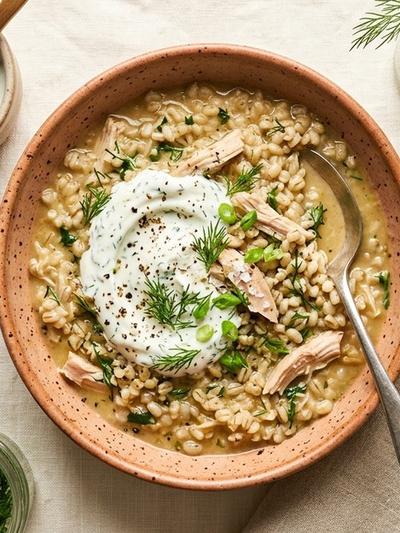
Each serving of this slow cooker chicken khichdi packs 42 grams of protein and just 372 calories, drawing its strength from a full pound and a quarter of chicken breast braised low and slow with yellow moong dal. The split moong dal contributes an additional 7 grams of plant protein per bowl while providing gentle, soluble fiber that won't aggravate a sensitive stomach. Turmeric and cumin aren't just flavor — turmeric offers well-documented anti-inflammatory properties, and cumin supports digestion, both meaningful benefits during GLP-1 therapy.
Khichdi is one of India's oldest comfort foods: a soft, porridge-like blend of rice and lentils that's traditionally served to anyone recovering from illness or needing easy nourishment. This version layers in warm cumin, fresh ginger, turmeric, and a touch of ghee that blooms overnight in the slow cooker, filling your kitchen with an aroma that makes waking up effortless. The chicken breaks apart into tender shreds during the long cook, weaving protein throughout every spoonful rather than sitting on top as a separate element.
For GLP-1 users, khichdi solves the morning appetite problem elegantly. The soft, porridge-like texture requires almost no effort to eat when appetite is low, yet a small bowl delivers serious protein density. Setting everything up the night before means breakfast is waiting when you wake — no cooking decisions required during those groggy morning hours when Mounjaro or Wegovy has your appetite at its quietest.
Why This Works on GLP-1
Preserving lean muscle mass during GLP-1-assisted weight loss requires consistent, adequate protein intake — ideally 25 to 40 grams per meal. This khichdi delivers 42 grams per serving almost entirely from chicken breast and moong dal, two of the most digestible protein sources available. For anyone on Zepbound or a similar GLP-1 medication experiencing reduced hunger, getting this much protein into a single soft, warm bowl means you can meet your daily target without forcing yourself through multiple meals.
The moong dal in this recipe is one of the gentlest legumes on the digestive system. Unlike kidney beans or chickpeas, split moong dal is low in the oligosaccharides that cause gas and bloating — a critical consideration when GLP-1 medications are already slowing your gastric emptying. The soluble fiber it provides helps stabilize blood sugar through the morning without creating the heavy, overfull feeling that denser fiber sources can trigger.
At just 5 grams of fat per serving, this khichdi avoids the digestive burden that high-fat breakfasts impose on GLP-1 users. The single tablespoon of ghee divided across four servings is enough to bloom the spices and carry their flavors through the dish without adding unnecessary heaviness. Turmeric's curcumin, activated by the black pepper in the recipe, provides a modest anti-inflammatory benefit that supports overall gut comfort.
Ingredients (serves 4)
For the khichdi base:
- 1¼ lb (560g) boneless, skinless chicken breast
- ⅔ cup (130g) yellow moong dal (split mung beans), rinsed
- ⅓ cup (65g) basmati rice, rinsed
- 1 medium yellow onion, finely diced
- 2 medium tomatoes, chopped
- 1 tablespoon fresh ginger, grated
- 3 cloves garlic, minced
- 1 tablespoon ghee (or olive oil)
- 3½ cups (830ml) low-sodium chicken broth
- ½ cup (120ml) water
For the spices:
- 1 teaspoon ground turmeric
- 1 teaspoon ground cumin
- ½ teaspoon ground coriander
- ¼ teaspoon black pepper
- ½ teaspoon salt, plus more to taste
- 1 small dried bay leaf
For finishing:
- 2 cups (60g) baby spinach
- ½ cup (70g) frozen green peas
- 1 tablespoon fresh lemon juice
- Fresh cilantro leaves, for serving
Instructions
Bloom the spices (evening prep, 10 minutes):
- Heat the ghee in a small skillet over medium heat. Add the cumin, turmeric, coriander, and black pepper and stir for 30 seconds until fragrant — this step activates the fat-soluble flavor compounds in the spices, which won't develop properly if added dry to the slow cooker.
- Add the diced onion and cook for 3 minutes until just softened. Stir in the ginger and garlic and cook for another minute. Transfer the entire mixture to the slow cooker insert.
Assemble the slow cooker:
- Add the rinsed moong dal and basmati rice to the slow cooker. Stir to combine with the spice-onion mixture.
- Place the whole chicken breasts on top of the dal and rice — keeping them whole prevents them from drying out during the long cook.
- Scatter the chopped tomatoes around the chicken. Add the bay leaf.
- Pour in the chicken broth and water. The liquid should cover everything by about 1 inch (2.5cm). Stir gently without disturbing the chicken breasts.
- Cover and cook on LOW for 7 to 8 hours, or HIGH for 4 hours. The khichdi is done when the dal has completely broken down into a soft porridge and the chicken shreds easily.
Finish and serve (morning, 5 minutes):
- Remove the bay leaf. Lift the chicken breasts out with tongs and shred them with two forks — they should fall apart with minimal effort.
- Return the shredded chicken to the pot. Add the baby spinach and frozen peas, then stir everything together. The residual heat will wilt the spinach and warm the peas in about 2 minutes.
- Stir in the lemon juice and taste for salt. The lemon brightens the earthy turmeric and dal flavors significantly — don't skip it.
- Ladle into bowls and top with fresh cilantro. Serve immediately, or portion into containers for the week.
Nutrition per Serving
| Nutrient | Amount (approx.) |
|---|---|
| Calories | ~372 kcal |
| Protein | ~42g |
| Fat | ~5g |
| Carbohydrates | ~36g |
| Fiber | ~5g |
Estimates based on standard USDA values for raw chicken breast, dry yellow moong dal, dry basmati rice, and ghee, divided across 4 equal servings.
Practical Notes
Overnight timing. Set the slow cooker on LOW before bed around 10 or 11 PM, and breakfast will be ready by 6 or 7 AM. If your slow cooker has a timer with a warm-hold function, use it — khichdi holds well on warm for up to 2 additional hours without drying out.
Meal prep storage. Portion cooled khichdi into four airtight containers and refrigerate for up to 4 days, or freeze for up to 2 months. The texture thickens significantly when cold — add 2 to 3 tablespoons of water or broth when reheating to restore the porridge consistency.
Reheating for best results. Microwave individual portions for 2 minutes, stirring halfway through and adding a splash of water. Stovetop reheating over low heat with a few tablespoons of broth works even better and takes about 4 minutes.
Adjust consistency to your comfort level. GLP-1 users in early treatment phases often tolerate thinner, more soup-like textures better. Add an extra cup of broth before cooking if you prefer a looser porridge, or stir in hot water at serving time to thin individual portions.
Boost fiber if tolerated. If you handle fiber well, stir in ¼ cup of cooked quinoa per serving at the finish step, or replace the basmati rice with brown rice (increase cook time to 9 hours on LOW). This raises fiber to approximately 7 grams per serving without changing the protein content.
Frequently Asked Questions
Can I eat this khichdi if I have very low appetite on my GLP-1 medication?
Can I substitute the chicken breast with thighs or another protein?
How should I store and reheat portions throughout the week?
What if I'm in my first few weeks on GLP-1 and can only eat very small amounts?
Do I have to bloom the spices the night before, or can I skip that step?
This article provides general food and nutrition guidance only. It does not constitute medical advice. Always consult your healthcare provider regarding your GLP-1 medication and individual nutritional needs.