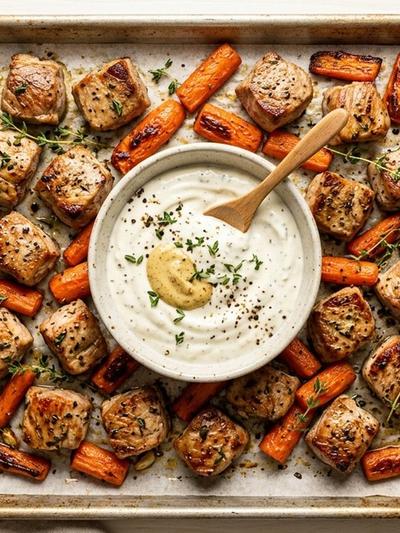
Each serving of this Polish-inspired sheet pan dinner delivers 35 grams of protein from lean pork tenderloin, paired with naturally sweet roasted beets and carrots seasoned with caraway. The entire meal clocks in at just 350 calories with a solid 5 grams of fiber from the root vegetables and virtually no added sugar. A cool horseradish yogurt sauce rounds out the plate with an additional 2.5 grams of protein and the sharp, sinus-clearing bite that defines Central European cooking. Everything roasts on a single pan, which means one dish to wash and consistent results every time.
Caraway seeds lend that unmistakable Central European warmth to the pork and vegetables as they roast, while the beets caramelize into jammy, sweet cubes that contrast beautifully with the mild, lean meat. Red onion wedges turn silky and slightly charred at the edges, adding a savory depth that balances the sweetness. The cold horseradish yogurt — spiked with fresh dill and a squeeze of lemon — cuts through the roasted sweetness and adds a creamy element without the heaviness of traditional sour cream-based sauces.
The sheet pan format means minimal hands-on work and straightforward portion control. Plate exactly what you need, refrigerate the rest, and reheat tomorrow without any loss in quality. Root vegetables like beets digest gently compared to raw cruciferous options, making this dinner comfortable even during the first weeks on GLP-1 medication when the digestive system is still adjusting.
Why This Works on GLP-1
Pork tenderloin is one of the leanest cuts available, rivaling skinless chicken breast in its protein-to-fat ratio at roughly 26 grams of protein and just 3 grams of fat per 4-ounce portion. Each serving of this dinner provides 35 grams of complete protein, which is critical for preserving lean muscle mass during weight loss on medications like Mounjaro or Wegovy. Research consistently shows that adults losing weight benefit from consuming at least 25 to 30 grams of protein per meal to maintain muscle protein synthesis, and this recipe exceeds that threshold comfortably. The protein comes entirely from whole food sources rather than supplements, which supports better absorption and longer-lasting satiety.
Beets and carrots provide a gentle source of both soluble and insoluble fiber, totaling about 5 grams per serving. Unlike raw high-fiber vegetables that can cause bloating and discomfort, roasting softens the cellular structure, making these root vegetables considerably easier to digest. This matters because GLP-1 medications slow gastric motility, so foods that are already partially broken down by cooking cause less abdominal pressure.
Beets are naturally rich in dietary nitrates and folate, both of which support cardiovascular health — a relevant consideration for many GLP-1 users managing metabolic syndrome alongside weight loss. The modest fat content of 12 grams per serving, sourced primarily from heart-healthy olive oil, keeps the meal light enough to eat comfortably without triggering the nausea that high-fat dinners can provoke during GLP-1 treatment.
Ingredients (serves 4)
For the pork and vegetables:
- 1¼ lb (570g) pork tenderloin, trimmed and cut into 1-inch (2.5cm) medallions
- 3 medium beets (about 12 oz / 340g), peeled and cut into ¾-inch (2cm) cubes
- 3 medium carrots (about 8 oz / 225g), peeled and cut into ½-inch (1.5cm) rounds
- 1 large red onion, cut into 8 wedges
- 2 tablespoons (30ml) extra-virgin olive oil
- 1½ teaspoons caraway seeds
- 1 teaspoon smoked paprika
- ¾ teaspoon fine sea salt
- ½ teaspoon freshly ground black pepper
- 3 cloves garlic, minced
For the horseradish-dill yogurt:
- ½ cup (120g) plain nonfat Greek yogurt
- 1½ tablespoons prepared horseradish (not cream-style)
- 2 tablespoons chopped fresh dill, plus more for garnish
- 1 teaspoon fresh lemon juice
- Pinch of fine sea salt
Instructions
Prepare the vegetables and pork:
Preheat your oven to 425°F (220°C) and line a large rimmed baking sheet with parchment paper. The high heat ensures proper browning on the pork and vegetables without needing excess oil.
Toss the beet cubes, carrot rounds, and red onion wedges on the prepared baking sheet with 1 tablespoon of the olive oil, 1 teaspoon of the caraway seeds, and half the salt and pepper. Spread them into a single layer, leaving a clear area in the center for the pork.
Season the pork medallions with the remaining 1 tablespoon olive oil, remaining caraway seeds, smoked paprika, minced garlic, and remaining salt and pepper. Toss to coat evenly, pressing the spices gently into the surface of each medallion.
Roast everything together:
Nestle the seasoned pork medallions among the vegetables, ensuring nothing overlaps significantly. Overcrowding causes steaming rather than roasting, so use two sheet pans if your baking sheet feels cramped.
Roast for 15 minutes, then flip the pork medallions and stir the vegetables gently with a spatula. Return to the oven and continue roasting for 8 to 10 minutes more, until the pork reaches an internal temperature of 145°F (63°C) and the beets are fork-tender with caramelized edges.
Remove from the oven and let the pork rest on the pan for 5 minutes. This redistributes the juices throughout the meat and keeps each medallion moist when you cut into it.
Make the horseradish-dill yogurt:
- While the pork rests, stir together the Greek yogurt, prepared horseradish, chopped dill, lemon juice, and a pinch of salt in a small bowl. Taste and adjust the horseradish to your preference — start with 1 tablespoon if you are sensitive to heat and work up from there.
Serve:
- Divide the roasted vegetables among four plates and arrange the pork medallions on top. Spoon the horseradish-dill yogurt alongside or drizzle it directly over the pork. Finish with a scattering of fresh dill fronds.
Nutrition per Serving
| Nutrient | Amount (approx.) |
|---|---|
| Calories | ~350 kcal |
| Protein | ~35g |
| Fat | ~12g |
| Carbohydrates | ~23g |
| Fiber | ~5g |
Calculated based on trimmed pork tenderloin, nonfat Greek yogurt, and 2 tablespoons total olive oil divided across 4 servings.
Practical Notes
Beet prep shortcut. If peeling and cutting raw beets feels tedious or stains your hands, buy pre-cooked vacuum-packed beets from the refrigerated produce section. Cut them into cubes and add them to the sheet pan during the last 10 minutes of roasting — they only need to heat through and develop a light caramelized edge. This also shaves about 5 minutes off the total cook time.
Meal prep storage. Store the roasted pork and vegetables in airtight containers for up to 4 days in the refrigerator. Keep the horseradish yogurt in a separate small container to prevent it from becoming watery. Reheat the pork and vegetables in a 350°F (175°C) oven for 8 to 10 minutes — the microwave works but softens the caramelized edges you worked to build.
Start with a smaller plate. If you are in the early weeks of GLP-1 treatment and your appetite is significantly reduced, plate two or three pork medallions with a smaller scoop of vegetables. The nutrition density remains high even in half-portions — you will still get around 17 grams of protein from just half a serving, which is meaningful for muscle maintenance.
Adjust the horseradish intensity. Prepared horseradish varies widely in pungency between brands. If horseradish is not your thing, swap it for 1 tablespoon of whole-grain Dijon mustard for a milder but still distinctly Central European flavor. Both options keep the yogurt sauce low in calories while adding character.
Swap the root vegetables freely. Parsnips, turnips, or celeriac work beautifully in place of beets if you prefer a less sweet profile or want to avoid the pink staining. Cut them to similar sizes so everything finishes roasting at the same time. Golden beets are another option — they develop the same caramelized sweetness without coloring the entire pan.
Frequently Asked Questions
Will this dinner sit well if I take my GLP-1 injection in the evening?
Can I use a different cut of pork instead of tenderloin?
How long do leftovers keep, and can I freeze this meal?
What if my appetite is very small during early GLP-1 treatment?
Do I need to pre-cook the beets before roasting them?
This article provides general food and nutrition guidance only. It does not constitute medical advice. Always consult your healthcare provider regarding your GLP-1 medication and individual nutritional needs.