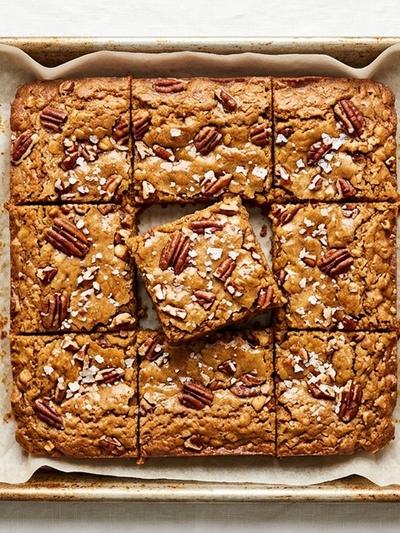
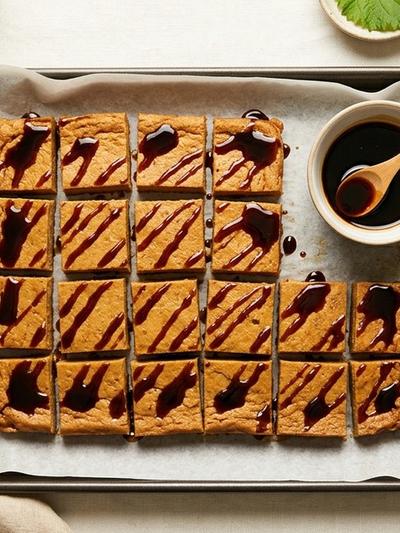
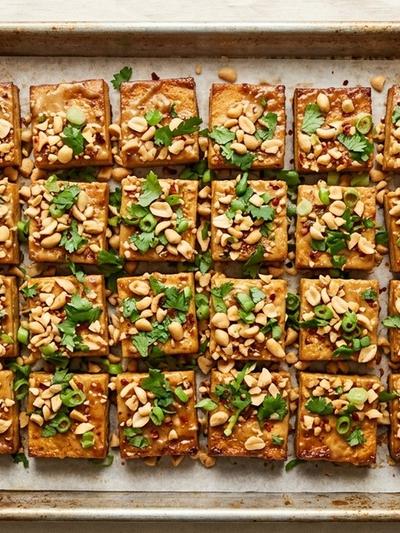
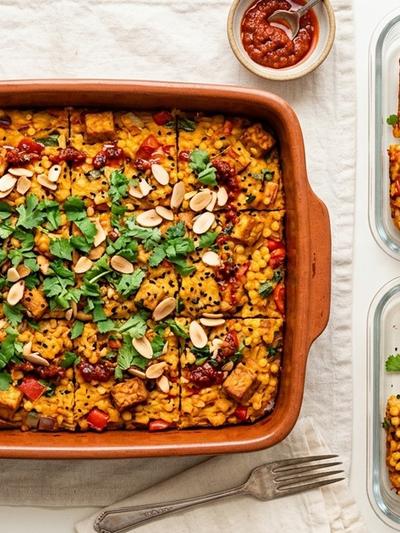
Each serving of these Moroccan-inspired tofu squares delivers roughly 28 grams of plant protein from two complementary sources — extra-firm tofu and cannellini beans — along with 7 grams of fiber and under 400 calories. Dates provide natural sweetness without refined sugar, while almond flour and a scoop of plant-based protein powder round out the amino acid profile. The result is a dense, fudgy square that eats like a proper dessert while doing genuine nutritional work.
Orange blossom water is the star flavor here, lending a floral perfume that lifts the earthy bean-and-tofu base into something unmistakably North African. Warm cinnamon and a hint of cardamom echo the spice profile of Moroccan sellou, while crushed pistachios and toasted sesame seeds add crunch against the soft, chewy interior. The dates melt into the batter during baking, creating pockets of sticky caramel sweetness that make these squares taste far more indulgent than their macros suggest.
For GLP-1 users, the portioned-square format is ideal. Three small squares per serving feel like a complete dessert without overwhelming a reduced appetite. The fiber from beans and dates slows digestion gently, and the dense texture means you naturally eat slowly — exactly what works when gastric emptying is already delayed.
Why This Works on GLP-1
Preserving lean muscle mass during GLP-1-assisted weight loss is one of the most important nutritional priorities, and it requires consistent protein intake spread across the day — including at snack and dessert time. These squares provide 28 grams of complete plant protein per serving by combining tofu's full amino acid profile with the complementary proteins in white beans. For someone on Mounjaro or a similar GLP-1 medication eating three meals and one snack daily, a serving of these squares can account for roughly a quarter of the day's protein target without feeling like a chore.
The 7 grams of fiber per serving comes primarily from the cannellini beans and dates, both of which contain soluble fiber that forms a gentle gel in the digestive tract. This is important because GLP-1 medications already slow gastric emptying — the fiber here supports satiety without creating the heavy, bloated feeling that high-insoluble-fiber foods sometimes cause.
The fat content sits at a moderate 14 grams per serving, mostly from the almond flour and pistachios, which provide heart-healthy monounsaturated fats alongside vitamin E and magnesium. At under 400 calories, a serving fits comfortably into the reduced daily intake most GLP-1 users naturally settle into, leaving room for satisfying protein-forward meals the rest of the day.
Ingredients (serves 4)
For the tofu-bean base:
- 1 block (16 oz / 450g) extra-firm tofu, drained and pressed for 10 minutes
- 1 can (15 oz / 425g) cannellini beans, drained and rinsed
- 4 large Medjool dates (about 3 oz / 90g), pitted and roughly chopped
- 1.5 scoops (about 3 tbsp / 45g) vanilla plant-based protein powder
- 1/3 cup (35g) almond flour
- 2 tbsp (20g) oat flour
- 1 tbsp orange blossom water
- 1 tbsp (15g) honey or maple syrup
- 1 tsp ground cinnamon
- 1/4 tsp ground cardamom
- 1/4 tsp ground ginger
- 1/4 tsp fine sea salt
For the topping:
- 2 tbsp (18g) raw pistachios, roughly crushed
- 1 tbsp (8g) sesame seeds
- Light drizzle of honey (about 1 tsp), optional
Instructions
Press the tofu and prepare the pan:
- Wrap the tofu block in a clean kitchen towel, set it on a plate, and place a heavy skillet or book on top. Let it press for at least 10 minutes to remove excess moisture — this prevents the batter from being too wet and ensures the squares hold together after baking.
- Preheat your oven to 350°F (175°C). Line a 9x13-inch (23x33 cm) sheet pan or quarter sheet pan with parchment paper, letting the paper overhang the long sides for easy removal later.
Blend the batter:
- Break the pressed tofu into rough chunks and add it to a food processor along with the drained cannellini beans, chopped dates, orange blossom water, honey, cinnamon, cardamom, ginger, and salt. Process for 60 to 90 seconds until completely smooth, scraping down the sides once — the mixture should look like thick hummus with no visible chunks of date or bean.
- Add the almond flour, oat flour, and protein powder. Pulse 8 to 10 times until just incorporated. Over-processing at this stage makes the squares gummy, so stop as soon as the dry ingredients disappear into the batter.
Shape and top:
- Scrape the batter onto the prepared sheet pan and spread it into an even layer about 3/4 inch (2 cm) thick using an offset spatula or the back of a damp spoon. The batter is sticky — wetting your tool prevents it from pulling.
- Scatter the crushed pistachios and sesame seeds evenly across the top, pressing them gently into the surface so they adhere during baking.
Bake and cool:
- Bake on the center rack for 28 to 30 minutes. The squares are done when the edges are lightly golden, the surface feels firm to a gentle touch, and a toothpick inserted in the center comes out clean or with just a few moist crumbs. The center will still feel slightly soft — it firms as it cools.
- Remove the pan from the oven and, if using, drizzle the optional teaspoon of honey over the top in thin lines. Let the squares cool completely in the pan on a wire rack — at least 30 minutes. Cutting while warm will cause crumbling. Once cool, use the parchment overhang to lift the slab out, then cut into 12 equal squares.
Nutrition per Serving
| Nutrient | Amount (approx.) |
|---|---|
| Calories | ~390 kcal |
| Protein | ~28g |
| Fat | ~14g |
| Carbohydrates | ~42g |
| Fiber | ~7g |
Estimates based on extra-firm tofu, canned cannellini beans, Medjool dates, and a standard pea-rice blend protein powder. Your totals may shift slightly depending on tofu brand and protein powder formulation.
Practical Notes
Store these in the fridge, not the counter. Because the base is tofu and beans rather than butter and flour, the squares are perishable. Stack them between parchment sheets in an airtight container and refrigerate for up to 5 days. They taste best cold or at cool room temperature — the texture becomes denser and more fudge-like after a night in the fridge, which most people actually prefer.
Freeze individual squares for on-demand dessert. Wrap each square in plastic wrap, then store in a freezer bag for up to 2 months. Thaw in the fridge overnight or at room temperature for 20 minutes. Having a frozen stash means you always have a protein-rich sweet option available without needing to bake on a low-appetite day.
Swap the nut and seed topping freely. Crushed almonds, chopped walnuts, or hemp seeds all work in place of pistachios and sesame. If you have a nut allergy, replace the almond flour with an equal weight of additional oat flour and use sunflower seeds on top — protein will drop by about 3 grams per serving but the squares still hold together.
Use a blender if your food processor is small. A high-speed blender works for the base, though you may need to add 1 to 2 tablespoons of water to get things moving. Add the dry ingredients last and blend on low just until combined. The batter should be thick enough to mound on a spoon — if it pours freely, it is too thin and will not set properly.
Do not skip pressing the tofu. Unpressed tofu releases water during baking, creating a soggy center that will not firm up no matter how long you bake. If you are short on time, wrap the tofu block in paper towels and microwave it for 2 minutes — this drives out moisture quickly without a press.
Frequently Asked Questions
I just started Wegovy and can barely eat a full meal. Is three squares too much for a serving?
Can I use silken tofu instead of extra-firm?
How should I reheat these if I prefer warm desserts?
I do not have orange blossom water. What can I replace it with?
Can I make these without protein powder?
This article provides general food and nutrition guidance only. It does not constitute medical advice. Always consult your healthcare provider regarding your GLP-1 medication and individual nutritional needs.