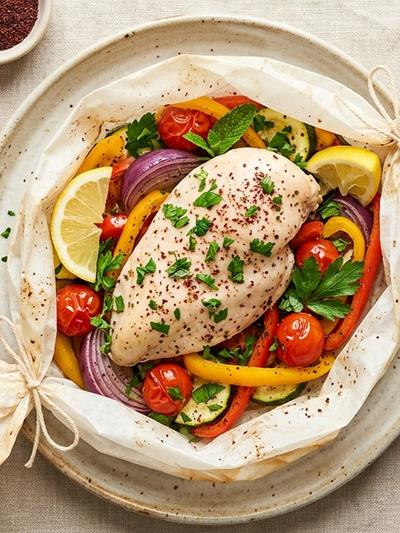
When appetite is compressed by GLP-1 medication, every bite needs to carry weight. Sheet pan chicken with roasted vegetables is one of the most efficient formats for meeting protein targets without requiring large volumes of food. The combination of chicken thighs or breasts with colorful vegetables delivers dense nutrition in a modest portion, and the entire meal comes together in one pan with about ten minutes of hands-on preparation.
For GLP-1 users, the appeal of this recipe goes beyond simplicity. Roasting concentrates flavor without adding calories, which means the food tastes satisfying even in smaller quantities. The lemon and herb profile is bright and clean, without heavy sauces or rich fats that can trigger nausea — a common concern during the adjustment period on GLP-1 medications. The vegetables roast until tender rather than raw, making them easier on a digestive system that may be processing food more slowly than usual.
This recipe also solves the meal prep problem. Roasting a full sheet pan on Sunday means protein-ready lunches or dinners for the next three days, reducing decision fatigue and the temptation to skip meals when appetite signals are unreliable.
Why This Works on GLP-1
GLP-1 receptor agonists slow gastric emptying, which extends satiety but also means that heavy, fatty meals can sit uncomfortably for hours. Chicken — particularly breast — is a lean protein source that digests more smoothly than red meat while still providing the amino acid density needed to protect muscle mass during Zepbound treatment and weight loss.
The Mediterranean-style seasoning (lemon, thyme, oregano, olive oil) brings anti-inflammatory benefit through polyphenols in the herbs and oleocanthal in the olive oil. Zucchini and cherry tomatoes add volume and fiber without contributing significant carbohydrate load, which supports stable blood glucose (a key target of Ozempic) — relevant for many GLP-1 users managing type 2 diabetes or insulin resistance alongside weight. Roasting rather than boiling or steaming preserves the vegetables' structural integrity and makes them more palatable when appetite is low.
Ingredients (serves 4)
Protein
- 4 boneless, skinless chicken thighs or breasts (about 700g / 1.5 lb total)
Vegetables
- 250g / 9 oz cherry tomatoes, halved
- 2 medium zucchini (about 400g / 14 oz), sliced into half-moons
- 1 medium red onion (about 180g / 6 oz), cut into wedges
Seasoning
- 3 tablespoons (45ml) extra-virgin olive oil
- Zest and juice of 1 large lemon
- 3 garlic cloves, minced
- 1 teaspoon dried thyme
- 1 teaspoon dried oregano
- 1/2 teaspoon fine sea salt
- 1/4 teaspoon black pepper
- Fresh parsley, chopped, to serve (optional)
Instructions
Preheat the oven to 200°C (400°F). Line a large rimmed baking sheet with parchment paper or lightly oil the surface.
In a small bowl, whisk together the olive oil, lemon zest, lemon juice, garlic, thyme, oregano, salt, and pepper.
Place the chicken pieces in the center of the prepared baking sheet. Pour half the herb mixture over the chicken and turn to coat on all sides.
Arrange the cherry tomatoes, zucchini, and red onion around the chicken in a single layer. Drizzle the remaining herb mixture over the vegetables and toss gently to distribute.
Roast for 25–30 minutes if using chicken breasts, or 30–35 minutes for thighs, until the internal temperature of the chicken reaches 74°C (165°F) and the vegetables are tender and beginning to caramelize at the edges.
Remove from the oven and rest for 5 minutes before slicing the chicken. Scatter chopped parsley over the top if using. Serve directly from the pan.
Nutrition per Serving
| Nutrient | Approximate Value |
|---|---|
| Calories | 340 kcal |
| Protein | 38g |
| Fat | 14g |
| Carbohydrates | 10g |
| Fiber | 3g |
Values based on chicken breast. Thighs add approximately 40–50 calories and 4–5g fat per serving.
Practical Notes
Choose thighs for meal prep. Chicken thighs retain moisture better during refrigeration and reheating. Breast is leaner, but it dries out faster — if you plan to eat this over three days, thighs hold up considerably better.
Portion by protein need, not plate size. On GLP-1 medication, your appetite signal may stop you well before you finish a standard portion. Pre-slice the chicken and weigh it (a food scale is useful here) so you can stop eating knowing you have hit your protein target, even if you leave vegetables on the plate.
Reheat low and slow. Microwave at 50–60% power with a damp paper towel over the plate to prevent the chicken from toughening. Alternatively, reheat covered in a 160°C (320°F) oven for 10 minutes.
The vegetables release liquid as they refrigerate. Store the chicken and vegetables in the same container — the accumulated juices keep the chicken moist. Consume within 3 days.
Make it a wrap on day two. Sliced leftover chicken and roasted vegetables roll easily into a high-protein wrap with a tablespoon of hummus. This changes the texture and format enough to feel like a fresh meal.
Scale down without waste. If you are cooking for one, reduce to one or two chicken pieces, halve the vegetables, and use the same seasoning ratios. The cooking time stays the same.
Frequently Asked Questions
Should I use chicken thighs or chicken breasts for this recipe on GLP-1?
What other vegetables can I swap in if I don't have zucchini or cherry tomatoes?
How do I prevent the chicken from drying out when reheating leftovers?
Can I marinate the chicken overnight to save time on cooking day?
My appetite is very small — how much chicken do I actually need to eat to meet my protein goals?
This article provides general food and nutrition guidance only. It does not constitute medical advice. Always consult your healthcare provider regarding your GLP-1 medication and individual nutritional needs.