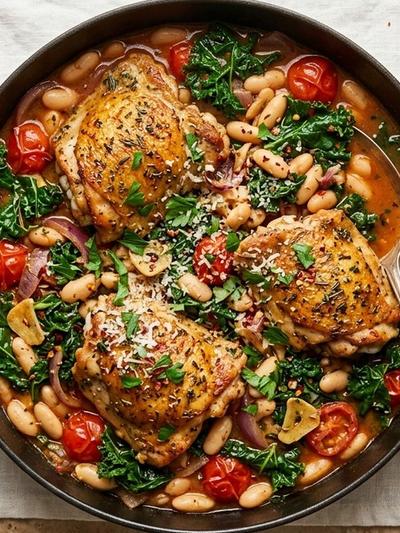
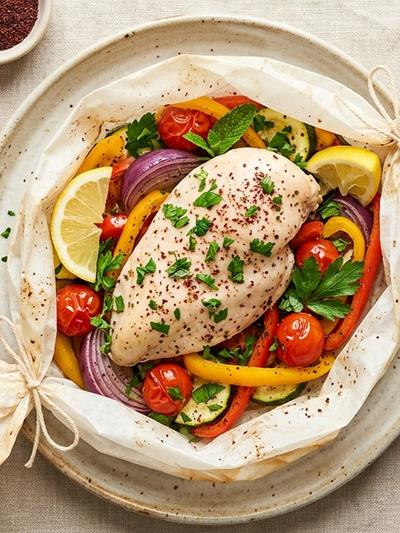
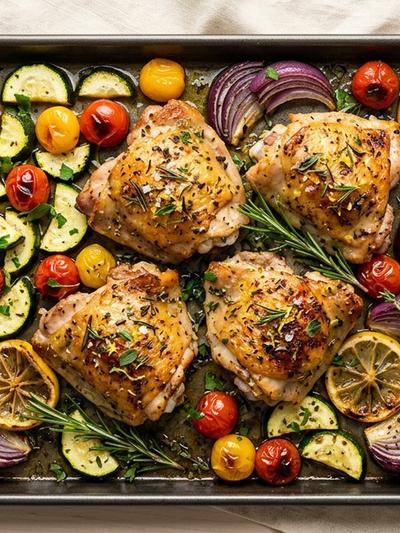
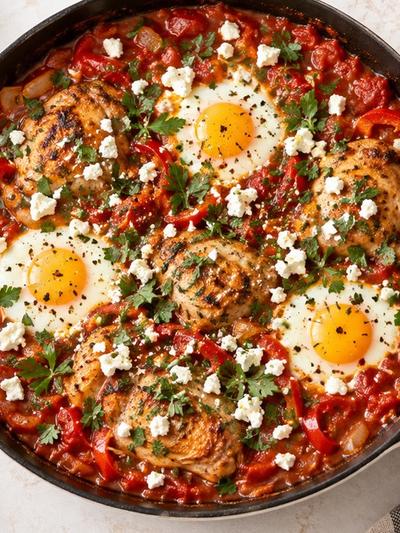
Each serving of this braised chicken delivers approximately 38 grams of complete protein from bone-in, skin-removed thighs — one of the most flavorful and forgiving cuts for slow cooking. Artichoke hearts contribute an additional 4 grams of fiber per serving alongside folate and magnesium, two micronutrients that GLP-1 users often fall short on when eating reduced volumes. The dish clocks in at roughly 365 calories per serving, with the fat kept moderate by removing the skin before braising and relying on the chicken's own collagen-rich juices for body.
The flavor here is unmistakably Greek: oregano and thyme build the aromatic base, crushed tomatoes provide acidity and sweetness, briny Kalamata olives add depth without overwhelming, and a generous amount of lemon juice stirred in at the end brightens everything. The artichoke hearts soften during braising into a creamy, almost buttery texture that contrasts with the tender, pull-apart chicken. A scatter of fresh dill at the finish ties the entire profile together with a clean, herbal note that lifts what could otherwise be a heavy stew.
Braising is one of the best cooking methods for GLP-1 users because it produces meat so tender it practically falls apart — no knife-and-fork effort required, and no chewy textures that can feel like a chore when your appetite is limited. The broth left in the pan is packed with dissolved collagen and flavor, so even a small bowl with a modest piece of chicken feels like a complete, satisfying meal. This is comfort food that works within your nutritional constraints rather than against them.
Why This Works on GLP-1
Chicken thighs contain more iron, zinc, and B vitamins than breast meat, and their higher myoglobin content means they stay moist through long cooking — a practical advantage when you might eat half a serving now and reheat the rest tomorrow. With the skin removed, thighs run about 26 grams of protein per 100 grams of cooked meat, and the bone-in preparation adds gelatin to the braising liquid, which supports joint health and gut lining integrity. At 38 grams of protein per serving, this dish covers roughly 50–60% of most GLP-1 users' daily protein targets in a single meal.
The artichoke hearts provide both soluble and insoluble fiber, which supports steady blood sugar response and feeds beneficial gut bacteria. Unlike high-fiber cruciferous vegetables that can cause significant gas and bloating — a real concern when GLP-1 medications such as Zepbound and Ozempic already slow gastric emptying — artichokes are generally well tolerated and break down to a soft, easy-to-digest consistency during braising.
Tomatoes in the braise contribute lycopene, a fat-soluble antioxidant whose absorption is enhanced by the moderate fat content of the thigh meat. The olives provide monounsaturated fats associated with improved cardiovascular markers. Together, the Mediterranean ingredient profile aligns with dietary patterns consistently shown to support metabolic health during active weight loss.
Ingredients (serves 4)
For the chicken:
- 8 bone-in, skinless chicken thighs (about 2 lb / 900g total)
- 1/2 teaspoon fine sea salt
- 1/4 teaspoon black pepper
- 1 tablespoon olive oil
For the braise:
- 1 medium yellow onion, diced (about 1 cup / 150g)
- 4 cloves garlic, thinly sliced
- 1 can (14 oz / 400g) crushed tomatoes
- 1 can (14 oz / 400g) artichoke hearts, drained and quartered
- 1/3 cup (80ml) dry white wine (or chicken broth)
- 1/2 cup (120ml) low-sodium chicken broth
- 1 tablespoon dried oregano
- 1 teaspoon dried thyme
- 1/4 teaspoon red pepper flakes (optional)
- 1/4 cup (35g) Kalamata olives, halved
To finish:
- 3 tablespoons (45ml) fresh lemon juice (about 1 large lemon)
- 2 tablespoons fresh dill, roughly chopped
- 1 teaspoon lemon zest
Instructions
Season and sear the chicken:
- Pat the chicken thighs thoroughly dry with paper towels. Removing surface moisture is essential — wet chicken steams rather than browns, and that initial sear creates the Maillard reaction compounds that give the finished dish its depth of flavor.
- Season both sides of each thigh with salt and pepper.
- Heat the olive oil in a large Dutch oven or deep oven-safe skillet over medium-high heat until the oil shimmers. Place the thighs presentation-side down and sear without moving for 4–5 minutes until deeply golden. Flip and sear the other side for 2 minutes. Transfer to a plate — the chicken will finish cooking during the braise.
Build the braising liquid:
- Reduce heat to medium. Add the diced onion to the same pot, stirring occasionally for 4–5 minutes until softened and lightly golden. The fond (browned bits) from the chicken will dissolve into the onions and form the flavor base.
- Add the sliced garlic and cook for 30 seconds until fragrant — garlic burns quickly, so keep it moving.
- Pour in the white wine (or broth) and scrape the bottom of the pot with a wooden spoon to deglaze. Let the wine reduce by half, about 1 minute.
- Add the crushed tomatoes, chicken broth, oregano, thyme, and red pepper flakes if using. Stir to combine and bring to a gentle simmer.
Braise:
- Nestle the seared chicken thighs into the sauce in a single layer. Tuck the artichoke hearts and olives around and between the chicken pieces.
- Cover the pot with a tight-fitting lid and reduce heat to low. Braise for 35–40 minutes until the chicken registers 185°F (85°C) internally. For thighs, this higher temperature is intentional — unlike breast meat, thigh collagen begins converting to gelatin above 165°F, which is what makes the meat silky and fork-tender rather than tough.
- Alternatively, transfer the covered pot to a 325°F (160°C) oven for 40–45 minutes. The oven provides more even, gentle heat that reduces the chance of scorching on the bottom.
Finish and serve:
- Remove the lid, stir in the lemon juice and lemon zest, and taste the sauce. Adjust salt if needed — the olives contribute saltiness, so taste before adding more.
- Scatter the fresh dill over the top. Serve directly from the pot, spooning the braising liquid generously over each portion. Pair with a small serving of orzo, crushed baby potatoes, or simply enjoy the broth on its own with crusty bread.
Nutrition per Serving
| Nutrient | Amount (approx.) |
|---|---|
| Calories | ~365 kcal |
| Protein | ~38g |
| Fat | ~16g |
| Carbohydrates | ~14g |
| Fiber | ~5g |
Based on 2 bone-in, skinless chicken thighs per serving with one-quarter of the braising liquid, artichokes, and olives. Using chicken broth instead of wine reduces calories by approximately 10 kcal per serving.
Practical Notes
This recipe improves on day two. Like most braises, the flavors meld and deepen overnight. Make the full batch, let it cool completely, then refrigerate in an airtight container. Reheat individual portions gently on the stovetop with a splash of broth to loosen the sauce. It keeps well for 4 days refrigerated or 3 months frozen.
Bone-in thighs are worth the minor extra effort. Boneless thighs will work if that is what you have, but they braise in about 25 minutes and produce less gelatin in the sauce. The bones contribute body and richness to the braising liquid that you cannot replicate otherwise. If using boneless, reduce the braising time and add a teaspoon of unflavored gelatin to the sauce for similar mouthfeel.
Start with half a thigh if your appetite is limited. One full serving is 2 thighs, but GLP-1 users in early titration phases may find one thigh with a generous spoonful of sauce and artichokes perfectly sufficient. The braising liquid carries enough protein and flavor to make a smaller portion feel complete rather than inadequate.
Pair strategically for a complete plate. A quarter cup of cooked orzo (about 100 calories) or two small roasted baby potatoes rounds this into a full dinner without overwhelming your stomach. The starchy side also absorbs the braising liquid, which is where much of the flavor lives.
Substitute the wine confidently. If you prefer not to cook with alcohol, use an equal amount of chicken broth with a teaspoon of white wine vinegar added. The acid component is what matters for the sauce balance, not the alcohol itself, which cooks off during braising.
Frequently Asked Questions
Will the richness of chicken thighs cause nausea on GLP-1?
Can I use chicken breast instead of thighs?
How long does this keep, and can I freeze individual portions?
What if I can only eat a very small portion right now?
Can I make this in a slow cooker?
This article provides general food and nutrition guidance only. It does not constitute medical advice. Always consult your healthcare provider regarding your GLP-1 medication and individual nutritional needs.