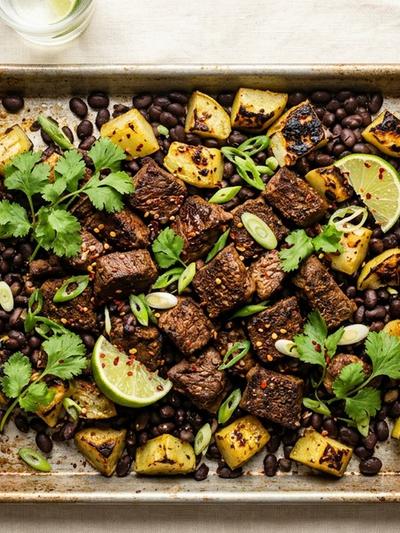
This Caribbean-spiced sheet pan breakfast delivers 32 grams of protein per serving from lean sirloin steak paired with black beans, making it one of the most protein-dense morning meals you can prepare with minimal effort. Each portion provides 9 grams of fiber alongside iron, B12, and potassium — nutrients that GLP-1 users frequently need to prioritize. The entire dish roasts on a single pan in under 25 minutes, so cleanup is nearly nonexistent.
The flavor here is built on a homemade dry jerk seasoning — allspice, thyme, garlic, and a touch of scotch bonnet — rubbed into thin strips of sirloin before roasting at high heat. Bell peppers and red onion caramelize alongside the beef, adding natural sweetness that balances the warmth of the spice. Black beans scattered across the pan turn slightly crispy on top while staying creamy inside, giving the hash a satisfying range of textures.
For GLP-1 users, this breakfast solves the common problem of needing high protein in a small volume. A single serving is nutrient-dense without being heavy, and the gentle warmth of the jerk seasoning stimulates appetite without overwhelming a sensitive stomach. The sheet pan format means you can scale this up for meal prep or down to two servings with no recipe adjustments.
Why This Works on GLP-1
Each serving delivers 32 grams of complete protein primarily from lean sirloin steak, which provides all essential amino acids needed for muscle preservation during weight loss. Maintaining muscle mass is one of the most important nutritional goals for people on Mounjaro or other GLP-1 medications, since rapid weight loss can lead to disproportionate lean tissue loss if protein intake is insufficient. The black beans add another 7 grams of plant protein per serving, creating a complementary amino acid profile that supports steady absorption throughout the morning.
The 9 grams of fiber per serving come from the black beans and roasted vegetables, providing enough bulk to support healthy digestion without the bloating risk of raw high-fiber foods. Roasting the vegetables softens their cell walls, making them gentler on a digestive system that may be moving more slowly due to GLP-1 medication effects.
The moderate fat content of 14 grams per serving keeps the dish satisfying without triggering the nausea that high-fat meals can cause on GLP-1 therapy. Sirloin is one of the leanest beef cuts available, and because the vegetables roast in just a light coating of olive oil, the overall fat-to-protein ratio stays well within the range that most GLP-1 users tolerate comfortably.
Ingredients (serves 4)
For the jerk seasoning:
- 1 teaspoon ground allspice
- 1 teaspoon dried thyme
- 1 teaspoon garlic powder
- 1 teaspoon onion powder
- ½ teaspoon smoked paprika
- ¼ teaspoon ground cinnamon
- ¼ teaspoon ground scotch bonnet pepper or cayenne (adjust to tolerance)
- ½ teaspoon salt
- ¼ teaspoon black pepper
For the sheet pan:
- 1 lb (450g) sirloin steak, trimmed of visible fat, cut into ½-inch strips
- 1 can (15 oz / 425g) black beans, drained and rinsed
- 2 medium bell peppers (1 red, 1 yellow), cut into ½-inch pieces
- 1 medium red onion, cut into ½-inch wedges
- 1 medium sweet potato (about 6 oz / 170g), peeled and cut into ½-inch cubes
- 1 tablespoon (15ml) olive oil
- 1 tablespoon (15ml) fresh lime juice
- 2 green onions, thinly sliced
For serving:
- 4 lime wedges
- 2 tablespoons fresh cilantro, roughly chopped
- Hot sauce (optional)
Instructions
Prepare the seasoning and ingredients:
Preheat your oven to 425°F (220°C) and line a large rimmed sheet pan with parchment paper. The high heat is essential for getting caramelization on the vegetables and a slight crust on the beef without overcooking the lean meat.
Combine all the jerk seasoning ingredients in a small bowl and mix thoroughly. This dry rub builds flavor without adding fat or sugar, unlike most bottled jerk sauces that contain oil and brown sugar.
Place the sirloin strips in a medium bowl, add half the jerk seasoning and the lime juice, and toss until evenly coated. Set aside at room temperature while you prepare the vegetables — even 5 minutes of contact helps the spices penetrate the meat.
Prepare and arrange the sheet pan:
Spread the sweet potato cubes, bell peppers, and red onion wedges on the prepared sheet pan. Drizzle with olive oil and sprinkle with the remaining jerk seasoning. Toss everything together directly on the pan until the vegetables are evenly coated.
Push the vegetables toward the edges of the pan and spread the seasoned beef strips in a single layer down the center. Keeping the beef separated from the vegetables prevents steaming and ensures proper browning.
Scatter the drained black beans over and around the vegetables. They will roast alongside everything else, developing a slightly crispy exterior.
Roast and finish:
Roast for 12 minutes, then remove the pan and flip the beef strips with tongs. The beef should have visible browning on the bottom side. If the sweet potato cubes are not yet tender, give them a stir as well.
Return the pan to the oven and roast for another 8–10 minutes, until the beef reaches your preferred doneness (medium is ideal for sirloin — it stays tender) and the sweet potatoes are fork-tender with caramelized edges.
Remove from the oven and immediately squeeze a little lime juice over the entire pan. Scatter the green onions and cilantro on top. Let rest for 2 minutes before dividing into four portions — this brief rest allows the beef juices to redistribute so the hash stays moist.
Nutrition per Serving
| Nutrient | Amount (approx.) |
|---|---|
| Calories | ~365 kcal |
| Protein | ~32g |
| Fat | ~14g |
| Carbohydrates | ~28g |
| Fiber | ~9g |
Estimates based on USDA data for trimmed sirloin steak, canned black beans, and standard-size vegetables. Actual values may vary based on specific cuts and ingredient brands.
Practical Notes
Meal prep friendly for 3–4 days. Store individual portions in airtight containers in the refrigerator for up to 4 days. Reheat in a 375°F (190°C) oven for 8–10 minutes or in a skillet over medium heat for 4–5 minutes. The microwave works in a pinch but the beef will lose some of its texture.
Substitute the beef cut if needed. Flank steak or top round work equally well — just slice them thinly against the grain before seasoning. Ground beef (93% lean) can replace the steak strips entirely; break it into small pieces across the pan and reduce the second roasting time by 2–3 minutes since ground beef cooks faster.
Cut sweet potato small for even cooking. Half-inch cubes are the maximum size — any larger and the sweet potato will still be firm when the beef is done. If your sweet potato is particularly dense, you can microwave the cubes for 2 minutes before adding them to the pan to give them a head start.
Start with less scotch bonnet if you are new to GLP-1. Many people on Wegovy or similar medications find that their spice tolerance decreases, especially in the first few months. Use just a pinch of cayenne or omit the hot pepper entirely, then add hot sauce at the table once you know how your stomach responds.
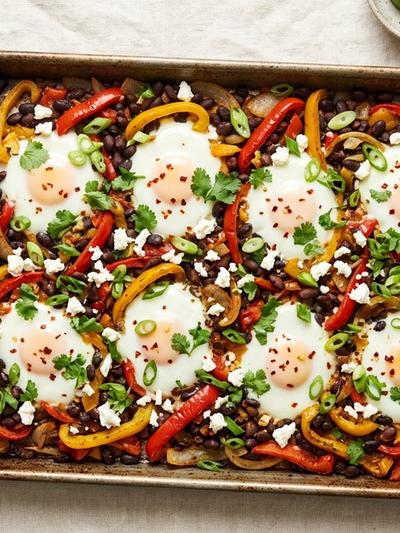
Add an egg for extra protein. During the last 8 minutes of roasting, create four small wells in the hash and crack an egg into each one. This adds roughly 6 grams of protein and 70 calories per serving, turning the dish into a 38-gram protein breakfast without any additional prep work.
Frequently Asked Questions
Is this breakfast too heavy for someone just starting Zepbound or another GLP-1 medication?
Can I use a different protein instead of beef?
How should I store and reheat leftovers?
What if I can only eat a very small amount in the morning?
Why roast at such a high temperature instead of a lower, slower bake?
This article provides general food and nutrition guidance only. It does not constitute medical advice. Always consult your healthcare provider regarding your GLP-1 medication and individual nutritional needs.