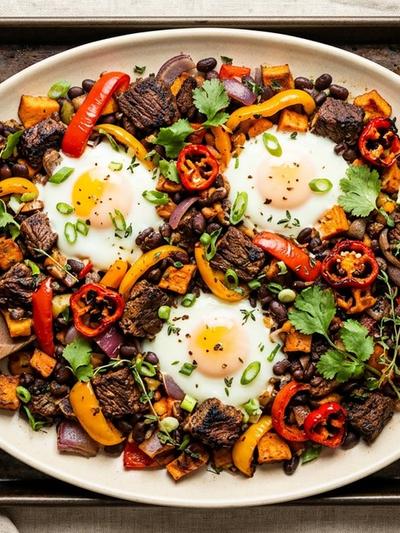
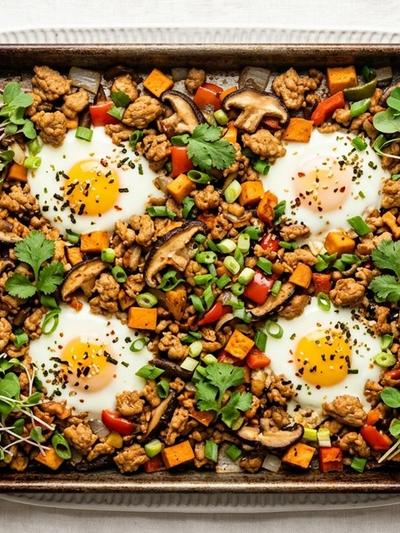
This one-pan Caribbean breakfast delivers 31 grams of protein per serving by combining lean ground beef with baked eggs over a bed of roasted yam and sweet peppers. The dish provides a strong hit of iron from the beef alongside complete protein from the eggs, making it a nutritionally dense way to start the day. Each serving stays under 400 calories while offering enough substance to keep you satisfied through the morning. The roasted yam adds slow-digesting complex carbohydrates that provide steady energy without spiking blood sugar.
Caribbean green seasoning — a vibrant paste of fresh herbs, garlic, and scallions — is the backbone of this dish's flavor. Unlike the heat-forward punch of jerk seasoning, green seasoning brings a bright, herbaceous depth that mellows beautifully in the oven. The yam caramelizes at its edges while staying creamy inside, and the bell peppers soften into sweet, smoky bites that complement the savory beef.
For GLP-1 users, this sheet-pan format is ideal because everything cooks together with minimal hands-on effort — important on mornings when appetite and energy may be low. The portions are satisfying without being overwhelming, and the combination of protein from two sources (beef and eggs) means your body gets a sustained amino acid release. Leftovers reheat well, so you can prep this once and eat from it for two to three mornings.
Why This Works on GLP-1
Each serving of this breakfast provides 31 grams of protein from two complementary sources: 93% lean ground beef and whole eggs. That level of protein at breakfast is critical for preserving lean muscle mass during weight loss, which is one of the most important nutritional considerations for people on medications like Mounjaro or Wegovy. Research consistently shows that front-loading protein at breakfast improves satiety signals throughout the day, which works synergistically with GLP-1 receptor agonists to reduce overall calorie intake. The iron and B12 from beef are especially valuable since some GLP-1 users report fatigue during their adjustment period.
The yam in this recipe provides gentle, soluble-fiber-rich carbohydrates that are easier on the digestive system than high-fiber cruciferous vegetables. At 5 grams of fiber per serving, this dish supports regularity without the bloating or gas that can be amplified by GLP-1 medications' effect on gastric motility. The slow-digesting starches in yam also help stabilize blood sugar, complementing the glucose-regulating effects of the medication itself.
The total fat content stays moderate at 16 grams per serving, with most of it coming from the egg yolks — a source of choline that supports liver function during active weight loss. The sheet-pan method requires only a light coating of oil since the beef renders its own moisture, keeping the dish lean without sacrificing texture. This balance of macronutrients makes the recipe suitable for both early-phase Zepbound users eating smaller portions and those further along who can manage a full serving.
Ingredients (serves 4)
For the green seasoning paste:
- 4 scallions, roughly chopped
- 4 cloves garlic
- 1/2 cup (15g) fresh cilantro, stems and leaves
- 6 sprigs fresh thyme, leaves stripped
- 1/2 scotch bonnet pepper, seeded (or 1 small habanero)
- 1 tablespoon lime juice
- 1/2 teaspoon ground allspice
- 1/2 teaspoon salt
- 1/4 teaspoon black pepper
For the sheet pan:
- 1 lb (450g) 93% lean ground beef
- 12 oz (340g) white yam or sweet potato, peeled and cut into 1/2-inch wedges
- 1 large red bell pepper, cut into strips
- 1 large green bell pepper, cut into strips
- 1 small onion, cut into thin wedges
- 1 tablespoon avocado oil
- 4 large eggs
- 1/4 teaspoon smoked paprika
- Fresh cilantro and lime wedges, for serving
Instructions
Make the green seasoning:
- Combine the scallions, garlic, cilantro, thyme leaves, scotch bonnet, lime juice, allspice, salt, and black pepper in a small food processor or blender. Pulse until you have a coarse paste — it should be chunky, not smooth, so the herbs retain texture during roasting. If you don't have a food processor, mince everything very finely by hand and mix together. Set aside about 1 tablespoon of the paste for finishing.
Prep and roast the vegetables:
Preheat your oven to 425°F (220°C) and line a large rimmed sheet pan with parchment paper. The parchment is essential — it prevents the yam from sticking and makes cleanup effortless.
Toss the yam wedges, bell pepper strips, and onion wedges with the avocado oil on the prepared pan. Spread them in an even layer, giving the yam wedges space so they roast rather than steam. Place the pan in the oven and roast for 15 minutes while you prepare the beef.
Season and shape the beef:
- In a medium bowl, combine the ground beef with the green seasoning paste. Mix with your hands until the herbs are evenly distributed, but avoid overworking the meat — excessive mixing makes ground beef tough and dense. Divide the mixture into 4 equal portions and flatten each into an oval patty about 1/2-inch thick.
Assemble and finish:
Remove the pan from the oven after the initial 15 minutes. Push the vegetables to the sides and edges of the pan to create space. Nestle the beef patties among the vegetables. Return the pan to the oven and roast for 10 minutes.
Remove the pan again. Use the back of a spoon to create a shallow well in the center of each beef patty. Crack one egg into each well. Sprinkle the smoked paprika lightly over the eggs. Return the pan to the oven and bake for 6 to 8 minutes — 6 minutes gives you a runny yolk, 8 minutes gives you a yolk that is just set. Watch closely, as ovens vary.
Remove from the oven and let rest for 2 minutes. Dot the reserved tablespoon of green seasoning over the top, scatter fresh cilantro, and serve with lime wedges on the side.
Nutrition per Serving
| Nutrient | Amount (approx.) |
|---|---|
| Calories | ~385 kcal |
| Protein | ~31g |
| Fat | ~16g |
| Carbohydrates | ~28g |
| Fiber | ~5g |
Estimates based on 93% lean ground beef, large eggs, white yam, and measured oil. Actual values may vary depending on specific yam variety and egg size.
Practical Notes
Meal prep strategy. This breakfast stores well in airtight containers in the fridge for up to 3 days. Reheat individual portions in a 350°F oven for 8 to 10 minutes. The eggs will cook through during reheating, so if you prefer softer yolks, undercook them slightly on the initial bake. Microwave reheating works but can make the egg rubbery — the oven is worth the extra minutes.
Scotch bonnet heat control. The seeded half scotch bonnet in this recipe gives warmth without overwhelming heat. If you are sensitive to spice — which many GLP-1 users are, especially in the early weeks — substitute with half a mild bell pepper plus a pinch of cayenne. You get the fruity aroma without the burn. Always wash your hands thoroughly after handling scotch bonnets.
Yam versus sweet potato. True Caribbean white yam has a drier, starchier texture than orange sweet potato and holds up better to roasting. If you can find it at a Caribbean or Asian grocery, use it. Standard orange sweet potatoes work perfectly as a substitute — they are sweeter and slightly softer, but the nutrition profile is nearly identical. Either way, cut the wedges evenly so they cook at the same rate.
Smaller appetite portions. If you are in the early weeks of GLP-1 treatment and eating smaller volumes, serve yourself half a portion — one egg, one beef patty, and a scoop of vegetables. That still gives you over 15 grams of protein, enough to make the meal nutritionally worthwhile. Wrap the remaining portions for the next day.
Skip the food processor. If you do not own a food processor, the green seasoning works well made with a mortar and pestle or even a sharp knife. Mince the garlic and scotch bonnet first, then add the herbs and chop everything together on the cutting board until you have a rough paste. The texture will be slightly different but the flavor is the same.
Frequently Asked Questions
Can I make this recipe if I experience nausea on GLP-1 medication?
Can I use a different cut of beef instead of ground beef?
How should I store and reheat leftovers?
What if I can only eat very small portions right now?
Can I prep the green seasoning in advance?
This article provides general food and nutrition guidance only. It does not constitute medical advice. Always consult your healthcare provider regarding your GLP-1 medication and individual nutritional needs.