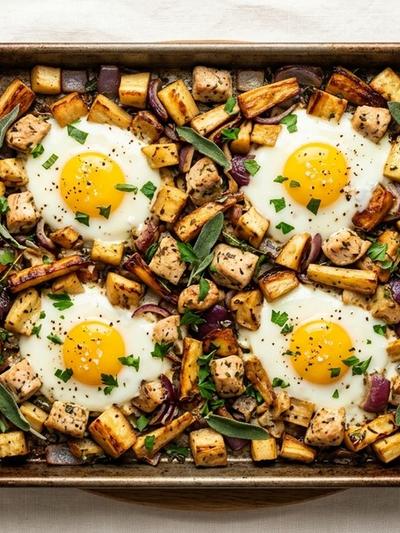
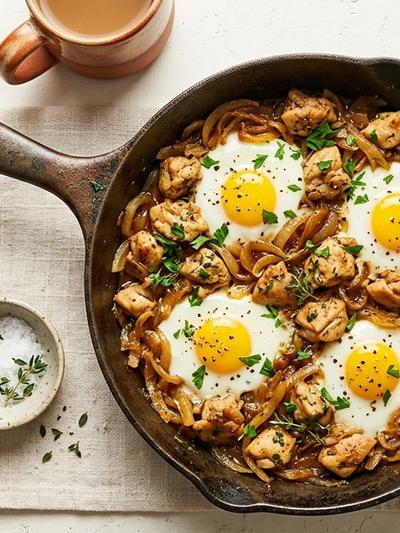
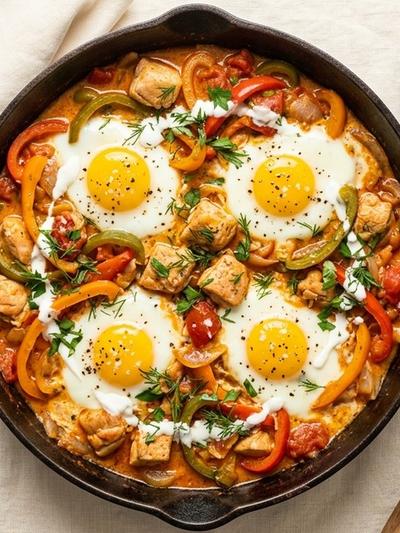
This German-inspired sheet pan breakfast delivers 31 grams of protein per serving from a simple combination of seasoned ground chicken and baked eggs, all roasted alongside tender potatoes and tart apple. Each portion supplies a meaningful dose of B vitamins from the chicken and choline from the eggs — two nutrients that support energy metabolism during active weight management. The Brussels sprouts and sauerkraut add gentle fiber and gut-friendly probiotics without overwhelming the digestive system.
The flavors here are distinctly Central European: warm caraway seeds, smoky paprika, and a touch of whole-grain mustard season the chicken, while roasted Granny Smith apple pieces bring a sweet-tart brightness that cuts through the savory base. The potatoes develop crispy golden edges on the sheet pan, and the eggs bake gently in wells nestled among the hash. It tastes like a proper German farmer's breakfast, reimagined as a lighter, protein-forward meal.
For GLP-1 users, this single-pan format means breakfast comes together with minimal effort on mornings when energy and appetite are both limited. The portions are compact but nutrient-dense — you get a complete meal with protein, complex carbohydrates, and vegetables in every serving. The gentle spicing and soft-baked eggs are easy on the stomach, which matters when gastric emptying is slowed by medication.
Why This Works on GLP-1
Preserving lean muscle mass is one of the most important nutritional priorities during GLP-1-assisted weight loss, and this breakfast addresses it directly with 31 grams of protein before you leave the house. Ground chicken breast provides a complete amino acid profile with leucine — the amino acid most critical for stimulating muscle protein synthesis. For anyone on Mounjaro or a similar GLP-1 medication experiencing reduced appetite, front-loading protein at breakfast helps ensure you meet daily targets even if later meals are smaller.
The fiber in this dish comes from a combination of Brussels sprouts, potato skins, and sauerkraut — all gentle, well-cooked sources that are less likely to cause the bloating or discomfort that raw high-fiber foods sometimes trigger for GLP-1 users. The sauerkraut also provides natural probiotics, which can support the gut microbiome during a period of significant dietary change.
The caraway seeds are more than a flavoring choice. Caraway has a long history in German cooking partly because it aids digestion — it can help reduce gas and ease the feeling of fullness. Combined with the moderate carbohydrate content from potatoes, this breakfast provides sustained energy without the blood sugar spike that simpler carbohydrate sources would cause.
Ingredients (serves 4)
For the chicken hash:
- 1 lb (450g) lean ground chicken breast
- 12 oz (340g) baby gold potatoes, cut into 1/2-inch (1.25cm) dice
- 6 oz (170g) Brussels sprouts, trimmed and quartered
- 1 medium Granny Smith apple, cored and cut into 1/2-inch (1.25cm) pieces
- 1/2 medium yellow onion, finely diced
- 2 tsp (10ml) olive oil
- 1 tsp caraway seeds
- 1 tsp smoked paprika
- 1/2 tsp garlic powder
- 1/2 tsp fine sea salt
- 1/4 tsp freshly ground black pepper
For the baked eggs and finishing:
- 4 large eggs
- 1/4 cup (60g) drained sauerkraut
- 1 tbsp whole-grain mustard
- 1 tbsp fresh chives, finely snipped
- Pinch of flaky salt
Instructions
Prepare the sheet pan and vegetables:
Preheat your oven to 425°F (220°C) and line a large rimmed sheet pan with parchment paper. The parchment prevents sticking and makes cleanup effortless — important on busy mornings.
Toss the diced potatoes with 1 teaspoon of the olive oil and spread them in a single layer on the sheet pan. Roast for 10 minutes to give them a head start, since they take longer to cook through than the other ingredients.
Season and assemble the hash:
While the potatoes roast, combine the ground chicken in a bowl with the caraway seeds, smoked paprika, garlic powder, salt, and pepper. Mix with your hands until the spices are evenly distributed, but avoid overworking — this keeps the chicken tender rather than dense.
Remove the sheet pan from the oven. Add the seasoned ground chicken in crumbled pieces, the quartered Brussels sprouts, diced apple, and onion to the pan around the par-roasted potatoes. Drizzle with the remaining teaspoon of olive oil and toss everything together gently, then spread into an even layer.
Return the pan to the oven and roast for 12 minutes, until the chicken is cooked through and the Brussels sprouts are beginning to caramelize at the edges.
Bake the eggs and finish:
Remove the pan and use the back of a spoon to create four shallow wells in the hash, spacing them evenly. Crack one egg into each well. The surrounding hash acts as a natural barrier that keeps the eggs contained.
Return the pan to the oven and bake for 6–8 minutes, until the egg whites are fully set but the yolks are still slightly soft. If you prefer fully set yolks, add 2 more minutes.
Remove from the oven and immediately top each portion with a tablespoon of sauerkraut, a small dab of whole-grain mustard, and a scattering of fresh chives. Finish with a pinch of flaky salt over the eggs.
Divide into four portions and serve directly from the pan. Each serving should include one egg and roughly one quarter of the hash.
Nutrition per Serving
| Nutrient | Amount (approx.) |
|---|---|
| Calories | ~345 kcal |
| Protein | ~31g |
| Fat | ~12g |
| Carbohydrates | ~27g |
| Fiber | ~5g |
Estimates based on lean ground chicken breast (99% lean), large eggs, and measured oil. Using ground chicken thigh will increase fat and calories by approximately 40–60 calories per serving.
Practical Notes
Make it meal prep. This hash stores well in the refrigerator for up to 3 days. Portion the cooked hash (without eggs) into individual containers. When ready to eat, reheat the hash in a skillet and cook a fresh egg on top — reheated baked eggs tend to become rubbery, so a freshly cooked one is worth the two extra minutes.
Adjust for very small appetites. If you are early in your GLP-1 treatment and find a full portion too large, divide the recipe into 6 servings instead of 4. You will still get approximately 21 grams of protein per smaller portion, which is meaningful for a breakfast meal.
Swap the Brussels sprouts if needed. Zucchini, diced bell pepper, or asparagus all work as substitutes if Brussels sprouts cause digestive discomfort. Cut any substitute into similar-sized pieces so they roast at the same rate. Asparagus should be added during the last 8 minutes only to prevent overcooking.
Use a meat thermometer for confidence. Ground chicken should reach an internal temperature of 165°F (74°C). Since it is crumbled rather than formed into patties, it cooks quickly and evenly — but a quick check removes any guesswork, especially when you are also timing the eggs.
Try different European apple varieties. Granny Smith works well because its tartness holds up during roasting, but Braeburn or Pink Lady apples are equally good. Avoid soft, sweet varieties like Gala or Fuji — they turn to mush in the oven and lose the pleasant contrast with the savory chicken.
Frequently Asked Questions
Can I eat this if I experience morning nausea on my GLP-1 medication?
Can I use ground turkey instead of ground chicken?
How should I store and reheat leftovers?
What if I can only manage a few bites in the morning?
Can I prep the hash the night before and just bake it in the morning?
This article provides general food and nutrition guidance only. It does not constitute medical advice. Always consult your healthcare provider regarding your GLP-1 medication and individual nutritional needs.