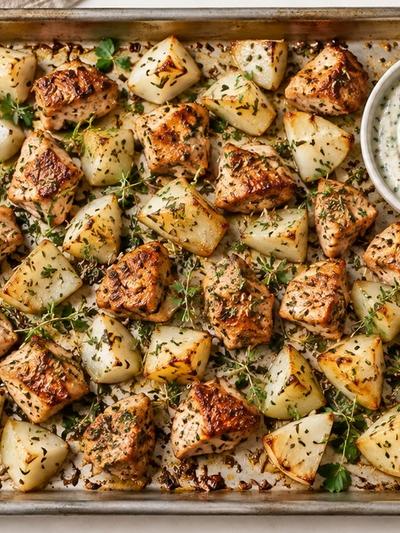
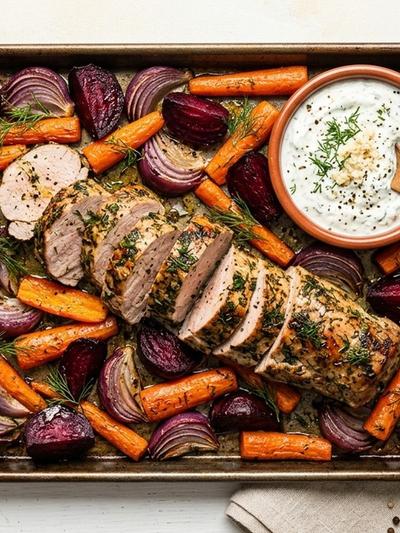
Each snack-sized serving of these Flemish-inspired pork bites packs 26 grams of protein from one of the leanest cuts available, while keeping calories at just 220. Pork tenderloin is a powerhouse for muscle-sparing nutrition, and roasting it in small pieces on a sheet pan renders the edges golden while keeping the interior tender. The carrots roasting alongside contribute natural sweetness, beta-carotene, and a gentle dose of fiber that supports digestion without overwhelming it.
Flemish cooking leans on a handful of honest flavors: whole-grain mustard, fresh thyme, and slow-cooked root vegetables. These bites borrow that philosophy. The pork cubes get a light coat of olive oil, dried thyme, and smoked paprika before hitting the hot oven. As they roast, the carrots and quartered shallots caramelize at the edges, developing a sweetness that balances the sharp, grainy mustard in the yogurt dip. The contrast of warm, savory bites against cool, tangy yogurt is what makes this snack worth repeating.
For anyone on a GLP-1 medication dealing with smaller appetite windows, a protein-dense snack you can batch-prepare and pull from the fridge all week matters more than most recipes in your rotation. These bites reheat in minutes, eat well cold, and sidestep the digestive heaviness of fried or overly rich snacks. One serving is a modest handful of pork and roasted carrots with a spoonful of dip, satisfying without excess.
Why This Works on GLP-1
Pork tenderloin is comparable to chicken breast in its protein-to-calorie ratio, delivering roughly 22 grams of protein per four-ounce portion with only three grams of fat. Combined with the Greek yogurt in the dip, each snack-sized serving reaches 26 grams of complete protein, enough to meaningfully support muscle preservation during the weight loss that Wegovy and similar GLP-1 medications promote. Skeletal muscle is metabolically expensive tissue, and losing it reduces resting energy expenditure, which is exactly why consistent protein intake at every eating occasion matters. These bites turn a between-meal snack into a genuine protein delivery system rather than empty calories.
Roasted carrots bring soluble fiber, which moves through the digestive tract gently and supports the slower gastric emptying GLP-1 medications already produce. The portion of vegetables is modest by design, providing flavor, texture, and nutrients without the bulk that can cause discomfort when your stomach empties more slowly than usual.
B vitamins, particularly B6 and B12, are worth noting. Pork tenderloin is one of the richest food sources of thiamine (B1) and also delivers meaningful B6, both of which support energy metabolism. Greek yogurt adds calcium and probiotics. These micronutrient contributions add up across snacks and meals, especially when appetite is reduced and each bite needs to earn its place.
Ingredients (serves 4)
For the pork bites:
- 1 lb (450g) pork tenderloin, trimmed and cut into 1-inch pieces
- 2 tsp olive oil
- 1 tsp dried thyme
- 1/2 tsp smoked paprika
- 1/2 tsp garlic powder
- 1/4 tsp fine sea salt
- 1/4 tsp freshly ground black pepper
For the roasted carrots:
- 4 medium carrots (about 10 oz / 280g), peeled and sliced into 1/2-inch rounds
- 2 large shallots, peeled and quartered
- 1 tsp olive oil
- Pinch of salt
For the mustard-thyme yogurt:
- 1/2 cup (120g) plain nonfat Greek yogurt
- 1 tbsp whole-grain mustard
- 1 tsp fresh thyme leaves (or 1/4 tsp dried thyme)
- 1 tsp fresh lemon juice
- Pinch of fine sea salt
Instructions
Preheat and prepare the vegetables:
Position a rack in the center of the oven and preheat to 425°F (220°C). Line a rimmed sheet pan with parchment paper for easy cleanup and to prevent the lean pork from sticking.
In a medium bowl, toss the carrot rounds and quartered shallots with 1 teaspoon olive oil and a pinch of salt. Spread them in a single layer on the prepared sheet pan, cut sides down for the shallots. Roast for 10 minutes to give them a head start, since carrots need more time than the pork to soften and caramelize properly.
Season and roast the pork:
While the vegetables roast, toss the pork tenderloin pieces in a bowl with 2 teaspoons olive oil, dried thyme, smoked paprika, garlic powder, salt, and pepper. Turn each piece to coat evenly. The thin oil coat helps the seasonings adhere and promotes browning without adding significant fat.
After the vegetables have roasted for 10 minutes, remove the pan and push the carrots and shallots to one side. Arrange the pork pieces in a single layer on the open half of the pan, leaving small gaps between pieces so hot air circulates and the surfaces sear rather than steam.
Return the pan to the oven and roast for 12 to 15 minutes, until the pork reaches an internal temperature of 145°F (63°C) and the carrots are tender with browned edges. Pork tenderloin dries out quickly past 150°F, so check early if your pieces are on the smaller side.
Remove the pan and let the pork rest on the sheet for 3 minutes. Residual heat carries the temperature up a few degrees while the juices redistribute, keeping each bite moist.
Make the mustard-thyme yogurt:
- While the pork rests, stir together the Greek yogurt, whole-grain mustard, thyme leaves, lemon juice, and salt in a small bowl. Taste and adjust the mustard or lemon to your preference. The dip should be tangy with visible mustard seeds and flecks of thyme.
Serve:
- Divide the pork bites and roasted carrots among four plates or containers. Serve each portion with about 2 tablespoons of the mustard-thyme yogurt on the side for dipping. The bites eat well warm, at room temperature, or cold from the fridge.
Nutrition per Serving
| Nutrient | Amount (approx.) |
|---|---|
| Calories | ~220 kcal |
| Protein | ~26g |
| Fat | ~6g |
| Carbohydrates | ~13g |
| Fiber | ~3g |
Estimates based on USDA data for raw trimmed pork tenderloin, standard carrots, shallots, and nonfat Greek yogurt. Actual values vary by brand and trimming.
Practical Notes
Batch prep for the week. These bites store well in airtight containers in the fridge for up to four days. Pack the yogurt separately to keep it from soaking into the pork. When you need a snack, pull a container and eat cold or microwave the pork and carrots for 45 seconds. The yogurt stays cold.
Swap the vegetables freely. Parsnips, turnips, or small beet wedges work in place of carrots with no other changes. Avoid cruciferous vegetables like Brussels sprouts or broccoli if you experience bloating on GLP-1 medication, since slowed gastric emptying can amplify gas from those foods.
Cut the pork evenly. Pieces that vary wildly in size cook at different rates, which means some will be overdone while others are underdone. Aim for uniform 1-inch cubes. If your tenderloin tapers at one end, cut those pieces slightly larger so they finish at the same time as the thicker cuts from the center.
Use parchment, not bare metal. Pork tenderloin has almost no intramuscular fat, and without parchment it will bond to the pan and tear when you try to lift it. Silicone baking mats also work. Skip aluminum foil, which can stick to lean proteins and shred when you peel it off.
Scale down for one. If you want a single snack portion instead of a batch, use a quarter of the pork (about 4 oz / 113g), one carrot, half a shallot, and a quarter-sheet pan or small oven-safe skillet. Reduce the vegetable head-start roasting time to 7 minutes, since a smaller volume heats faster.
Frequently Asked Questions
Can I eat these pork bites during the first weeks of GLP-1 treatment when my appetite is very low?
What can I use instead of pork tenderloin?
How should I store and reheat these for meal prep?
I find plain Greek yogurt too tart. How can I adjust the dip?
Can I use an air fryer instead of the oven for this recipe?
This article provides general food and nutrition guidance only. It does not constitute medical advice. Always consult your healthcare provider regarding your GLP-1 medication and individual nutritional needs.