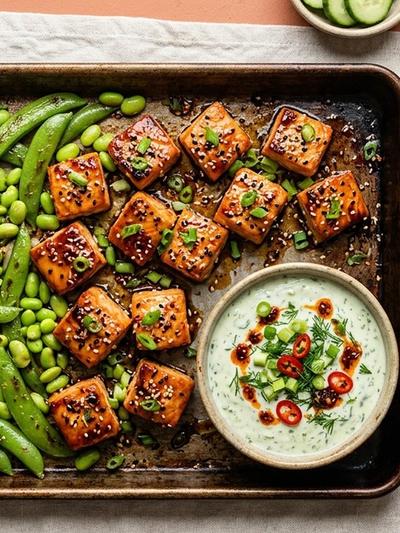
Each snack-sized serving of these sheet pan five-spice tempeh bites delivers 25 grams of complete plant-based protein from two soy powerhouses: fermented tempeh and roasted edamame. At 245 calories per portion, they land squarely in snack territory — substantial enough to bridge the gap between meals without overwhelming a reduced appetite. The Chinese five-spice glaze caramelizes in the oven, creating lacquered, crispy edges on the tempeh cubes while the edamame turns nutty and satisfyingly crunchy. A cool ginger-scallion yogurt dip rounds out each bite with brightness and an extra hit of protein.
Chinese five-spice powder — a fragrant blend of star anise, cloves, cinnamon, Sichuan pepper, and fennel — punches well above its calorie weight, delivering deep warmth and complexity to the simple soy-maple glaze. The tempeh cubes develop a chewy, almost jerky-like exterior while staying tender inside, and roasted red bell pepper adds pops of natural sweetness. The chilled yogurt dip tempers the warm spices with fresh ginger and sharp scallion — a contrast that keeps you reaching for one more bite.
For GLP-1 users, snacking can feel like navigating a minefield of portions that are either too heavy or too empty of nutrition. These bites solve that problem: small enough to eat comfortably even on low-appetite days, yet protein-dense enough to support the muscle preservation that matters during active weight loss. The sheet pan method eliminates fuss — cut, toss, roast, dip.
Why This Works on GLP-1
The 25 grams of protein per serving come entirely from plant sources, with tempeh providing the bulk at roughly 19 grams per portion. Tempeh is one of the few plant foods that delivers all essential amino acids in meaningful amounts, making it particularly valuable for people on Mounjaro or other GLP-1 medications where adequate protein intake helps preserve lean muscle mass during weight loss. The edamame contributes another 4–5 grams of protein plus important minerals like iron and folate. Together they create a protein profile that rivals many meat-based snacks without the saturated fat.
Tempeh's fermentation process breaks down phytic acid and produces beneficial enzymes that make it notably easier to digest than unfermented soy products. This matters for GLP-1 users, since delayed gastric emptying can make certain high-fiber plant foods uncomfortable. The 5 grams of fiber per serving falls in the moderate range — enough to support healthy digestion without the bloating that can come from very high-fiber legume dishes.
At 245 calories per serving, these bites deliver an efficient protein-to-calorie ratio of roughly 1 gram of protein per 10 calories. The fennel and star anise in five-spice powder have traditional associations with digestive comfort, and while research is limited, many people find these warming spices genuinely soothing. The low fat content (11 grams, mostly unsaturated from the soy) means these bites sit lighter in the stomach than fried snack alternatives.
Ingredients (serves 4)
For the five-spice tempeh and edamame:
- 12 oz (340g) tempeh, cut into 3/4-inch (2cm) cubes
- 1 cup (155g) shelled edamame, thawed if frozen
- 1 medium red bell pepper, cut into 1-inch (2.5cm) pieces
- 2 tbsp (30ml) low-sodium soy sauce or tamari
- 1 tbsp (15ml) rice vinegar
- 1 tbsp (15ml) pure maple syrup
- 1 tsp toasted sesame oil
- 1 tsp Chinese five-spice powder
- 2 cloves garlic, minced
- 1 tbsp (6g) fresh ginger, finely grated
For the ginger-scallion yogurt dip:
- 1/3 cup (80g) plain nonfat Greek yogurt
- 1 tsp fresh ginger, finely grated
- 2 scallions, thinly sliced (white and green parts separated)
- 1 tsp rice vinegar
- Pinch of fine sea salt
For garnish:
- 1 tsp toasted sesame seeds
- 1 scallion, thinly sliced
Instructions
Prepare the marinade and tempeh:
- Preheat your oven to 400°F (200°C) and line a large sheet pan with parchment paper. Parchment prevents sticking without adding extra oil, which keeps the calorie count honest.
- In a medium bowl, whisk together the soy sauce, rice vinegar, maple syrup, sesame oil, five-spice powder, garlic, and ginger until the maple syrup dissolves.
- Add the tempeh cubes and toss gently to coat evenly. Let sit for 5 minutes while you prepare the dip — this brief rest allows the porous surface of the tempeh to absorb the glaze, which means more flavor in every bite.
Make the ginger-scallion yogurt dip:
- In a small bowl, stir together the Greek yogurt, grated ginger, white parts of the scallions, rice vinegar, and salt. Cover and refrigerate until serving. The dip benefits from chilling — it gives the ginger time to infuse the yogurt.
Roast on the sheet pan:
- Arrange the marinated tempeh cubes in a single layer on one half of the prepared sheet pan. Scatter the edamame and bell pepper pieces on the other half. Drizzle any remaining marinade from the bowl over everything. Keep space between the tempeh cubes so hot air circulates and the edges crisp rather than steam.
- Roast for 12 minutes, then flip the tempeh cubes with a spatula and stir the edamame. Return to the oven for another 8–10 minutes until the tempeh edges are golden brown and slightly crispy, and the edamame is lightly charred in spots.
Serve:
- Transfer to a serving plate or divide among four individual containers. Sprinkle with toasted sesame seeds and sliced scallion greens. Serve with the chilled ginger-scallion yogurt dip on the side.
Nutrition per Serving
| Nutrient | Amount (approx.) |
|---|---|
| Calories | ~245 kcal |
| Protein | ~25g |
| Fat | ~11g |
| Carbohydrates | ~14g |
| Fiber | ~5g |
Calculated using 12 oz tempeh, 1 cup shelled edamame, nonfat Greek yogurt, and the marinade ingredients listed. Actual values may vary with specific tempeh brand and yogurt fat content.
Practical Notes
Make it meal prep. Store the roasted tempeh and edamame in airtight containers for up to 4 days in the refrigerator, keeping the yogurt dip in a separate small container. Reheat the bites in a 375°F (190°C) oven for 5 minutes to restore crispness — microwaving works in a pinch but softens the caramelized glaze.
Swap the protein if needed. Extra-firm tofu works if you can't find tempeh — press it for 15 minutes between towels first, then cube and marinate as directed. The texture will be softer but the five-spice glaze caramelizes on tofu just as well. You can also substitute one drained 15-oz (425g) can of chickpeas, patted very dry, for a crunchier bite with similar protein.
Adjust for early GLP-1 phases. If your appetite is very small during Zepbound or Ozempic dose titration, eat half a serving — a few tempeh cubes with a spoonful of edamame — and refrigerate the rest. The high protein density means even a partial serving delivers meaningful nutrition. Many people find small, protein-focused snacks easier to manage than full meals during the first weeks of treatment.
Try different Asian glazes. Swap the five-spice powder for 1 tablespoon of gochujang paste for a Korean-inspired version, or blend 1 tablespoon of white miso with a teaspoon of mirin for a Japanese umami take. The sheet pan technique and timing stay identical regardless of the glaze direction.
Pack them for work. These bites travel well at room temperature for up to 3 hours, making them a practical desk or gym-bag snack. Pack the yogurt dip in a small leak-proof container with an ice pack if your commute is long. For a sturdier grab-and-go option, skip the dip entirely and double the marinade so the bites carry enough flavor on their own.
Frequently Asked Questions
Can I turn this snack into a full meal for days when my appetite allows it?
What if I don't have Chinese five-spice powder?
How long do these keep, and can I freeze them?
My stomach is very sensitive on GLP-1 medication — will tempeh cause digestive issues?
Do I need to steam the tempeh before roasting it?
This article provides general food and nutrition guidance only. It does not constitute medical advice. Always consult your healthcare provider regarding your GLP-1 medication and individual nutritional needs.