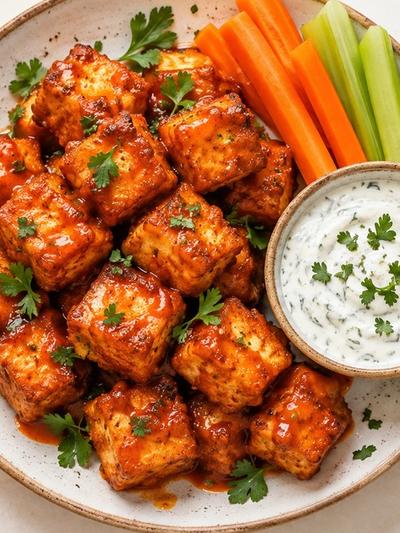
Each serving of these nori-crusted tofu fries delivers 26 grams of plant-based protein and only 275 calories, making them one of the most efficient protein snacks you can pull from an air fryer. Extra-firm tofu provides a complete amino acid profile that rivals animal sources gram for gram, while the panko-nori coating adds crunch, umami, and a boost of iodine — a trace mineral many plant-forward eaters run low on. Nutritional yeast folded into the breading contributes additional B vitamins and deepens the savory character without adding fat.
The flavor is built in layers. Nori brings an oceanic, mineral savoriness that pairs naturally with the soy sauce dredge soaking into the tofu's surface. Panko breadcrumbs shatter cleanly on the first bite, giving way to a warm, creamy interior that holds its shape without turning mushy. The ponzu dipping sauce brings everything into balance — bright with citrus, sharp with rice vinegar, and gently warmed by freshly grated ginger. It is the kind of snack that tastes deliberate, not like a protein compromise.
For anyone on GLP-1 medication, these fries solve a real snacking problem: finding something satisfying in a small portion that still delivers serious protein. The finger-food format lets you eat one or two at a time, naturally pacing your intake and making it easy to register fullness before overdoing it. Tofu is among the gentlest proteins on the digestive system, which matters when gastric emptying is slowed by medication.
Why This Works on GLP-1
With 26 grams of protein per serving, these tofu fries cover roughly a third of the daily protein target most dietitians recommend for people using Wegovy or other GLP-1 receptor agonists during active weight loss. Preserving lean muscle mass is one of the most important — and most overlooked — challenges when appetite suppression leads to significantly reduced calorie intake. Plant proteins like tofu digest more gradually than whey-based options, which can help extend satiety between meals. Getting this much protein from a snack rather than a full sit-down meal provides real flexibility in how you structure the rest of your eating day.
The air-fried preparation keeps total fat to 12 grams per serving, roughly a third of what deep-fried tofu would carry. Lower-fat snacks are generally better tolerated on GLP-1 medications because high-fat foods can worsen the nausea and early satiety some users experience, particularly during dose escalation. The thin panko coating offers textural satisfaction — that audible crunch — without a heavy, greasy mouthfeel that lingers.
Nori contributes iodine, an essential mineral for thyroid function that supports the metabolic processes underlying energy balance. Nutritional yeast, depending on brand, often supplies meaningful amounts of B12 — a nutrient that plant-based eaters typically need to supplement and that plays a direct role in energy metabolism and red blood cell formation. Together, these additions make the snack more nutritionally complete than most shelf-stable protein bars.
Ingredients (serves 2)
For the tofu fries:
- 14 oz (400g) extra-firm tofu, drained and pressed
- 1 1/2 tablespoons (12g) cornstarch
- 2 tablespoons low-sodium soy sauce
- 1 tablespoon water
For the crispy nori coating:
- 1/4 cup (15g) panko breadcrumbs
- 3 tablespoons (9g) nutritional yeast
- 2 sheets roasted nori, finely crumbled
- 1/2 teaspoon garlic powder
- 1/4 teaspoon fine sea salt
- Cooking spray
For the ponzu dipping sauce:
- 2 tablespoons ponzu sauce
- 1 tablespoon rice vinegar
- 1/2 teaspoon toasted sesame oil
- 1 teaspoon freshly grated ginger
- 1 scallion, thinly sliced
- Pinch of white sesame seeds
Instructions
Press and cut the tofu:
Wrap the drained tofu block in a clean kitchen towel or several layers of paper towel. Set a heavy skillet or cutting board on top and let it press for 15 to 20 minutes. This step removes the excess moisture that would otherwise steam the coating off in the air fryer rather than letting it crisp.
Slice the pressed tofu into sticks roughly 3 inches (8cm) long and 1/2 inch (1.25cm) wide, similar to thick-cut fries. You should get 16 to 20 sticks from one block. Pat each stick dry once more with a paper towel — even a thin film of surface moisture will prevent the cornstarch from sticking.
Set up the breading station:
- Place the cornstarch in a shallow bowl or plate. In a second shallow bowl, whisk together the soy sauce and water — this serves as the binding liquid instead of an egg wash while simultaneously seasoning the tofu from the outside in. In a third bowl, combine the panko, nutritional yeast, crumbled nori, garlic powder, and salt, tossing with a fork until evenly distributed.
Coat the tofu fries:
Working with 3 to 4 sticks at a time, dredge each piece in cornstarch, turning to coat all sides and shaking off the excess. Dip briefly into the soy sauce mixture, letting any drips fall away. Then press firmly into the panko-nori mixture on all four sides. The cornstarch creates a thin tacky layer that gives the wet dredge something to grip, and the wet dredge in turn anchors the panko — skipping a step breaks the chain.
Place the coated fries on a plate or small baking sheet as you work. Once all pieces are breaded, mist them lightly and evenly on all sides with cooking spray. This thin layer of oil is what drives the Maillard browning in the air fryer — without it, the panko stays pale and soft.
Air fry:
Arrange the tofu fries in a single layer in your air fryer basket, leaving roughly half an inch of space between pieces for air circulation. Depending on your air fryer size, you may need to work in two batches. Overcrowding traps steam between the fries and turns the coating soggy.
Cook at 400°F (200°C) for 10 to 12 minutes, flipping each piece carefully with tongs at the halfway mark. The fries are done when the coating is deep golden brown and sounds crisp when tapped with a utensil.
Make the ponzu dipping sauce:
- While the tofu cooks, stir together the ponzu, rice vinegar, sesame oil, and freshly grated ginger in a small dipping bowl. Scatter the sliced scallion and sesame seeds over the top. The sauce comes together in under a minute and benefits from resting while the fries cook, as the ginger flavor mellows and permeates the liquid.
Serve:
- Transfer the hot fries to a plate and serve immediately alongside the ponzu dip. For the best texture, eat these within 10 to 15 minutes of cooking, while the panko coating is at peak crunch.
Nutrition per Serving
| Nutrient | Amount (approx.) |
|---|---|
| Calories | ~275 kcal |
| Protein | ~26g |
| Fat | ~12g |
| Carbohydrates | ~18g |
| Fiber | ~2g |
Estimates based on standard extra-firm tofu nutritional data and typical coating adhesion rates. Values may vary with tofu brand and air fryer efficiency.
Practical Notes
Press the tofu thoroughly for the crispiest results. If you are short on time, try the freeze-thaw method: freeze the entire tofu block overnight, then thaw and press it. Freezing changes the internal protein structure, creating tiny ice crystals that leave behind channels when they melt. The result is tofu that releases water faster and develops a slightly chewier, meatier bite after air frying.
Freeze a double batch for grab-and-go snacking. Arrange coated, uncooked tofu fries in a single layer on a parchment-lined baking sheet and freeze until solid, then transfer to a freezer bag. They keep for up to 3 weeks. Air fry from frozen at 400°F for 14 to 16 minutes — no thawing required. The ponzu dip can be made fresh in 30 seconds whenever you need it.
Know your air fryer's hot spots. Every air fryer heats slightly differently. If your first batch comes out unevenly browned, rotate the basket or rearrange the fries at the flip point. If the coating is browning too fast on top, reduce temperature to 380°F and add 2 minutes. Basket-style air fryers generally crisp faster and more evenly than oven-style models for small items like these.
Start with a half serving during early GLP-1 treatment. In the first weeks on medication, appetite can swing unpredictably. Plate 4 to 5 fries with a tablespoon of ponzu rather than the full portion — you can always return for more if your stomach cooperates. Tofu is one of the easiest proteins to digest, making it a smart choice during the dose-adjustment period when nausea is most common.
Rotate your dipping sauces to prevent snack fatigue. The ponzu-ginger sauce is the natural partner, but these fries are equally good with a light miso-tahini drizzle, a spoonful of yuzu kosho mixed into Greek yogurt, or a simple dip of soy sauce with a few drops of chili oil. Keeping the fries consistent while changing the sauce extends their appeal across the week.
Frequently Asked Questions
Are these tofu fries gentle enough for GLP-1 users who experience nausea?
Can I make these gluten-free?
How do I store and reheat leftover tofu fries?
What if I can only eat a few bites due to reduced appetite on Mounjaro or Zepbound?
Why does the cornstarch dredge matter — can I skip it?
This article provides general food and nutrition guidance only. It does not constitute medical advice. Always consult your healthcare provider regarding your GLP-1 medication and individual nutritional needs.