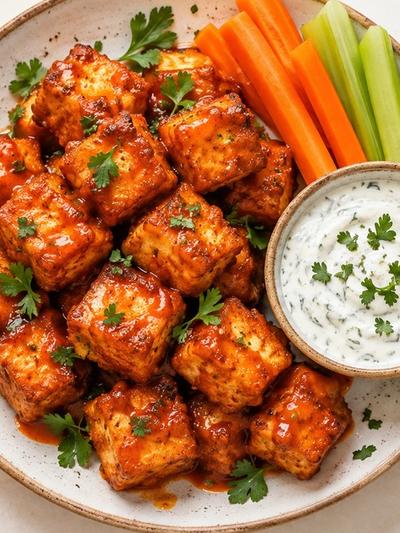
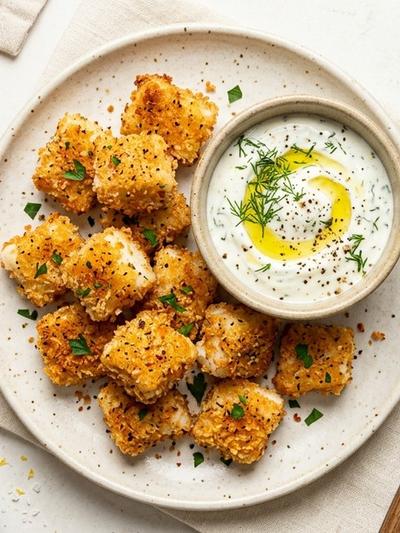
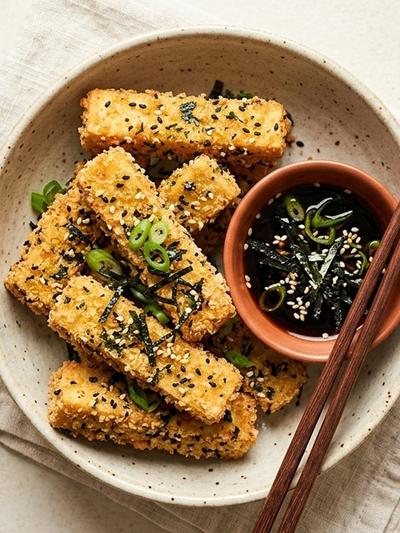
This air fryer snack packs 26 grams of plant-based protein into a handful of crispy, smoky nuggets. An eight-ounce block of tempeh gets cubed, coated in a BBQ spice blend with cornstarch for crunch, and air fried until deeply golden. A cool ranch yogurt dip made with nonfat Greek yogurt rounds out each bite with tangy contrast and an extra 6 grams of protein per serving.
The spice coating builds flavor in layers: smoked paprika and chili powder create the signature BBQ backbone, while garlic and onion powder add savory depth. A cornstarch dusting delivers that satisfying crackle when you bite through the exterior to the firm, meaty tempeh inside. A quick brush of low-sugar BBQ sauce in the final minutes of cooking adds a light caramelized glaze without making the nuggets heavy or sticky.
At just 265 calories per serving, these nuggets sit in the sweet spot for a GLP-1 snack. They bridge the gap between meals without overwhelming a reduced appetite. Tempeh's naturally firm texture holds up well in small pieces, making these easy to portion and eat one or two at a time, and the entire recipe comes together in under 25 minutes with minimal cleanup.
Why This Works on GLP-1
Each serving delivers 26 grams of complete plant-based protein, which supports the muscle preservation that becomes critical during GLP-1-assisted weight loss. Tempeh provides all essential amino acids in a bioavailable form, and the Greek yogurt dip layers leucine-rich dairy protein on top. For people taking Mounjaro who find their appetite significantly reduced, getting adequate protein in every eating occasion helps prevent the lean mass loss that can accompany rapid weight reduction. Even a snack that delivers this much protein contributes meaningfully to a daily target of 80 to 120 grams.
Tempeh has a digestive advantage over many plant proteins: it is fermented. The fermentation process partially breaks down the soy proteins and oligosaccharides that cause bloating in other legume-based foods, making it gentler on the GI tract. This matters because GLP-1 medications already slow gastric emptying and can make gas-producing foods more uncomfortable than usual. The small nugget format also helps you eat at your own pace rather than committing to a large portion all at once.
The macronutrient profile here aligns with what keeps Wegovy users feeling satisfied longest: high protein, moderate fat, low sugar. The air fryer method uses almost no added oil, keeping total fat at 10 grams per serving despite tempeh's natural fat content. And unlike many packaged high-protein snacks, these nuggets contain no artificial sweeteners or sugar alcohols that can trigger digestive discomfort during GLP-1 treatment.
Ingredients (serves 2)
For the tempeh nuggets:
- 1 package (8 oz / 227g) tempeh, cut into 1-inch (2.5cm) cubes
- 1 tsp low-sodium soy sauce or tamari
- 1 tbsp cornstarch
- 2 tsp smoked paprika
- 1 tsp garlic powder
- 1 tsp onion powder
- ½ tsp chili powder
- ¼ tsp salt
- ¼ tsp black pepper
- 2 tbsp low-sugar BBQ sauce
- Cooking spray
For the ranch yogurt dip:
- ½ cup (120g) plain nonfat Greek yogurt
- 1 tsp dried dill
- ½ tsp garlic powder
- ½ tsp onion powder
- 1 tbsp fresh lemon juice
- 1 tbsp fresh chives, minced
- Pinch of salt and pepper
Instructions
Prepare the tempeh:
- Cut the tempeh block into roughly 1-inch (2.5cm) cubes. You should get about 16 to 20 pieces. If your tempeh is thick, slice the block in half horizontally first to create thinner slabs before cubing, which increases surface area for better crisping.
- Place the cubes in a medium bowl and drizzle with soy sauce. Toss gently to coat all surfaces. This thin layer of moisture helps the spice mixture adhere evenly.
- In a small bowl, whisk together the cornstarch, smoked paprika, garlic powder, onion powder, chili powder, salt, and pepper. Sprinkle the spice mixture over the tempeh cubes and toss until every piece is evenly coated. The cornstarch creates a thin barrier that crisps up in the air fryer's circulating heat.
Air fry the nuggets:
- Preheat your air fryer to 390°F (200°C) for 2 minutes. Arrange the coated tempeh cubes in a single layer in the basket, leaving a small gap between pieces so hot air circulates freely. Lightly spray the tops with cooking spray.
- Cook for 10 minutes, then flip each piece using tongs. Lightly brush or drizzle the BBQ sauce over the nuggets, dividing it evenly across all pieces.
- Cook for 3 to 4 more minutes until the edges are crispy and the glaze has caramelized slightly. The nuggets should look deeply golden brown with a few darker spots at the edges.
Make the ranch dip:
- While the nuggets cook, stir together the Greek yogurt, dried dill, garlic powder, onion powder, lemon juice, chives, salt, and pepper in a small bowl. Taste and adjust the seasoning. The dip should be tangy and herb-forward to contrast the smoky nuggets.
Serve:
- Transfer the nuggets to a plate and serve immediately with the ranch dip on the side. These are best eaten warm, while the coating is still crisp.
Nutrition per Serving
| Nutrient | Amount (approx.) |
|---|---|
| Calories | ~265 kcal |
| Protein | ~26g |
| Fat | ~10g |
| Carbohydrates | ~19g |
| Fiber | ~3g |
Estimates based on soy-only tempeh and nonfat Greek yogurt. Exact values depend on your tempeh brand, as protein ranges from 16g to 20g per 100g across common brands.
Practical Notes
Choose the right tempeh. Not all tempeh is the same. Look for soy-only tempeh (not multi-grain) for the highest protein count. Brands like Lightlife Original or SoyBoy typically deliver 16 to 20 grams of protein per 3-ounce serving. Multi-grain varieties taste great but may have 2 to 4 fewer grams of protein per serving.
Steam if your tempeh tastes bitter. Some people find raw tempeh slightly bitter, especially less fermented brands. If yours has a sharp edge, steam the cubes for 5 minutes before coating. This mellows the flavor without adding much time, since you can steam while the air fryer preheats. Add those 5 minutes to your total prep time.
Store and reheat with care. Cooked nuggets keep in the refrigerator for up to 3 days in an airtight container. Reheat in the air fryer at 375°F (190°C) for 3 to 4 minutes to restore crispiness. The microwave works in a pinch but softens the coating. Store the ranch dip separately; it lasts up to 5 days refrigerated.
Scale for meal prep. Double or triple the batch to have grab-and-go snacks for the week. Portion the nuggets into small containers with the dip in a separate compartment. For GLP-1 users managing small appetites, having a pre-portioned high-protein snack available prevents skipping eating entirely, which can accelerate muscle loss over time.
Adjust the heat to your comfort. GLP-1 medications can increase sensitivity to spicy foods. If chili powder irritates your stomach, reduce it to a pinch or omit it entirely. The smoked paprika still provides the BBQ flavor without the heat. You can also swap in sweet paprika for an even milder version.
Frequently Asked Questions
I'm on Ozempic and struggle with nausea after snacks. Will these tempeh nuggets sit well?
Can I make this recipe soy-free?
Can I make the nuggets ahead of time for the week?
I'm in the first weeks of GLP-1 medication and can barely eat. How do I adapt this?
My air fryer is small. Can I cook these in batches?
This article provides general food and nutrition guidance only. It does not constitute medical advice. Always consult your healthcare provider regarding your GLP-1 medication and individual nutritional needs.