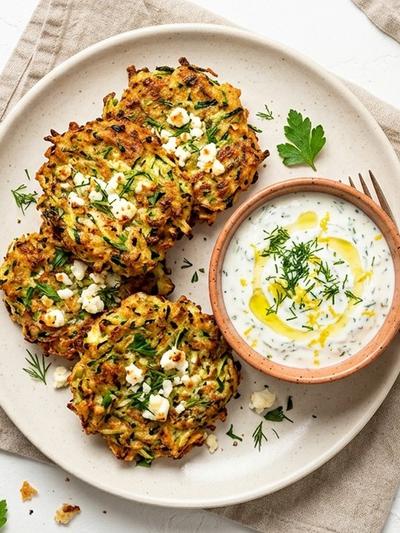
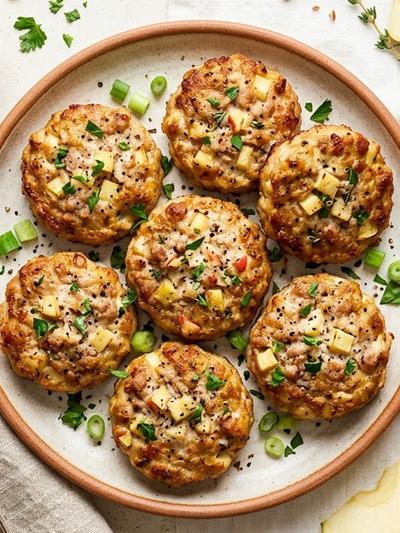
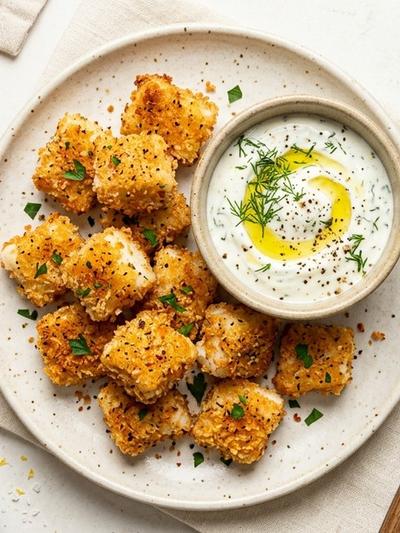
These air fryer turkey and cheddar stuffed mushrooms pack 28 grams of protein into a compact, snack-sized serving of just 225 calories. Each cremini cap holds a savory filling of seasoned lean ground turkey, sharp cheddar, wilted spinach, and chopped mushroom stems, creating a nutrient-dense bite that delivers far more satisfaction than its modest calorie count suggests. The air fryer gives them a golden, lightly crispy top in just ten minutes while the mushroom releases its natural juices to keep the filling moist. A cool chive yogurt dip on the side rounds out each serving with a hit of tangy protein.
The flavor profile draws on classic American steakhouse stuffed mushrooms but strips away the excess butter and cream that make the original a calorie bomb. Sharp cheddar provides a strong, tangy backbone that melts into the seasoned turkey, while smoked paprika and garlic add warmth without heat. The chopped mushroom stems folded back into the filling create an extra layer of umami depth that stretches the turkey further and keeps every bite juicy.
For GLP-1 users, these stuffed mushrooms work beautifully as a mid-afternoon protein boost or a pre-dinner appetizer that won't overwhelm a reduced appetite. Each four-mushroom serving is portioned to satisfy without the heaviness of traditional stuffed mushrooms, and the high protein-to-calorie ratio helps maintain muscle mass between meals.
Why This Works on GLP-1
Each serving of these stuffed mushrooms provides 28 grams of protein from a combination of lean ground turkey, sharp cheddar, and Greek yogurt — nearly half the daily minimum many dietitians recommend for people on Wegovy or Mounjaro. Adequate protein intake is especially critical during GLP-1-assisted weight loss because the body can lose muscle alongside fat when calorie intake drops significantly. A protein-rich snack between meals helps stimulate muscle protein synthesis and prevents the metabolic slowdown that accompanies lean mass loss. At just 225 calories, these mushrooms deliver that protein efficiently without pushing past your reduced appetite threshold.
Cremini mushrooms are gentle on the digestive system and provide B vitamins, selenium, and potassium — nutrients that support energy production and immune function during a caloric deficit. The spinach mixed into the filling adds folate and iron without contributing significant volume or rough fiber that might trigger bloating, making this snack comfortable for users who experience the gastric slowing effects of GLP-1 medications.
The moderate fat content from sharp cheddar helps with satiety signaling while keeping total fat well below what you would find in butter-laden traditional stuffed mushrooms. Pairing the mushrooms with a tangy Greek yogurt dip adds probiotics that can support gut health — a practical consideration since GLP-1 medications alter digestive motility and many users report changes in their gastrointestinal comfort.
Ingredients (serves 4)
For the stuffed mushrooms:
- 16 large cremini (baby bella) mushrooms (about 12 oz / 340g total)
- 12 oz (340g) 93% lean ground turkey
- 2 oz (55g) sharp cheddar cheese, finely shredded
- 1 large egg white
- 1 cup (30g) baby spinach, finely chopped
- 2 tablespoons whole wheat panko breadcrumbs
- 2 tablespoons fresh chives, minced
- 1 clove garlic, minced
- 1/2 teaspoon smoked paprika
- 1/4 teaspoon onion powder
- 1/4 teaspoon fine sea salt
- 1/4 teaspoon black pepper
- Olive oil cooking spray
For the chive yogurt dip:
- 1/2 cup (120g) plain nonfat Greek yogurt
- 1 tablespoon fresh chives, minced
- 1 teaspoon Dijon mustard
- 1 teaspoon fresh lemon juice
- Pinch of salt
Instructions
Prepare the mushrooms:
Wipe the mushrooms clean with a damp paper towel — avoid rinsing them under water, since cremini absorb moisture quickly and will steam instead of crisping in the air fryer. Gently twist and remove the stems, then set the caps hollow-side up on a cutting board.
Finely chop the reserved mushroom stems. These go into the filling, adding moisture and an extra layer of savory depth that stretches the turkey further without adding calories.
Make the filling:
In a medium bowl, combine the ground turkey, chopped mushroom stems, baby spinach, three-quarters of the shredded cheddar (reserve the rest for topping), egg white, panko, chives, garlic, smoked paprika, onion powder, salt, and pepper. Mix gently with a fork or your hands until just combined — overworking ground turkey makes the filling dense and rubbery rather than tender.
Divide the filling evenly among the 16 mushroom caps, mounding it slightly above the rim. Press gently so the filling is compact enough to hold together during cooking. Sprinkle the reserved cheddar evenly over the tops.
Air fry:
Preheat your air fryer to 375°F (190°C) for 3 minutes. Lightly spray the basket or tray with olive oil cooking spray to prevent sticking.
Arrange the stuffed mushrooms in a single layer with a small gap between each one for air circulation. Work in two batches if your air fryer is small — crowding prevents the tops from crisping properly and traps steam around the mushrooms.
Air fry for 8 to 10 minutes, until the turkey filling reaches an internal temperature of 165°F (74°C) and the cheddar on top is golden and bubbling. The mushrooms will release some liquid during cooking — this is normal and the moisture will mostly evaporate by the time they finish.
Make the dip and serve:
While the mushrooms cook, stir together the Greek yogurt, chives, Dijon mustard, lemon juice, and a pinch of salt in a small bowl. Refrigerate until ready to serve.
Let the stuffed mushrooms rest for 2 minutes before plating — this allows the filling to set slightly so it holds together when you pick one up. Arrange 4 mushrooms on each plate with a generous spoonful of chive yogurt dip on the side.
Nutrition per Serving
| Nutrient | Amount (approx.) |
|---|---|
| Calories | ~225 kcal |
| Protein | ~28g |
| Fat | ~11g |
| Carbohydrates | ~6g |
| Fiber | ~1g |
Estimates based on 93% lean ground turkey, nonfat Greek yogurt, and standard sharp cheddar cheese. Actual values may vary by brand.
Practical Notes
Make them ahead for grab-and-go snacking. Cooked stuffed mushrooms store well in an airtight container in the refrigerator for up to 3 days. Reheat in the air fryer at 350°F (175°C) for 4 to 5 minutes to restore the crispy top — microwaving works but softens the texture considerably. Pack the yogurt dip in a separate small container.
Choose mushrooms carefully for the best results. Look for cremini or baby bella mushrooms that are at least 2 inches (5 cm) across — smaller ones will not hold enough filling to deliver meaningful protein per bite. If you can only find white button mushrooms, select the largest ones available and expect a slightly milder flavor.
Freeze the raw filling for faster future batches. Portion the uncooked turkey mixture into a silicone ice cube tray, freeze solid, then transfer to a zip-lock freezer bag. When you want stuffed mushrooms, thaw the filling overnight in the refrigerator, buy fresh mushrooms, stuff, and air fry as directed. The filling keeps frozen for up to 2 months.
Swap the cheddar for variety. Monterey Jack or Colby melts smoothly and has a gentler taste, though it provides less flavor punch than sharp cheddar. Pepper Jack works if you tolerate mild heat, but avoid it during the early weeks of GLP-1 treatment when your stomach may be more sensitive to capsaicin.
Build a snack plate around them. Celery sticks, bell pepper strips, or cucumber slices alongside the mushrooms add crunch and volume with negligible calories — useful when your appetite allows a bit more food but you want to keep the snack light and easy to digest.
Frequently Asked Questions
Can I eat these stuffed mushrooms during the first weeks of Ozempic or Mounjaro?
Can I use ground chicken instead of turkey?
How should I store and reheat leftover stuffed mushrooms?
What if my appetite is too small for four mushrooms?
Do I need to precook the spinach before adding it to the filling?
This article provides general food and nutrition guidance only. It does not constitute medical advice. Always consult your healthcare provider regarding your GLP-1 medication and individual nutritional needs.