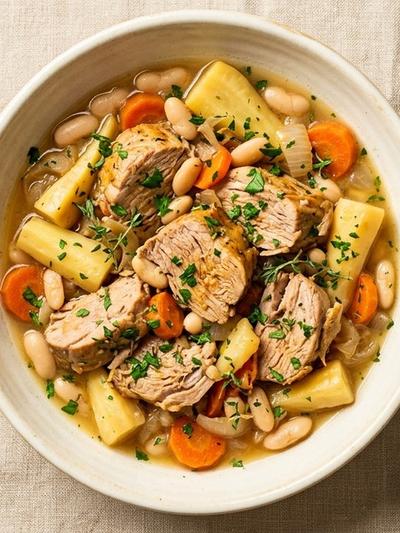
This Burgundy-style pork delivers 38 grams of protein per serving from lean tenderloin medallions paired with fiber-rich cannellini beans. The combination provides complete amino acids alongside slow-digesting carbohydrates that sustain energy without blood sugar spikes. Each bowl contains just 375 calories — concentrated nutrition that satisfies without overwhelming a reduced appetite.
The flavor draws from the French tradition of braising in red wine: pork medallions seared golden, then simmered with cremini mushrooms, sweet pearl onions, and aromatic thyme until the sauce reduces to a silky, deeply savory glaze. Mushrooms add umami complexity that makes the dish taste far richer than its modest fat content suggests. A spoonful of tomato paste deepens the color and adds subtle sweetness that rounds out the wine's acidity.
This one-pot format means everything cooks together in a single skillet — 35 minutes from cutting board to table with minimal cleanup. The smaller portion size works beautifully here because the concentrated sauce and tender pork make each bite count. White beans absorb the braising liquid and add body, turning this into a complete meal without needing separate sides.
Why This Works on GLP-1
Each serving provides 38 grams of high-quality protein from pork tenderloin, one of the leanest cuts available at just 3.5 grams of fat per 5-ounce portion. This protein density matters significantly during GLP-1-assisted weight loss — maintaining muscle mass requires consistent protein intake of 25–40 grams per meal, and many Mounjaro users find that reduced appetite makes hitting these targets difficult. By concentrating protein into a flavorful, easy-to-finish portion, this recipe helps meet those requirements without forcing volume.
The 8 grams of fiber per serving comes primarily from cannellini beans, which provide soluble fiber that feeds beneficial gut bacteria without the bloating that raw vegetables can cause on GLP-1 medications. Mushrooms contribute additional prebiotic fiber and B vitamins. The gentle braising process softens all vegetables thoroughly, making them easy to digest even when gastric emptying is slowed.
Red wine used in cooking loses its alcohol through simmering but retains polyphenols — antioxidant compounds that support cardiovascular health. The iron in pork tenderloin combined with vitamin C from tomato paste creates an optimal absorption pairing, relevant for Wegovy users who may have reduced nutrient intake overall. This dish reheats exceptionally well, making it practical for the unpredictable hunger patterns common during GLP-1 treatment.
Ingredients (serves 4)
For the pork:
- 1¼ lbs (567g) pork tenderloin, trimmed and cut into 1-inch medallions
- ½ tsp fine sea salt
- ¼ tsp freshly ground black pepper
- 1 tbsp (8g) all-purpose flour
For the braise:
- 1 tbsp (15ml) olive oil
- 8 oz (227g) cremini mushrooms, quartered
- 1 cup (150g) frozen pearl onions, thawed
- 2 medium carrots (120g), peeled and sliced into ½-inch coins
- 3 cloves garlic, minced
- 2 tbsp (32g) tomato paste
- ¾ cup (180ml) dry red wine (Pinot Noir or Côtes du Rhône)
- 1½ cups (360ml) low-sodium chicken broth
- 1 can (15 oz / 425g) cannellini beans, drained and rinsed
- 4 sprigs fresh thyme
- 2 bay leaves
To finish:
- 1 tbsp (15ml) red wine vinegar
- 2 tbsp fresh flat-leaf parsley, chopped
Instructions
Prepare and sear the pork:
Pat the pork medallions dry with paper towels — moisture prevents browning, and a good sear creates the fond that flavors the entire sauce. Season both sides with salt and pepper, then dust lightly with flour.
Heat olive oil in a large (12-inch) skillet or Dutch oven over medium-high heat until shimmering. Sear the medallions for 2 minutes per side until golden brown. They won't be cooked through — that happens during braising. Transfer to a plate and set aside.
Build the braising base:
Reduce heat to medium. Add the mushrooms to the same pan and cook for 4–5 minutes, stirring occasionally, until they release their liquid and begin to brown. The mushroom liquid dissolves the pork fond from the bottom of the pan, building flavor.
Add the pearl onions and carrots. Cook for 3 minutes until the onions take on light color. Push everything to the edges and add the garlic and tomato paste to the center. Stir the paste directly on the hot surface for 30 seconds to caramelize it — this removes the raw tinny taste and develops sweetness.
Pour in the red wine and scrape up any remaining browned bits from the pan bottom. Let the wine simmer for 2 minutes to cook off the harsh alcohol while concentrating the fruit flavors.
Braise everything together:
Add the chicken broth, cannellini beans, thyme sprigs, and bay leaves. Stir to combine. Nestle the seared pork medallions into the liquid — they should be partially submerged but not fully covered.
Bring to a gentle simmer, then reduce heat to medium-low. Cover and cook for 15 minutes. The low simmer keeps the pork tender rather than tough — aggressive boiling tightens protein fibers and makes lean cuts chewy.
Remove the lid and simmer uncovered for 5 more minutes to reduce the sauce slightly. It should coat the back of a spoon but remain brothy enough to pool around the beans.
Finish and serve:
Remove thyme sprigs and bay leaves. Stir in the red wine vinegar — this brightens the entire dish and cuts through the richness of the reduced wine sauce. Taste and adjust salt if needed.
Divide among four shallow bowls, ensuring each portion gets equal pork, beans, and vegetables. Scatter fresh parsley over the top. Serve immediately.
Nutrition per Serving
| Nutrient | Amount (approx.) |
|---|---|
| Calories | ~375 kcal |
| Protein | ~38g |
| Fat | ~7g |
| Carbohydrates | ~32g |
| Fiber | ~8g |
Estimates based on USDA data for pork tenderloin, canned cannellini beans, cremini mushrooms, and standard cooking wine with alcohol evaporation factored in.
Practical Notes
Meal prep storage. This dish refrigerates beautifully for up to 4 days — the flavors actually deepen overnight as the beans absorb more sauce. Store in individual portions for easy reheating. Microwave covered at 70% power for 2–3 minutes, adding a splash of broth if the sauce has thickened too much.
Wine substitution. If you prefer not to cook with wine, replace with an equal amount of low-sodium beef broth plus 1 tablespoon balsamic vinegar added at the end. The result is slightly less complex but still deeply savory. Avoid "cooking wine" from the grocery store — it contains added salt and preservatives.
Smaller appetite adjustment. On days when your appetite is particularly suppressed, serve a half portion (about ¾ cup) alongside a few bites of crusty bread to soak up the sauce. The concentrated protein means even a smaller serving still delivers nearly 20 grams. You can refrigerate the remaining half for the next day.
Pork tenderloin tips. Remove the silver skin (the thin, pearlescent membrane) before slicing — it doesn't break down during cooking and creates chewy spots. Cut medallions evenly to ensure uniform cooking. If your tenderloin has a thin tail end, fold it under and secure with a toothpick so it matches the thickness of the other pieces.
Freezer-friendly batch cooking. Double the recipe and freeze individual portions in airtight containers for up to 3 months. Thaw overnight in the refrigerator and reheat gently on the stovetop. The beans hold their texture well through freezing when stored in sauce, unlike beans frozen without liquid.
Frequently Asked Questions
Can I eat this during the first few weeks of GLP-1 treatment when nausea is common?
What can I use instead of pork tenderloin?
How should I store and reheat leftovers for meal prep?
What if I can only manage a very small portion — is it still nutritionally worthwhile?
Why do you sear the pork before braising — can I skip this step?
This article provides general food and nutrition guidance only. It does not constitute medical advice. Always consult your healthcare provider regarding your GLP-1 medication and individual nutritional needs.